Your woodlot recovers quickly when soil quality is healthy, rich in nutrients, and well-structured, supporting strong root growth and beneficial microorganisms. Careful management practices like avoiding soil compaction, protecting against erosion, and timing harvests properly also play an essential role. If you keep these practices in mind, you’ll better understand how to promote fast recovery and guarantee a resilient forest. Discover more ways to support your woodlot’s regeneration success below.

Get business pricing on tools and workshop supplies
- Business-only prices and quantity discounts
- Tax-exempt purchasing
- Multiple users, one account, clear invoices
Key Takeaways
- Healthy soil with high nutrient content and good structure promotes rapid seed germination and root development.
- Proper harvest timing minimizes ecosystem stress and preserves the seed bank for natural regeneration.
- Minimizing soil disturbance and preventing erosion maintain optimal conditions for seedling growth.
- Sustainable management practices, including organic matter maintenance, support soil health and regeneration.
- Preserving native seed reserves and avoiding soil compaction enhance the forest’s natural recovery process.
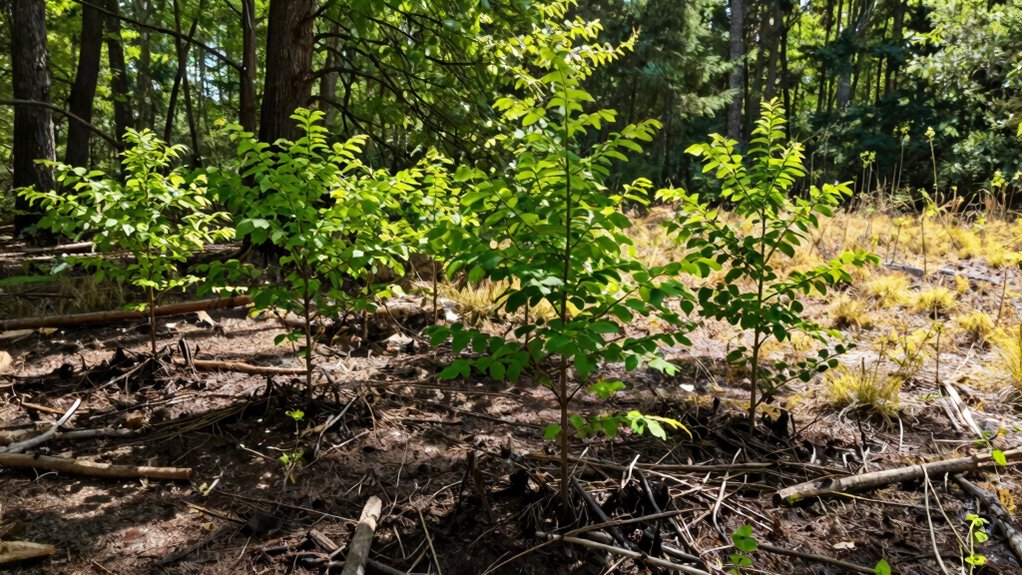
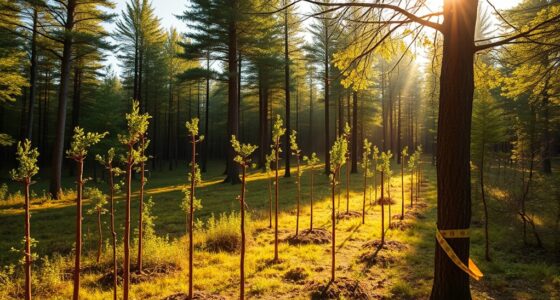
When a woodlot is carefully managed and properly maintained, it can bounce back quickly after cutting. The key to this resilience lies in how well the forest is prepared for regeneration. Forest regeneration is the process where new trees grow to replace those that have been harvested. If the land has been nurtured with an understanding of the natural growth cycles and the needs of native species, you’ll notice a swift comeback. Healthy regeneration depends heavily on the soil quality, which provides the foundation for young saplings to thrive. When soil is rich in nutrients and has good structure, it promotes vigorous root development, ensuring that new growth is strong and sustainable.
Your management practices directly influence soil quality. Avoiding soil compaction, minimizing disturbance during harvest, and maintaining organic matter in the soil all contribute to better soil health. When soil is in good condition, it retains moisture more effectively, supports beneficial microorganisms, and supplies essential nutrients to seedlings. These factors combined create an environment where new trees can establish quickly, leading to faster forest recovery. Conversely, poor soil quality hampers forest regeneration. Overly compacted or eroded soils inhibit root penetration and reduce water absorption, slowing down or even preventing new growth.
If you focus on maintaining a diverse seed bank in the soil, your woodlot will have a better chance of recovering swiftly. Native seeds often lie dormant in the soil, waiting for the right conditions to sprout after cutting. By protecting the soil from erosion and avoiding the use of harsh chemicals, you help preserve this natural seed reserve. Additionally, controlling invasive species and pests ensures that young trees are not outcompeted or damaged, further supporting rapid recovery. Promoting soil health through sustainable practices enhances the forest’s ability to regenerate naturally. Understanding and maintaining natural growth cycles can also significantly improve regeneration success, encouraging a thriving, resilient forest.
A focus on soil management can make a substantial difference in how quickly your woodlot recovers after harvesting. The timing of your harvest also plays a significant role. Cutting during the appropriate season allows the remaining trees and the soil to recover more efficiently. Proper timing reduces stress on the ecosystem and encourages quicker forest regeneration. Incorporating soil conservation techniques can further enhance recovery by preventing erosion and preserving the seed bank. Overall, your proactive management—focused on soil quality, seed preservation, and timing—makes the difference in whether a woodlot recovers fast or struggles to bounce back. When you understand and support the natural processes, you enable your woodlot to heal and flourish in a shorter amount of time, ensuring a healthy, resilient forest for years to come.
As an affiliate, we earn on qualifying purchases.
Frequently Asked Questions
How Does Soil Quality Affect Woodlot Recovery?
Soil quality greatly impacts your woodlot’s recovery. Rich soil with ample nutrients supports vigorous growth, while poor soil hampers it. Healthy microbial activity helps decompose organic matter, releasing essential nutrients for new plants. If your soil lacks nutrients or microbial life, trees struggle to establish and grow quickly. Improving soil quality through amendments or conservation practices boosts nutrient levels and microbial activity, giving your woodlot a better chance to recover swiftly after cutting.
What Role Do Invasive Species Play in Recovery?
Invasive species can hinder recovery by disrupting native competition dynamics, often outcompeting young trees for resources. While some invasives quickly dominate, others may create opportunities for native species to rebound if managed properly. Their presence complicates recovery, sometimes delaying it or forcing a shift in species composition. Understanding their role helps you develop strategies to control invasives and support healthy, resilient woodlot regeneration.
Can Climate Change Influence Recovery Speed?
Climate change can considerably influence your woodlot’s recovery speed by altering weather patterns, which affects climate resilience. Increased temperatures, shifting rainfall, and more frequent extreme weather events can stress trees, slow growth, or cause damage. These changes make it harder for your woodlot to bounce back quickly. To improve recovery, you need to adapt management practices, enhance resilience, and consider climate predictions to support healthier, more resilient forests over time.
How Do Wildlife Populations Impact Regrowth?
Wildlife populations profoundly impact regrowth through their diversity and predator-prey dynamics. When you maintain a diverse range of animals, it helps control herbivore numbers, preventing overgrazing that hampers tree seedlings and saplings. Predator-prey relationships keep herbivore populations balanced, promoting healthier forest regrowth. By supporting diverse wildlife, you foster an ecological environment that encourages faster, more resilient recovery of woodlots after cutting, ensuring sustainable forest health.
What Are the Best Practices for Accelerating Recovery?
Think of your woodlot as a patient in recovery; to speed up healing, you should focus on best practices like targeted tree thinning, which reduces competition and boosts growth, and pest management to keep harmful insects at bay. Regular monitoring helps you catch issues early. By actively managing these factors, you create ideal conditions for rapid recovery, ensuring your woodland regrows strong and resilient after cutting.
Conclusion
Remember, your woodlot is like a garden of potential, waiting for your care to flourish. Some areas bounce back quickly, like resilient seeds sprouting anew, while others need more patience and nurturing. By understanding these natural rhythms and respecting the land’s silent language, you become a steward of renewal. With each thoughtful action, you plant hope’s seed, allowing your woodlot to symbolize resilience—proof that, with patience, even wounds can blossom into strength.
Halloween Picks
halloween
As an affiliate, we earn on qualifying purchases.