TL;DR

Get tools and workshop supplies delivered free — and shop member deals
- Fast, free delivery on millions of items
- Access to Prime Big Deal Days deals on October 6–7
- Prime Video, Amazon Music and more included
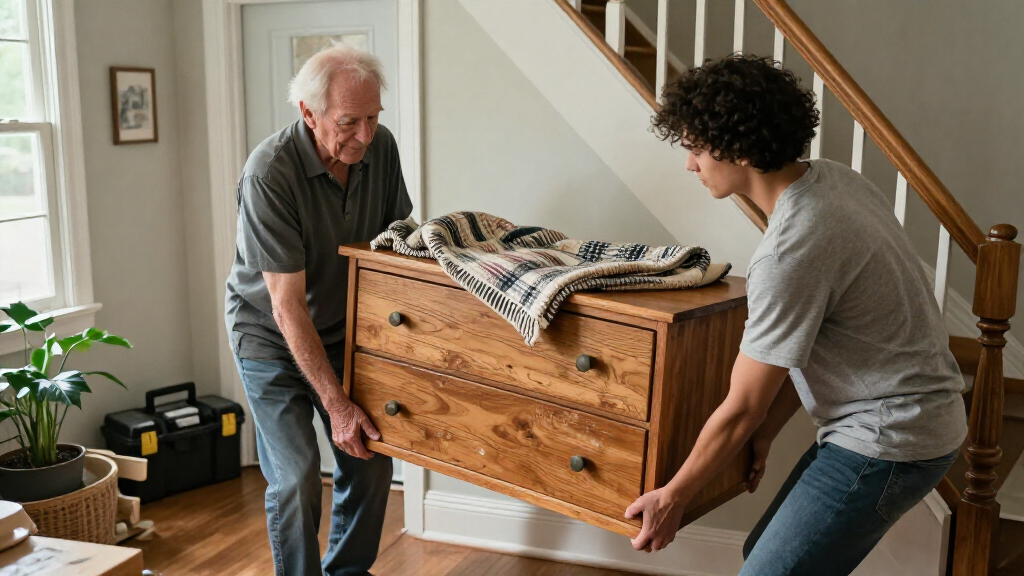
A Family Handyman report featuring a strength coach and a physical therapist says there is no fixed age when people must stop moving furniture. The experts advise judging the task by a person’s strength, control and health, and recommend getting help or hiring movers when the load feels unsafe.
A Family Handyman report featuring strength coach Zac Armstrong and physical therapist Joshua Holskey says there is no set age at which a person is too old to move furniture. The experts recommend judging each lift by whether someone can handle the item smoothly and under control, and seeking help or hiring movers when the task feels unsafe.
The report describes possible risks from moving heavy furniture, including back and shoulder injuries, muscle strains, joint sprains, falls and fractures. Armstrong says injuries can occur when someone twists while carrying a load to keep it from falling. He advises turning the whole body rather than twisting under weight. The article also notes that strenuous lifting can raise heart rate and blood pressure, which may pose particular danger for people with cardiovascular disease.
Holskey recommends getting a helper, clearing obstacles and agreeing on a plan before moving furniture, especially around stairs, corners and changes in height. The report also suggests warming up, using equipment such as dollies, sliders or lifting straps, and pushing an item when that is safer than pulling it. Armstrong recommends lifting in stages when possible. Both experts’ guidance is general; the source does not set out a medical screening rule or say that every older adult faces the same level of risk.
For lifting technique, Holskey says people should bend at the ankles, knees, hips and waist to keep the load closer to their body’s center of gravity. The article advises against attempting a lift if someone is unsure they can control the object, and says professional movers may offer in-home furniture-moving services.
A Safer Test Than Age Alone
The advice addresses a common household decision: whether to move a heavy object independently or ask for assistance. A fixed age cutoff would not account for differences in strength, balance, health or the size and shape of the furniture. The experts’ approach instead focuses on the demands of the particular task and a person’s ability to control the load.
That distinction matters because an injury can follow a fall or a poorly controlled lift, while strenuous effort may also be risky for someone with a heart condition. The report does not claim that using good technique removes those risks. Its practical message is to treat uncertainty as a reason to pause, get help or hire a professional rather than press ahead.
As an affiliate, we earn on qualifying purchases.
The Experts’ Ability-Based Guidance
The Family Handyman article is a service report, not a study establishing an age threshold or measuring injury rates. It draws on advice from Armstrong, a retired U.S. Marines naval commander and strength coach who founded Executive Health Edge in Coronado, California, and Holskey, a doctor of physical therapy at ATI Physical Therapy.
Armstrong frames the decision around strength and control, not a birthday. The report says a task may be too heavy if the person cannot lift and carry it smoothly while remaining in control. Its recommendations are intended to help readers assess a move, but the article gives no weight limit that applies to everyone and does not replace advice from a clinician about an individual health condition.
““Is there an age to stop? No.””
— Zac Armstrong, strength coach, as quoted by Family Handyman
No Universal Weight or Age Limit
The report does not provide a precise age, furniture-weight threshold or formula for determining when a move is safe. It also does not quantify the likelihood of injury or offer individualized guidance for people with heart disease, balance problems, osteoporosis or other medical concerns. A person’s condition and the specific route and object can change the risk. The source material does not include a response from a medical organization or a formal clinical guideline.
Pause Before the Next Lift
Before moving furniture, readers can assess whether they can control the object, check the route for obstacles and arrange help and suitable equipment. If the item is difficult to lift or carry smoothly, the experts’ advice is to stop and seek assistance rather than test their limits. People concerned about how lifting may affect a health condition can consult a health professional; the report also points to in-home services offered by some moving companies. No further study, official guidance or follow-up development is identified in the source material.
Key Questions
Is there a specific age when someone should stop moving furniture?
No. The experts quoted by Family Handyman say age alone is not the test. They recommend considering strength, control, health and the demands of the particular move.
How can someone judge whether a piece is too heavy?
Armstrong’s suggested test is whether the person can pick it up smoothly and carry it under full control. If not, the report advises asking for help or hiring movers rather than continuing.
What precautions does the report recommend?
Get a helper, clear the route, plan for corners and stairs, and use equipment such as a dolly or furniture sliders. The report also advises warming up, avoiding twisting while carrying and lifting in stages when possible.
What risks does moving heavy furniture pose?
The report lists back and shoulder injuries, strains, sprains, falls and fractures. It also notes that strenuous lifting can increase heart rate and blood pressure, which may be a concern for people with cardiovascular disease.
When should someone hire professional movers?
The experts’ guidance is to seek help if the lift feels uncertain or the item cannot be controlled. Family Handyman says some moving companies offer in-home furniture-moving services.
Source: rss
Fall yard work Picks
leaf blowers
As an affiliate, we earn on qualifying purchases.