
TL;DR

Get business pricing on tools and workshop supplies
- Business-only prices and quantity discounts
- Tax-exempt purchasing
- Multiple users, one account, clear invoices
A Livingetc report spotlights the renewed interest in Swedish kakelugnar and related northern European ceramic stoves among British interior designers. The stoves are described by industry sources as able to release heat for 12 to 24 hours after one hot burn, though efficiency and emissions depend on the model, fuel and installation.
Centuries-old Swedish ceramic stoves are drawing fresh interest from British interior designers, according to a Livingetc report, as homeowners look for heating fixtures that combine a decorative focal point with prolonged radiant warmth. Designers and a stove-company director interviewed by the magazine say these tiled heaters can release heat for 12 to 24 hours after one hot burn, although the report does not provide independent performance or emissions testing.
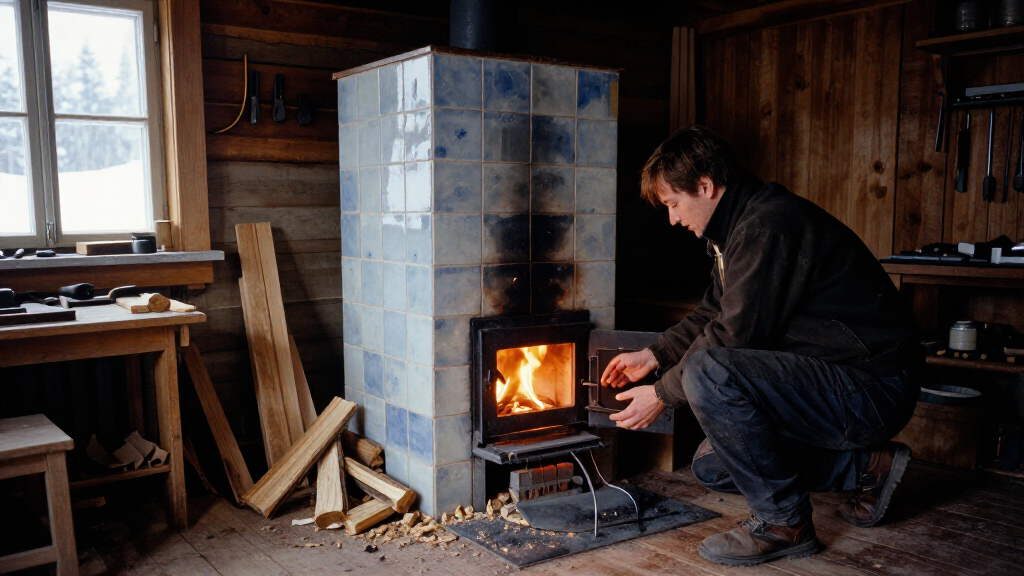
The stoves are known as kakelugnar in Swedish and kachelofen in German. Rather than functioning like an open hearth, they store heat in a substantial tiled structure and release it gradually. Alan Hills, director of The Ceramic Stove Company, told Livingetc that the fire burns hotter in the firebox, which he said helps combust particulates and reduces emissions. The article does not supply measurements or comparisons to support a specific emissions reduction.
Several design projects illustrate the range of forms. AOR Architects used a custom pink Drottningholm stove in Finnish shoe designer Minna Parikka’s home. Architect Mikki Ristola said the stove was intended both to provide warmth and to serve as a visual centrepiece. In an east London home, designer Olivia Outred selected a Karl-Johan model and had it fitted to run on gas, citing local air-quality rules.
The report says ceramic stoves can cost several thousand pounds, with prices varying by design and installation. They may arrive in sections and be assembled on site; Hills advised that installation timing matters and that some floors may need a reinforced base. Outred described building a brick structure before tiles were applied in the room. The article presents the stoves as long-lived investments, but does not give a typical lifespan, operating cost or payback calculation.
Heat Storage Meets Interior Design
The renewed attention reflects a practical and aesthetic choice for homeowners: a ceramic stove can function as a heating appliance and a permanent architectural feature. Its stored heat is released over time rather than being limited to the period when a fire is actively burning, according to Hills. That may appeal to households seeking a different experience from an open fireplace, but the actual benefit will depend on the building, stove size, fuel and how it is operated.
The environmental case requires care. Hills told Livingetc that hotter combustion can reduce particulate emissions, but the report contains no independent emissions figures and does not establish that every ceramic model is cleaner than every conventional woodburner. The east London example also shows that regulation and location can shape the choice of fuel: Outred’s clients used a gas-fitted stove rather than a wood-burning version.
Cost and construction are also relevant. A purchase price starting in the thousands of pounds, plus site preparation and fitting, puts the appliance beyond a simple plug-in upgrade. Buyers need to weigh those upfront costs against the proposed benefits of long heat release and a durable, customisable design; the supplied report gives no data to quantify household savings.
As an affiliate, we earn on qualifying purchases.
A Northern European Heating Tradition
Ceramic stoves have a long history in northern Europe, but Livingetc describes them as a relatively new direction for British interior design studios. The article says their monumental, tiled forms have appeared in popular culture, while their practical heating function has been less familiar to UK consumers accustomed to open fires. Hills attributed that gap in awareness to the greater familiarity of conventional hearths.
The report names designers including Adam Bray, Beata Heuman and Veere Grenney among those who have installed ceramic ovens for clients. Examples range from a patterned, cool-green tiled stove in a London-designed apartment to a terracotta model made by ceramicist Jessica Steinhäuser for Canadian designer Colette van den Thillart. These projects show that the form can be adapted to different interiors, but they are design examples rather than a survey of market adoption.
“Ceramic stoves work by generating heat for 12 to 24 hours from one hot burn, using far fewer logs than a conventional wood burner.”
— Alan Hills, director of The Ceramic Stove Company, speaking to Livingetc
Performance and Costs Need Verification
The supplied report does not identify independent tests for its claims about 12-to-24-hour heat release, lower log use or reduced particulate emissions. It gives no model-by-model figures, comparison conditions or emissions standards, so readers cannot infer that every ceramic stove will perform alike or outperform a particular woodburner.
Other practical details remain unspecified: installation costs beyond the broad starting price, maintenance requirements, the amount of heat delivered to different room sizes, and potential savings on fuel bills. Regulations also vary by location and appliance type. The article notes the gas installation in one London project but does not provide a full account of current local rules or explain which models meet them.
Check Suitability Before Installation
For readers considering a ceramic stove, the next step is to check the proposed model’s verified performance data, fuel requirements and local compliance, then obtain a site-specific installation quote. The report says installation often follows wet trades such as plastering and that a reinforced base may be needed; a qualified installer should assess the floor, flue or other venting arrangements, clearances and building requirements before work begins.
Livingetc’s report does not announce a product launch, new regulation or formal industry forecast. The development to watch is whether more UK designers and homeowners adopt the stoves, and whether manufacturers provide comparable evidence on efficiency, emissions and lifetime costs. Until then, the reported projects establish growing design interest, not a measured shift in the heating market.
Key Questions
What is a Swedish ceramic stove?
A Swedish ceramic stove, or kakelugn, is a tiled heating appliance designed to store heat from a fire and release it gradually. Related stoves are known as kachelofen in German.
How long can a ceramic stove stay warm?
Alan Hills of The Ceramic Stove Company told Livingetc that these stoves can generate heat for 12 to 24 hours after one hot burn. The report does not provide independent testing or specify the conditions behind that range.
Are ceramic stoves more efficient or cleaner than woodburners?
The report’s sources say ceramic stoves use fewer logs and that hotter combustion can reduce particulates. It does not include comparative test results, so those claims should not be treated as verified performance for every model.
How much does a ceramic stove cost?
Livingetc says prices start at several thousand pounds. The final cost can depend on the stove, custom tile work, site preparation and installation; the report does not give a typical total.
Can a ceramic stove be installed in a smaller home?
The report describes a gas-fitted model installed in a modest east London terrace, showing that such stoves are not limited to large houses. Suitability depends on available space, the building and applicable installation and air-quality rules.
Source: rss
Halloween Picks
halloween
As an affiliate, we earn on qualifying purchases.