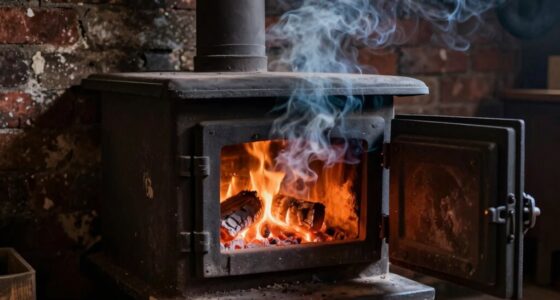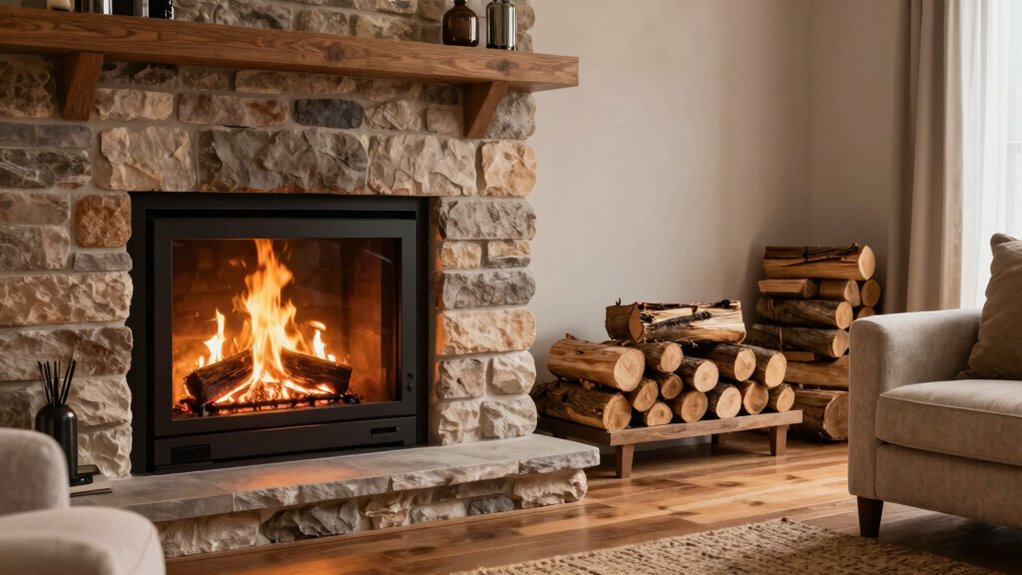

If you value convenience and minimal effort, pellet inserts are a great choice, thanks to their automatic feeding systems and cleaner operation. On the other hand, if you enjoy a hands-on approach and traditional routines, wood inserts may suit you better, though they require regular tending and ash removal. Your lifestyle determines which option fits best, and choosing wisely can save you time, effort, and money. Keep exploring to see how each option truly aligns with your daily life.
Key Takeaways
- Lifestyle preferences for convenience or manual maintenance heavily influence choosing between pellet and wood inserts.
- Pellet inserts offer automated feeding and minimal effort, ideal for convenience-focused users.
- Wood inserts require regular tending and ash removal, suited for traditional or hands-on users.
- Energy efficiency and fuel costs impact long-term savings and are important in lifestyle considerations.
- Environmental impact and emissions may sway choices based on eco-conscious priorities.
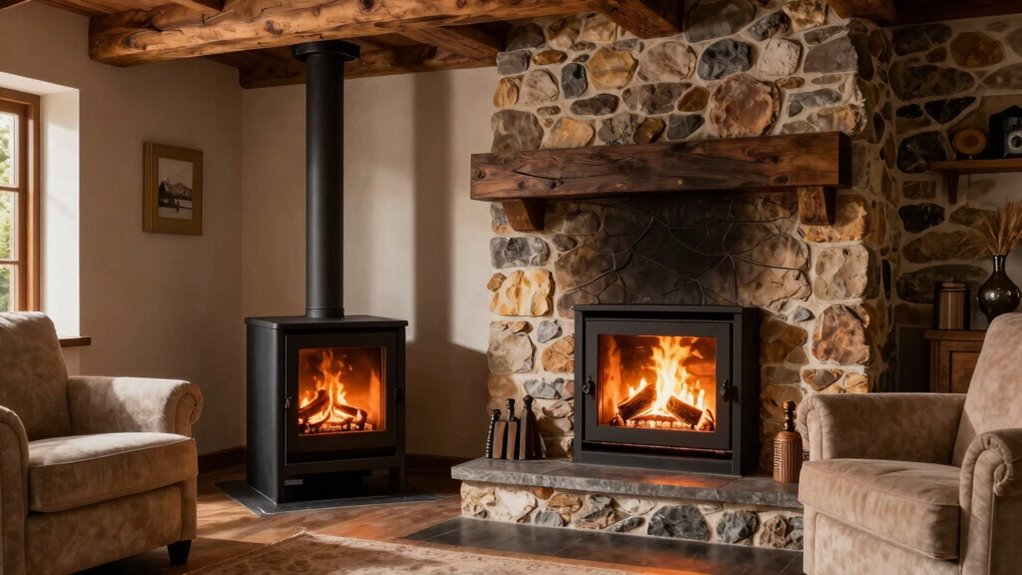
Are you considering a fireplace upgrade that combines efficiency with ambiance? Pellet inserts tend to be highly efficient because they burn processed fuel that produces more heat with less waste. They are designed to maximize heat output while minimizing emissions, which means you get more warmth for less fuel. efficiency can significantly impact your ongoing fuel costs and environmental footprint. Additionally, pellet inserts often feature automatic feeding systems, making them more convenient for daily use. Wood inserts, on the other hand, have improved over the years, becoming more efficient through advanced combustion technology. Still, they generally require more manual effort to maintain ideal efficiency, such as regular tending and ash removal. Choosing between these options often involves considering lifestyle preferences and how much energy efficiency matters to you.

Comfortbilt HP22i Pellet Stove Fireplace Insert Heats 2800 sq.ft 47 lb Hopper Capacity
- Ventilation Required: Requires proper ventilation
- High Efficiency: 110V, programmable heat, auto ignition
- EPA Approved: Heats up to 2,800 sq ft
As an affiliate, we earn on qualifying purchases.
As an affiliate, we earn on qualifying purchases.
Frequently Asked Questions
How Long Do Pellet and Wood Inserts Typically Last?
Pellet and wood inserts usually last between 15 to 30 years, depending on quality and maintenance. You’ll get better longevity if you prioritize fuel versatility, choosing high-quality pellets or seasoned wood. Be aware of installation challenges, as proper setup guarantees durability and safe operation. Regular cleaning and inspections also extend the lifespan, making these inserts a reliable, long-term heating solution for your home.
Are Pellet Inserts More Energy-Efficient Than Wood Inserts?
Yes, pellet inserts are generally more energy-efficient than wood inserts. They offer better fuel efficiency because pellets burn more completely, producing more heat with less fuel. When you compare costs, pellet inserts often have a favorable cost comparison due to their efficient fuel use and easier control of burn rates. This means you get more warmth for less money, making them a smart choice for energy-conscious homeowners.
Can Pellet and Wood Inserts Be Used During Power Outages?
During power outages, pellet and wood inserts can still keep you warm if they operate independently of electricity. Curiously, about 60% of homeowners consider alternative heating options essential for emergency preparedness. Pellet inserts often require electricity for the auger, but some models have battery backups, while wood inserts typically don’t need power. So, if you prepare properly, you can rely on these inserts during emergencies, ensuring continued warmth and safety.
What Is the Maintenance Required for Each Type of Insert?
You’ll need to regularly clean both pellet and wood inserts, usually every one to three months, to maintain efficiency. For pellet inserts, you should also check and clean the fuel storage area and ash trap frequently. Wood inserts require more frequent cleaning of ash and soot buildup. Proper maintenance guarantees safe operation, prolongs the lifespan of your insert, and keeps your heating system running smoothly.
Are There Any Environmental Benefits to Choosing Pellet Over Wood Inserts?
Sure, choosing pellet inserts is like giving Mother Earth a high-five. They produce eco-friendly emissions, making them a greener option than traditional wood inserts. Plus, pellets come from renewable energy sources, unlike dwindling wood supplies. So, if you’re into saving the planet while cozying up, pellet inserts are your eco-chic choice. They let you enjoy warmth and guilt-free living, proving sustainability can be stylish.
Conclusion
Ultimately, choosing between pellet and wood inserts is like selecting the perfect dance partner—each has its own rhythm and charm. Your lifestyle sets the tempo, guiding you toward the right step. Whether you crave the steady beat of pellet efficiency or the rustic waltz of traditional wood, remember, it’s the harmony of your daily life that makes the warmth truly resonate. Embrace the choice that fuels your fire and ignites your home’s soul.