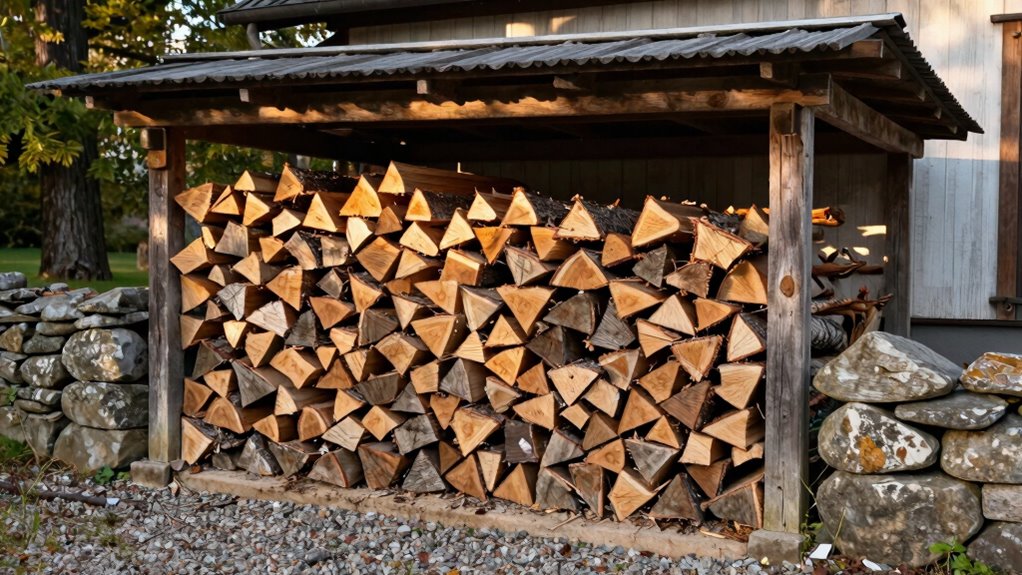

To store firewood near your house safely, keep it at least 20 feet away from your foundation and elevate it on racks or concrete blocks to improve airflow and prevent moisture buildup. Cover the top with a tarp, but leave sides open for ventilation. Regularly inspect for pests or mold, and avoid tightly packing logs. Proper seasoning, ventilation, and pest prevention tips can help you manage your firewood storage effectively, and there’s more to guarantee a trouble-free setup.

Get business pricing on tools and workshop supplies
- Business-only prices and quantity discounts
- Tax-exempt purchasing
- Multiple users, one account, clear invoices
Key Takeaways
- Store firewood at least 20 feet away from the house to prevent pest migration.
- Elevate firewood stacks on racks or concrete blocks to improve airflow and reduce moisture contact.
- Cover the top of the pile with a tarp or roof, leaving sides open for ventilation.
- Ensure proper seasoning of firewood to minimize pests and moisture issues.
- Regularly inspect stored firewood for pests, mold, or rot to maintain safety and quality.
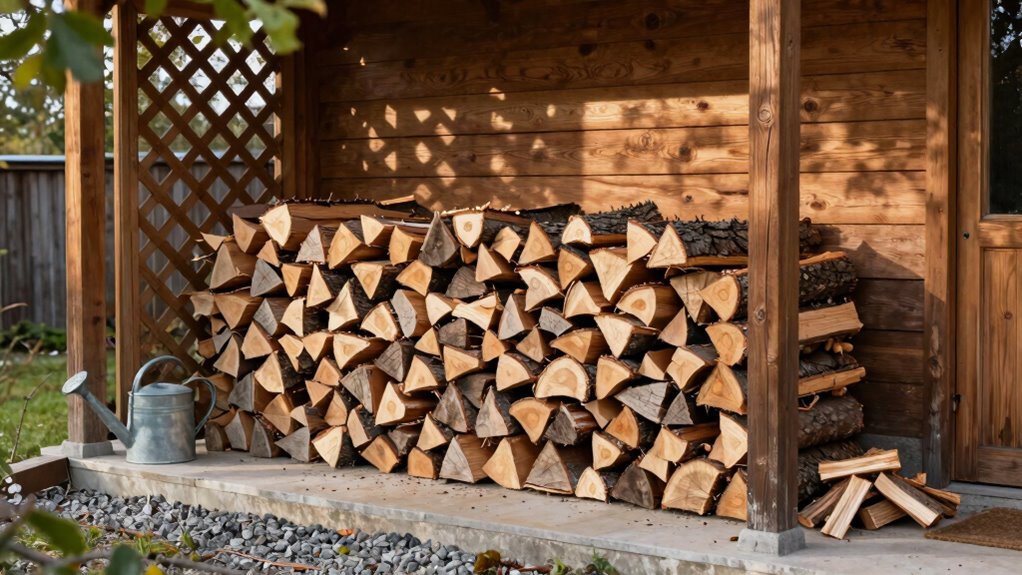
Storing firewood near your house can be convenient, but if you don’t do it properly, it can lead to pests, moisture problems, and structural damage. To avoid these issues, you need to focus on proper firewood seasoning and pest prevention. Seasoned firewood is dry, has low moisture content, and burns more efficiently, producing less smoke and creosote buildup. If your firewood isn’t well-seasoned, it retains moisture, making it more attractive to pests like termites, ants, and beetles. Before stacking your firewood close to your home, guarantee it’s been properly seasoned for at least six to twelve months, depending on the wood type and climate. Split the logs into smaller pieces to speed up seasoning, and store them in a dry, well-ventilated area away from direct soil contact. Using a cover like a tarp or a specialized firewood rack with a roof helps protect the wood from rain and snow, keeping it dry and preventing mold and rot. Additionally, ensuring proper firewood seasoning is essential for reducing moisture content and increasing safety. Proper seasoning also minimizes the risk of attracting unwanted pests, which can be a common problem when storing wood improperly.
Pest prevention is critical when storing firewood near your house. Pests are naturally drawn to moist, untreated wood, and if they find a cozy home in your stored supply, they can easily migrate into your house or damage your property. To minimize this risk, keep your firewood at least 20 feet away from your home’s foundation. Elevate the stack on concrete blocks or a firewood rack to promote airflow and prevent moisture buildup from ground contact. Regularly inspect your firewood for signs of pests, such as tiny holes, sawdust, or insect activity, and discard any infested logs immediately. Additionally, avoid storing firewood in enclosed spaces like garages or basements, where humidity levels are higher, and pests can thrive. Proper firewood storage practices can significantly reduce pest activity and protect your home environment.
Maintaining good airflow around your firewood stack is essential. Proper ventilation helps keep the wood dry and discourages pests from settling in. When stacking, don’t pack the wood too tightly; leave space between logs for air to circulate. Cover the top of the pile to shield it from rain and snow, but leave sides open to allow air movement. Regularly check your storage area for signs of moisture or pest activity, and adjust your setup as needed. By taking these simple steps, you can enjoy the convenience of close-by firewood without inviting pests or risking moisture damage. Proper firewood seasoning combined with vigilant pest prevention creates a safe, efficient, and pest-free storage solution close to your home.
As an affiliate, we earn on qualifying purchases.
Frequently Asked Questions
What Is the Ideal Distance to Store Firewood From the House?
You should store firewood at least 30 feet from your house to prevent pest issues and guarantee safety. Keeping it this distance allows proper air circulation, aiding firewood seasoning and moisture control, which reduces mold and decay. Elevate the wood off the ground and cover the top, leaving sides open for airflow. This setup helps keep your firewood dry, well-seasoned, and ready for use without attracting pests or causing damage.
How Often Should I Rotate My Stored Firewood?
Think of your firewood like a fine wine—seasonal rotation keeps it fresh and ready to burn. You should rotate your stored firewood every 6 to 12 months, depending on your climate and storage conditions. This practice guarantees firewood remains dry, free of pests, and maintains ideal firewood freshness. Regularly checking and swapping out older stacks helps prevent mold, pests, and moisture buildup, keeping your firewood ready for cozy fires whenever you need it.
Can Stored Firewood Attract Pests or Rodents?
Stored firewood can attract pests or rodents if not properly maintained. Insect infestations and rodent attraction increase when firewood is left in damp, unstacked piles or close to your home. To prevent this, keep firewood dry, elevate it off the ground, and store it away from your house. Regularly inspect and rotate your wood, ensuring it stays dry and pest-free, reducing the chances of unwanted critters taking up residence.
What Are the Best Materials for Firewood Storage Containers?
If you’re choosing a firewood container, a metal or plastic bin is ideal due to their durability and weather resistance. For example, a homeowner in Maine used a galvanized metal container, which prevented moisture damage and pests. The best firewood container types prioritize storage material durability, ensuring your wood stays dry and pest-free. Consider heavy-duty plastic or metal options for longevity and protection, especially in harsh climates.
How Do I Prevent Mold and Rot in Stored Firewood?
To prevent mold and rot in stored firewood, you should focus on moisture control and storage ventilation. Keep the wood off the ground using a rack or pallets, allowing air to circulate freely around it. Cover the top with a breathable material to shield from rain while still permitting airflow. Regularly check for excess moisture, and split or rotate the wood to guarantee even drying, keeping it dry and mold-free.
Conclusion
Storing firewood near your home is like tending a gentle garden—you want it accessible yet protected, thriving without chaos. Keep it elevated, dry, and organized, like a well-placed sculpture in a peaceful yard. With these simple steps, your firewood will stand tall and ready, a steadfast guardian of warmth. When done right, your stash becomes a cozy treasure chest, inviting and safe, ready to spark comfort through the coldest nights.
Halloween Picks
halloween
As an affiliate, we earn on qualifying purchases.