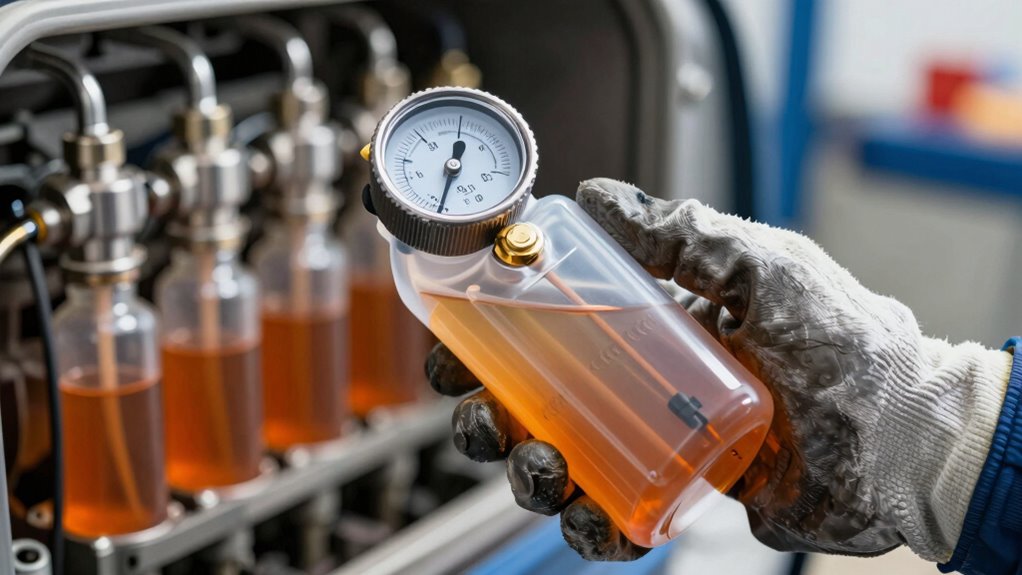
A practical rule of thumb for hydraulic fluid change intervals is to replace the fluid every 1,000 to 2,000 hours of operation or annually, whichever comes first. However, this depends on your equipment’s environment, workload, and fluid condition. Regular fluid testing can help you fine-tune these intervals, preventing contamination and wear. Keep an eye on signs like discoloration or strange odors, and you’ll discover even more ways to optimize your maintenance plan.

Get business pricing on tools and workshop supplies
- Business-only prices and quantity discounts
- Tax-exempt purchasing
- Multiple users, one account, clear invoices
Key Takeaways
- Follow manufacturer’s recommended intervals, typically every 1,000 to 2,500 hours of operation.
- Incorporate routine fluid testing to assess contamination and degradation levels.
- Replace fluid sooner in dusty, humid, or high-pressure environments for optimal performance.
- Look for signs like dark color, foul odor, or viscosity changes as indicators for timely fluid change.
- Use a combination of manufacturer guidelines and real-time fluid condition data for optimal scheduling.
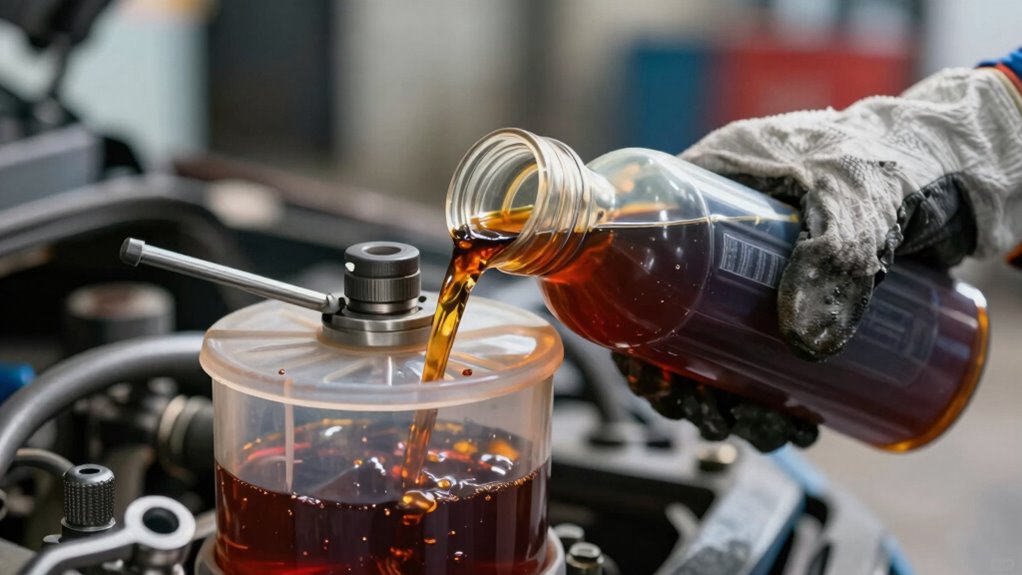
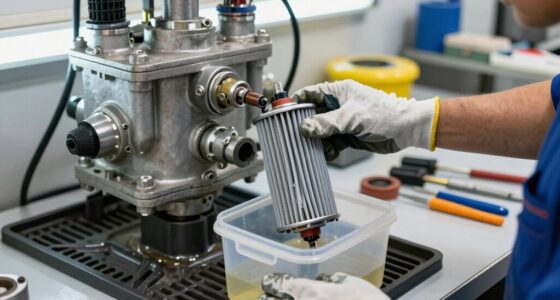
Regularly changing your hydraulic fluid is essential to keep your machinery running smoothly and prevent costly repairs. One of the key reasons for this is contamination prevention. Over time, dirt, metal particles, water, and other debris can enter the hydraulic system, leading to increased wear and potential failure of components. Contaminants not only degrade the fluid’s lubricating properties but also accelerate the deterioration of seals and valves. By maintaining clean fluid, you reduce the risk of system breakdowns and extend the lifespan of your equipment. Additionally, understanding fluid degradation helps in making more accurate maintenance decisions. To effectively prevent contamination, you should incorporate regular fluid testing into your maintenance routine. Fluid testing helps you monitor the condition of your hydraulic fluid and identify signs of contamination early. With proper testing, you can detect particles, moisture levels, and fluid degradation before they cause significant damage. This proactive approach allows you to schedule fluid changes at ideal intervals, rather than relying solely on a fixed timeline. Testing provides valuable insights into the health of your hydraulic system, enabling you to make informed decisions and avoid unnecessary downtime. When it comes to determining how often to change your hydraulic fluid, there’s no one-size-fits-all answer. Instead, consider factors like the operating environment, workload, and the type of equipment you’re using. For example, machinery operating in dusty or humid conditions may require more frequent fluid changes, while equipment used in cleaner environments might go longer between changes. Always refer to your manufacturer’s guidelines, but supplement those recommendations with fluid testing results for best results. This combined approach helps you strike a balance between maintaining ideal fluid condition and avoiding unnecessary fluid replacements. In addition to contamination prevention and fluid testing, it’s important to keep an eye on other indicators like fluid color, odor, and viscosity. Darkened or foul-smelling fluid often signals that it’s time for a change. Viscosity measurements can reveal if the fluid has broken down or become contaminated, which reduces its ability to lubricate and protect system components. By regularly inspecting these signs, you can ensure your hydraulic fluid remains effective and your machinery stays in peak condition.
As an affiliate, we earn on qualifying purchases.
Frequently Asked Questions
How Does Climate Affect Hydraulic Fluid Change Intervals?
Climate impact considerably affects your hydraulic fluid change intervals by influencing fluid longevity. In hot, humid environments, the fluid breaks down faster due to increased temperature and moisture, so you’ll need more frequent changes. Conversely, cooler, dry climates help extend fluid life. You should monitor your hydraulic system regularly and adjust your maintenance schedule accordingly, ensuring ideal performance and preventing costly damage caused by climate-related wear and tear.
Are Synthetic Fluids More Durable Than Mineral-Based Options?
Think of synthetic fluids like the marathon runners of lubricants—you’ll notice they last longer and perform better under stress. They’re more durable than mineral-based options, resisting oxidation and breakdown. Synthetic advantages include better temperature stability and extended change intervals, while mineral drawbacks involve quicker degradation and less consistent performance. If you want reliability and longer service life, synthetic fluids are your best bet for maintaining hydraulic systems.
Can I Extend Intervals With Better Filtration Systems?
Yes, you can extend intervals with better filtration systems. Improved filtration efficiency helps remove contaminants more effectively, which in turn enhances contamination control. By reducing dirt, debris, and water ingress, your hydraulic fluid stays cleaner longer, delaying the need for a change. Regularly upgrading your filtration system guarantees maximum performance and longer fluid life, saving you time and money on maintenance while keeping your equipment running smoothly.
What Signs Indicate Hydraulic Fluid Needs Changing Sooner?
You should change hydraulic fluid sooner if you notice contamination indicators like dirt, debris, or water in the fluid. Also, pay attention to fluid color change; if it turns dark or milky, it signals the need for an early change. These signs suggest the fluid’s lubricating properties are compromised, risking system damage. Regular inspections help catch these issues early, preventing costly repairs and ensuring your equipment runs smoothly.
How Often Should Hydraulic Filters Be Replaced?
Did you know that neglecting hydraulic filter maintenance can lead to fluid contamination, reducing system efficiency by up to 50%? You should replace hydraulic filters every 500 to 1,000 hours of operation or as recommended by the manufacturer. Regular filter changes prevent debris buildup, protect your hydraulic fluid, and guarantee smooth operation. Keep a close eye on filter condition to maintain peak performance and avoid costly repairs.
Conclusion
Remember, sticking to regular hydraulic fluid change intervals keeps your system running smoothly and prevents costly repairs. Some might think it’s unnecessary or too frequent, but delaying changes can lead to contamination and equipment failure. By following a practical rule of thumb, you guarantee peak performance without overdoing it. So, don’t skip those intervals—your equipment will thank you, and you’ll save money in the long run. Consistent maintenance is the key to reliability.
Fall Picks
fall essentials
As an affiliate, we earn on qualifying purchases.