The hydraulic wedge area is the most common injury point on log splitters, posing serious risks if safety measures are ignored. To avoid accidents, keep your hands away from the wedge, never bypass safety shields, and stay alert while operating the machine. Always follow manufacturer instructions and pause work before making adjustments. Staying cautious and vigilant will markedly reduce your chances of injury—if you want to know more, there’s important safety info ahead.
Key Takeaways
- The hydraulic wedge area is the most common injury point due to force concentration near the splitting wedge.
- Keep hands and fingers away from the hydraulic ram and wedge during operation to prevent crushing injuries.
- Always maintain a safe distance from the wedge and use safety shields and guards properly.
- Turn off and disconnect power before making adjustments or clearing jams to avoid accidental activation.
- Wear appropriate safety gear, including gloves, eye protection, and steel-toed boots, to minimize injury severity.
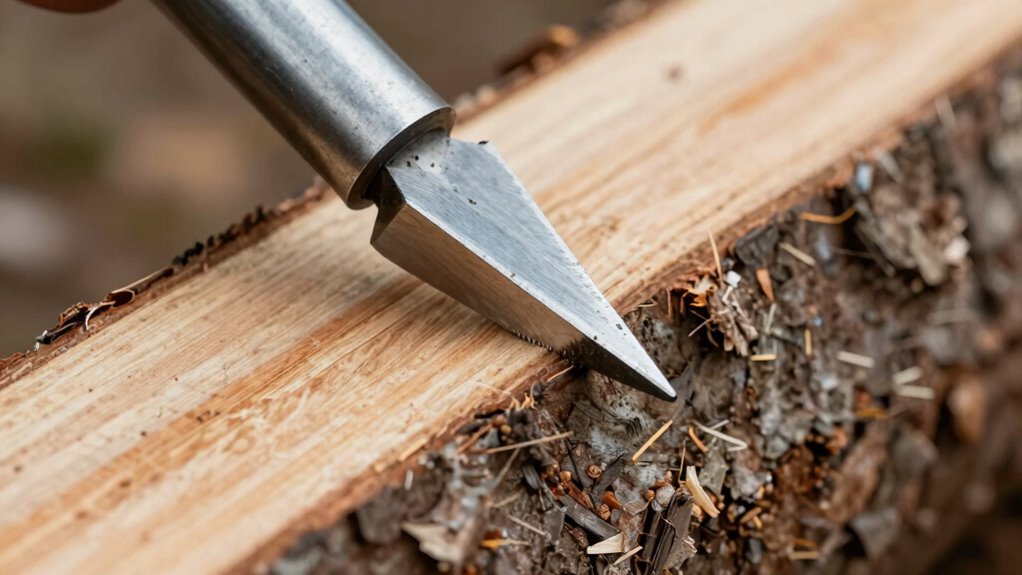
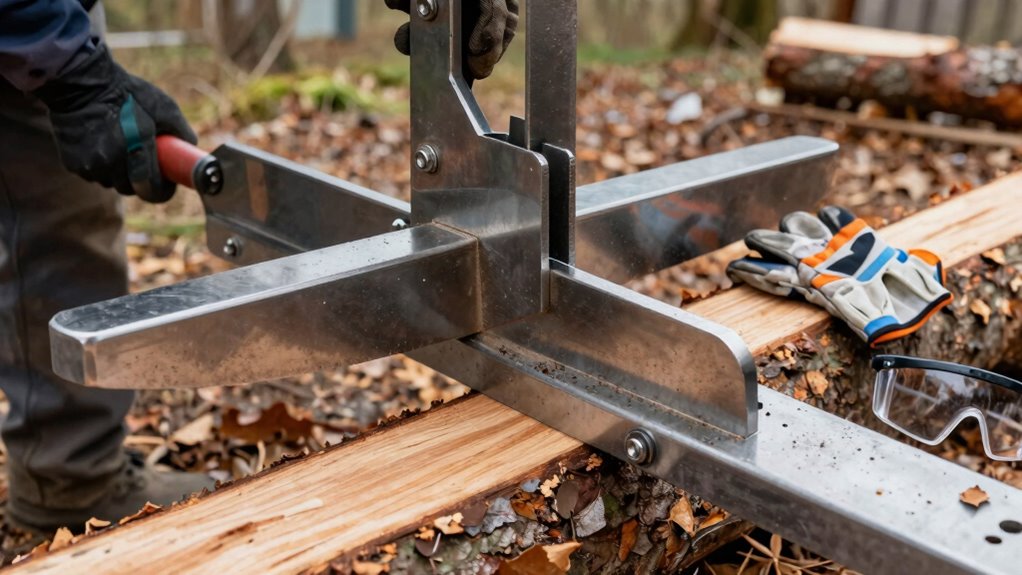
Log splitters are powerful tools that can make firewood preparation faster and more efficient, but they also pose serious safety risks if not used carefully. The most common injury point on log splitters is the hydraulic wedge area, where the force is concentrated to split the wood. This spot is dangerous because it’s where your hands and fingers are most vulnerable if you’re not paying close attention. Many accidents happen when operators reach too close to the hydraulic ram or fail to keep their hands clear during operation. It’s essential to recognize that even a small slip or distraction can lead to severe injuries. To prevent this, always maintain a safe distance from the splitting wedge and never bypass safety mechanisms.
Using proper safety gear is your first line of defense. Wearing sturdy gloves, eye protection, and steel-toed boots helps shield you from flying wood chips, debris, and accidental contact with moving parts. Gloves provide grip and protection, but remember they shouldn’t be loose-fitting, as they can get caught in moving parts. Eye protection, like safety goggles, guards your eyes from splinters and dust, while steel-toed boots protect your feet if logs are dropped or roll unexpectedly. Helmets are also advisable if you’re working in an area where overhead hazards exist. Wearing safety gear consistently guarantees that, even if an accident occurs, the damage can be minimized.
Regular maintenance is vital in keeping your log splitter safe and reliable. Before each use, inspect the hydraulic hoses for leaks, cracks, or wear, and replace any damaged parts promptly. Check that all safety shields and guards are in place and functioning correctly—these are there for your protection. Keep the splitting wedge sharp; dull blades require more force and increase the risk of logs slipping or kicking back. Lubricate moving parts as recommended by the manufacturer to prevent sticking or sudden movements. Proper maintenance not only prolongs the lifespan of your equipment but also ensures it operates smoothly, reducing the likelihood of accidents. Additionally, understanding modern safety standards can help you stay compliant and safe during operation.
Never attempt to force logs into the splitter or bypass safety features to speed up the process. Always follow the manufacturer’s instructions and use the tool as intended. When splitting wood, keep your hands away from the hydraulic wedge and the moving parts. Be patient and deliberate with each split, avoiding distractions such as phones or conversations. If you need to adjust or clear the area, turn off the machine and disconnect it from power sources. Staying vigilant, wearing appropriate safety gear, and maintaining your equipment properly are the best ways to avoid the #1 injury point on log splitters and operate them safely.
Frequently Asked Questions
How Often Should I Inspect My Log Splitter for Safety?
You should inspect your log splitter before each use to guarantee safety. Follow an inspection schedule that includes checking hydraulic lines, safety guards, and the power switch. Use a safety checklist to identify potential hazards and maintain the equipment properly. Regular inspections help you catch issues early, reducing the risk of injury. Always prioritize safety by staying vigilant and maintaining your log splitter in top condition.
Are There Specific Safety Gear Recommendations When Operating Log Splitters?
Did you know that wearing proper safety gear reduces injury risk by up to 70%? When operating log splitters, always use personal protective equipment like safety glasses, gloves, and steel-toed boots. Safety clothing, such as long sleeves and durable pants, also helps protect your skin from flying debris. These precautions keep you safe, prevent accidents, and make sure you can work confidently and efficiently.
What Training Is Recommended for Beginners Using Log Splitters?
As a beginner, you should take safety courses and watch equipment tutorials before operating a log splitter. These trainings teach you proper handling, safety protocols, and how to prevent common injury points. Hands-on instruction helps you understand the machine’s controls and safety features. Always follow manufacturer guidelines, wear recommended safety gear, and ask experienced operators for tips. This preparation ensures you operate the log splitter safely and confidently.
Can Safety Features Be Added to Older Log Splitter Models?
Surprisingly, you can add safety features to older log splitters through retrofit options and safety upgrades. While it’s tempting to think they’re outdated and can’t be improved, many models allow for attachments like shields, emergency stop switches, or guards. These upgrades help prevent accidents and enhance safety. So, don’t dismiss your old splitter—investing in retrofit options can make your work safer without buying new equipment.
What Maintenance Prevents Accidental Injury During Operation?
To prevent accidental injury during log splitter operation, you should regularly inspect and maintain safety features like emergency stops, ensuring they work properly. Always wear protective clothing, such as gloves and eye protection, to shield yourself from debris. Keep all safety shields in place and check them for damage. Proper maintenance and safety gear help you stay protected and reduce the risk of injury during operation.
Conclusion
To stay safe, always be aware of the injury point on your log splitter and take preventive measures. Remember, over 60% of log splitter injuries happen at this common hazard, highlighting how easily accidents can occur without proper caution. By staying alert and following safety tips, you can protect yourself and enjoy efficient, injury-free splitting. Don’t let a preventable mistake turn into a costly injury—safety first keeps your projects running smoothly.