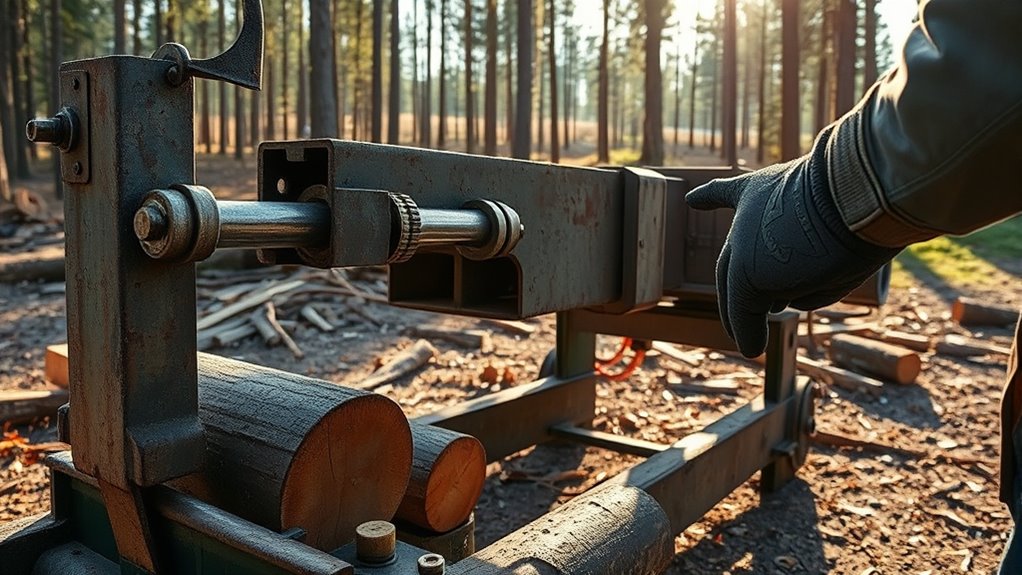

To fix log splitter auto-return failures, start by checking hydraulic fluid levels and quality, and inspect for leaks or contamination. Confirm that the hydraulic cylinder and hoses are in good condition and that all fittings are tight. Verify that the control valves and electrical components, like switches and wiring, work properly. Regularly lubricate moving parts and replace damaged seals. Following these steps can resolve common issues, and more detailed tips are available if you explore further.
Key Takeaways
- Regularly calibrate and adjust the auto-return control valve and mechanical linkages for proper timing.
- Inspect hydraulic fluid levels and quality; replace contaminated fluid to ensure system responsiveness.
- Check hydraulic cylinders, hoses, and moving parts for wear, damage, or misalignment, and repair as needed.
- Verify electrical components, wiring, and control switches for proper operation; replace faulty parts.
- Conduct routine maintenance, including seal inspection and cleaning, to prevent leaks and maintain hydraulic pressure.
Understanding How the Auto‑Return Mechanism Works

The auto‑return mechanism in a log splitter is designed to automatically bring the splitter’s ram back to its starting position after completing a splitting cycle. To guarantee it works correctly, you need to perform auto return calibration regularly. This process aligns the system’s settings so the ram returns smoothly and efficiently. Mechanical linkage adjustment also plays a vital role; if the linkages aren’t properly aligned or tight, the auto‑return may fail or be sluggish. You should inspect the linkage connections and tighten or reposition them as needed. Proper calibration and adjustment help maintain consistent auto‑return performance, preventing delays or failures. Regularly checking these components ensures your log splitter operates safely and effectively, saving you time and effort during splitting tasks. Additionally, understanding the importance of system maintenance can help prevent auto‑return issues from occurring in the first place.
Checking Hydraulic Fluid Levels and Quality

To guarantee your log splitter operates smoothly, you should regularly check the hydraulic fluid levels and quality. Start by inspecting the fluid reservoir, ensuring the level is within the recommended range. Conduct a hydraulic fluid analysis if you notice sluggishness or inconsistent auto return calibration, as contaminated or degraded fluid can hinder performance. Clean or replace the hydraulic fluid if it appears dark, cloudy, or contains debris. Proper fluid quality is essential for consistent auto-return functionality. Maintaining ideal hydraulic fluid levels and quality prevents air bubbles and moisture buildup, which can cause auto-return failures. Regular checks and timely fluid changes keep the system responsive and ensure your log splitter functions reliably, avoiding costly repairs or downtime. Additionally, staying informed about AI security concerns can help you understand how emerging technologies might impact maintenance tools and safety protocols.
Inspecting the Hydraulic Cylinder and Piston

Inspecting the hydraulic cylinder and piston is essential for diagnosing auto-return issues. You need to check for signs of wear, damage, or misalignment that could hinder proper operation. Look for hydraulic pressure inconsistencies, which can prevent the piston from returning smoothly. Ensure the cylinder is properly aligned; misalignment causes uneven wear and leaks, affecting performance. Use the table below to evaluate key aspects:
| Aspect | What to Check | Possible Issue |
|---|---|---|
| Hydraulic Pressure | Test pressure with a gauge | Inadequate pressure causes failure |
| Cylinder Alignment | Visual inspection and measurements | Misalignment causes jams |
| Piston Condition | Look for scratches or scoring on piston | Damaged piston impedes movement |
Addressing these issues restores proper auto-return function and prevents future failures. Regularly inspecting hydraulic components can help identify early signs of wear before complete failure occurs.
Examining Hydraulic Hoses and Connections for Leaks
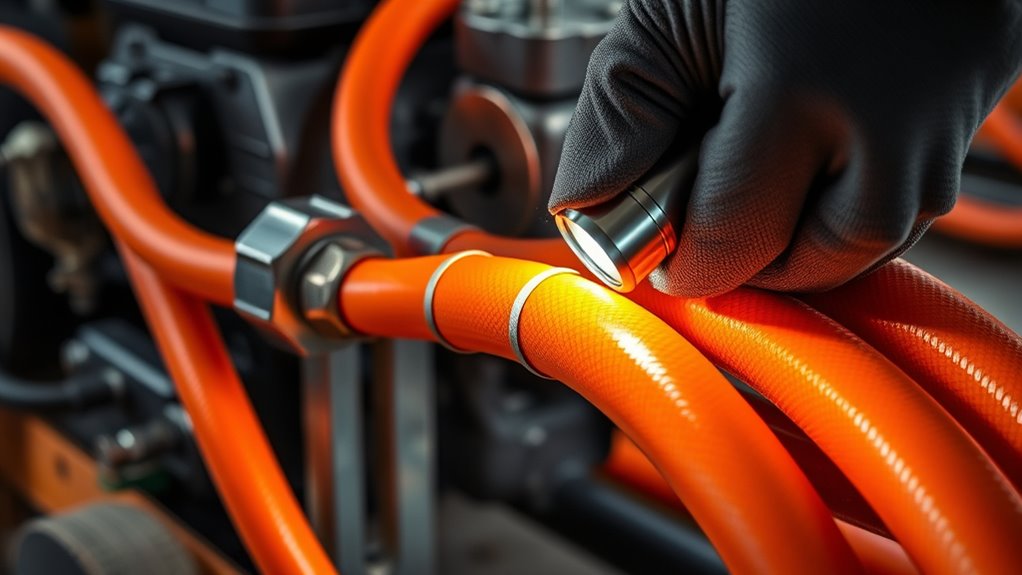
Since leaks in hydraulic hoses and connections can cause pressure loss and auto-return failures, it’s essential to examine these components carefully. Begin with a thorough hydraulic hose inspection, looking for cracks, bulges, or worn areas that could leak fluid. Check for any signs of damage or abrasion. Next, inspect all connections, ensuring they are tight and secure. Connection tightening is vital—loose fittings can leak hydraulic fluid and impair the system’s function. Use a wrench to snug fittings, but avoid over-tightening, which can damage threads. Pay close attention to fittings at the pump, cylinder, and control valves. Regularly inspecting hoses and tightening connections helps maintain proper pressure and prevents auto-return failures caused by hydraulic leaks. Incorporating preventive maintenance strategies can further reduce the risk of hydraulic system issues.
Assessing the Hydraulic Pump and Valves
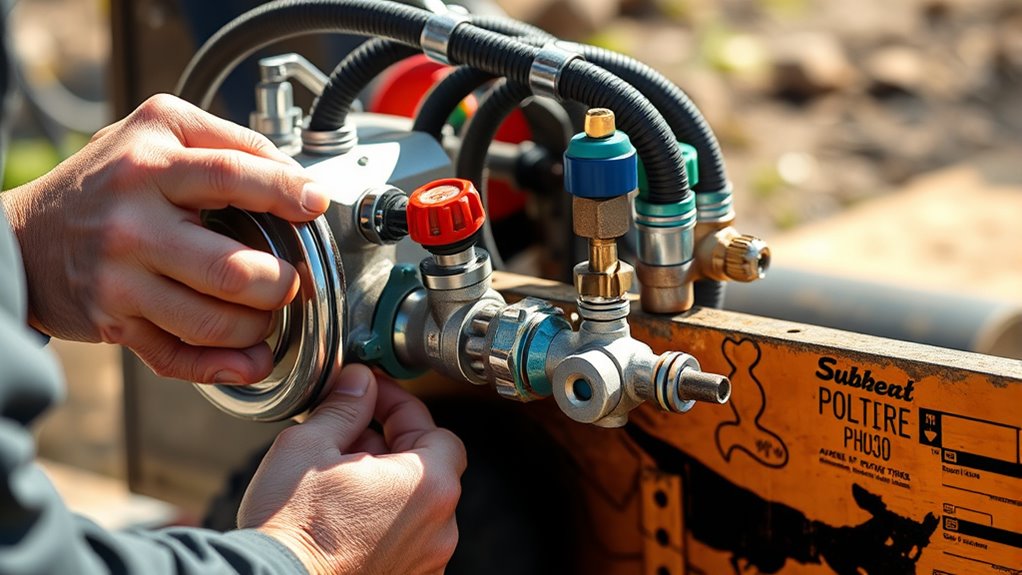
Evaluating the hydraulic pump and valves is essential when troubleshooting auto-return failures in your log splitter. You need to confirm the pump delivers proper pressure and flow, ensuring it powers the system effectively. During valve inspection, look for sticking, leaks, or blockages that might hinder movement. Faulty valves can prevent the ram from returning automatically, so testing each valve for proper operation is vital. Incorporating knowledge of remote hackathons can sometimes provide access to expert advice and innovative troubleshooting techniques from a global community.
Cleaning and Lubricating Moving Parts

Cleaning and lubricating moving parts is a crucial step in maintaining your log splitter’s auto-return function. Start by inspecting hydraulic filters, ensuring they’re clean and free of debris, which helps prevent dirt from entering the system. Use a soft brush or compressed air to remove dirt and grime from moving components like the ram, gears, and pivot points. Apply appropriate lubricants to reduce friction and wear, focusing on hinges, linkages, and sliding surfaces. Always follow safety precautions—disconnect power and relieve hydraulic pressure before working. Regular cleaning prevents buildup that can hinder movement, while lubrication ensures smooth operation. Keeping these parts in good condition not only improves auto-return performance but also extends the lifespan of your log splitter. Additionally, using proper lubricants designed for hydraulic or mechanical parts can significantly enhance the longevity and efficiency of your equipment.
Replacing Worn or Damaged Seals and Components

Inspecting and maintaining seals and components is essential for ensuring your log splitter’s auto-return function works reliably. Regular component inspection helps identify worn or damaged parts early, preventing further issues. When you notice leaks, sluggish movement, or inconsistent auto-return, it’s time for seal replacement. Worn or damaged seals can cause hydraulic fluid leaks, reducing pressure and hampering the auto-return mechanism. Carefully remove old seals and replace them with high-quality, compatible ones. Check nearby components, such as pistons and cylinders, for signs of wear or damage, and replace if necessary. Proper seal replacement restores hydraulic pressure and ensures smooth, reliable auto-return operation. Additionally, understanding how automation technology is improving equipment functionality can help you implement more effective maintenance strategies. Keep your equipment in top shape by routinely inspecting and replacing worn components before problems escalate.
Testing the Control System and Electrical Connections

Start by inspecting the wiring to guarantee all connections are secure and free of damage. Next, verify that the control switches function correctly and respond as expected. Finally, test the electrical components to identify any faults that could be causing auto-return issues. Additionally, ensure that the control system’s high-quality components are functioning properly to prevent malfunctions and improve overall reliability.
Inspect Wiring Integrity
To guarantee your log splitter’s control system functions properly, you need to test the electrical connections thoroughly. Start by inspecting all wiring for signs of wear, corrosion, or loose connections. Proper wiring troubleshooting can uncover faults that cause auto-return failures. Use a multimeter to perform electrical diagnostics, checking for continuity and voltage at key points. Make sure wires are securely connected to switches, solenoids, and relays. Look for damaged insulation or frayed wires that could interrupt signals. Address any issues you find promptly to prevent further problems. Additionally, reviewing wiring diagrams can help ensure all connections are correctly configured according to manufacturer specifications.
Verify Control Switches
Verifying that your control switches are functioning correctly is essential for diagnosing auto‑return issues. Faulty switches can disrupt auto‑return calibration, causing the splitter to fail to reset automatically. Start by testing each switch with a multimeter to check for continuity. If a switch doesn’t respond properly, replace or repair it to restore proper control switch troubleshooting. Use the table below to understand common issues:
| Issue | Possible Cause | Solution |
|---|---|---|
| Auto‑return doesn’t activate | Faulty control switch | Test and replace if needed |
| Intermittent operation | Loose wiring or connections | Tighten and secure connections |
| Unresponsive switches | Wiring damage or corrosion | Inspect and repair wiring |
Proper control switch troubleshooting ensures reliable auto‑return calibration and safe operation. Additionally, understanding the horsepower of electric dirt bikes can help in diagnosing electrical performance issues related to control systems.
Test Electrical Components
Testing the electrical components of your log splitter’s control system is an essential step in diagnosing auto-return failures. You should start by checking the battery to verify it has enough charge; weak batteries can cause control issues. Next, perform circuit troubleshooting by inspecting wiring connections for corrosion, loose contacts, or damage. Use a multimeter to test for proper voltage and continuity across switches and relays. Focus on the control switch and relay circuits, ensuring they work correctly. If you find any faulty components, replace or repair them promptly. Proper testing helps pinpoint electrical faults that prevent the auto-return from functioning. By systematically checking these electrical elements, you’ll identify the root cause and restore your log splitter’s auto-return feature efficiently.
Performing Routine Maintenance to Prevent Future Failures
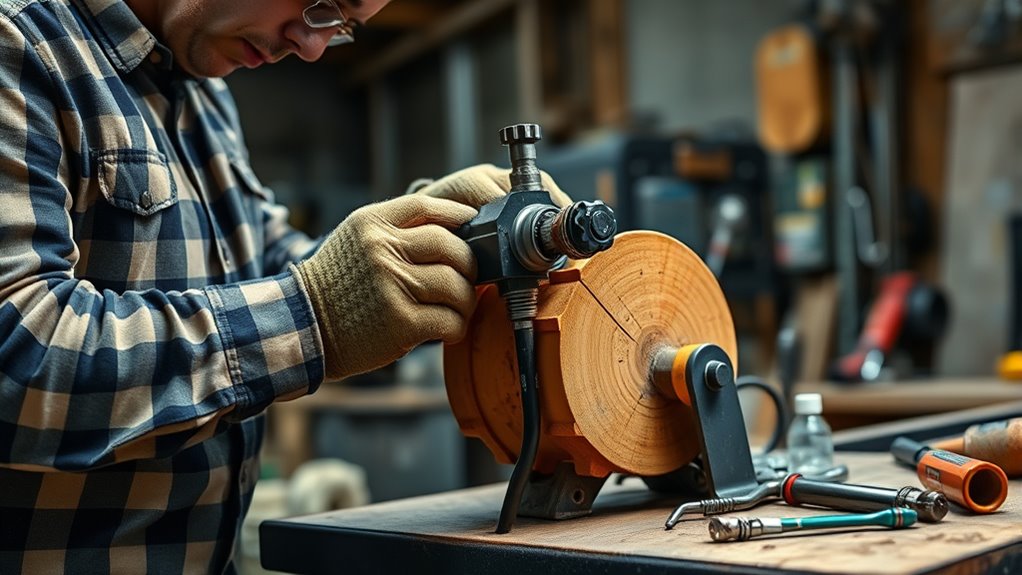
To keep your log splitter running smoothly, you should regularly check the hydraulic fluid levels and look for leaks. Inspect the control valves periodically to guarantee they function properly, and clean and lubricate moving parts to prevent wear. Performing these routine tasks helps prevent auto-return failures before they happen.
Regularly Check Hydraulic Fluid
Regularly checking the hydraulic fluid levels is essential to keep your log splitter functioning properly. Low or contaminated fluid can affect hydraulic pressure, leading to auto-return timing issues. By maintaining proper fluid levels, you ensure smooth operation and prevent auto-return failures.
To keep your system in top shape:
- Check fluid levels before each use and top off if needed
- Use the recommended hydraulic fluid to avoid contamination
- Look for signs of leaks or discoloration, which can impair hydraulic pressure
Maintaining clean, adequate hydraulic fluid helps your log splitter operate efficiently, reducing auto-return failures. Regular checks also help identify potential problems early, saving you time and money in repairs. Proper fluid management is a simple but vital step toward reliable auto-return performance.
Inspect Control Valves Periodically
Inspecting control valves periodically is essential for preventing auto-return failures and keeping your log splitter running smoothly. Regular checks help you spot issues with control valve calibration and ensure proper auto return timing. If the control valve isn’t calibrated correctly, the auto return might be delayed or won’t happen at all. Adjustments should be made promptly to maintain ideal performance. Use the table below to understand key ideas for inspection:
| Inspection Focus | What to Check | Result/Action |
|---|---|---|
| Control Valve Calibration | Verify calibration matches manufacturer specs | Recalibrate if necessary |
| Auto Return Timing | Ensure timing aligns with operation needs | Adjust control valve settings |
| Hydraulic Leaks | Look for leaks around valves | Repair leaks immediately |
| Debris and Obstructions | Clear debris blocking valve movement | Clean and clear obstructions |
| Wear and Damage | Inspect for wear or damage on components | Replace worn parts |
Regular inspections save costly repairs later.
Clean and Lubricate Moving Parts
Cleaning and lubricating moving parts is essential for maintaining your log splitter’s efficiency and preventing costly failures. Regularly check and clean components like the hydraulic fluid reservoir, control switches, and pivot points. Proper lubrication reduces friction and wear, ensuring smooth operation and reducing the risk of auto-return failures. Be sure to use the correct lubricants and keep hydraulic fluid levels topped off to prevent sticking or sluggish movement. Additionally, inspect control switches for dirt or corrosion, cleaning them carefully to maintain responsiveness. Well-maintained moving parts help your splitter function reliably and extend its lifespan.
- Inspect and clean control switches to prevent sticking
- Lubricate pivot points and moving joints regularly
- Check hydraulic fluid levels and replace if contaminated
Frequently Asked Questions
How Can I Manually Override the Auto-Return Function if It Fails?
When the auto-return function fails, you might wonder how to manually override it. First, consult your log splitter’s hydraulic troubleshooting guide, as procedures vary. Usually, you can locate a manual override valve or lever near the hydraulic system, allowing you to control the ram manually. Carefully operate this valve or lever to return the log splitter’s ram, ensuring safety and proper handling throughout the process.
What Are Signs of Electrical Issues Affecting the Auto-Return System?
You should watch for signs like the auto-return not activating or inconsistent movement, which suggest electrical issues. Conduct electrical diagnostics to check for blown fuses, loose wiring, or damaged switches. Use circuit troubleshooting to identify broken connections or faulty components that may disrupt the auto-return system. If you notice irregularities, address these electrical problems promptly to restore proper function and prevent further damage.
How Often Should I Perform Preventative Maintenance on My Log Splitter?
You should perform preventative maintenance on your log splitter at least once a year to keep it in top shape. Follow a regular maintenance schedule that includes inspecting hoses, checking oil levels, and cleaning parts. Use troubleshooting tips to identify early signs of wear or issues, like slow auto-return or strange noises. Regular upkeep helps prevent costly repairs and guarantees your splitter works efficiently when you need it most.
Can Improper Storage Affect the Auto-Return Mechanism’S Performance?
Imagine leaving your log splitter outdoors in freezing temperatures overnight. Poor storage conditions can cause moisture buildup and rust, which may hinder the auto-return mechanism’s performance over time. Proper storage conditions, like keeping your equipment in a dry, sheltered space, are essential for maintaining auto‑return functionality and extending equipment longevity. Neglecting storage can lead to corrosion and mechanical issues, ultimately reducing your splitter’s efficiency and lifespan.
What Safety Precautions Should I Take Before Attempting Repairs?
Before attempting repairs, you should prioritize safety. Wear protective gear like gloves and safety glasses to prevent injuries. Confirm the log splitter is turned off and unplugged to avoid electrical hazards. Check for any stored energy or pressure in the system, and release it safely. Keep your workspace clean and dry, and follow the manufacturer’s instructions carefully. Taking these precautions minimizes risks and keeps you safe during repairs.
Conclusion
By following these steps, you can effectively troubleshoot and fix your log splitter’s auto-return failures. Regular maintenance and inspections help prevent future issues, saving you time and money. Remember, keeping your equipment in top shape guarantees safer, more efficient operation. So, next time your splitter doesn’t return automatically, will you take the proactive approach to fix it or risk bigger problems down the line? Stay vigilant and keep your tools working smoothly.