
To replace the pull starter rope on a splitter engine, first remove the recoil assembly, then carefully unwind the old rope and inspect the spring and pulley. Thread a new rope through the pulley following the original path, knot it securely, and wind the spring into tension. Reassemble the recoil assembly correctly. If you keep going, you’ll discover key tips to make the process smoother and avoid common pitfalls.

Get business pricing on tools and workshop supplies
- Business-only prices and quantity discounts
- Tax-exempt purchasing
- Multiple users, one account, clear invoices
Key Takeaways
- Disconnect the spark plug and remove the starter assembly from the splitter engine.
- Carefully unwind and inspect the old recoil spring and pulley for damage or wear.
- Thread a new rope through the pulley and recoil spring, securing it with an appropriate knot.
- Reassemble the starter assembly, ensuring the pulley spins freely and the spring is properly tensioned.
- Test the pull starter on the engine to confirm smooth operation and proper reassembly.
Replacing a pull starter rope on splitter engines can seem intimidating, but with the right tools and steps, you can do it yourself. The key is to approach the task methodically, ensuring you follow proper maintenance tips and troubleshooting steps along the way. First, gather your tools—typically, you’ll need a screwdriver, pliers, a new starter rope, and possibly a socket wrench. Before starting, make sure the engine is off and cool, and disconnect the spark plug to prevent accidental starting. This safety step is essential to avoid injuries.
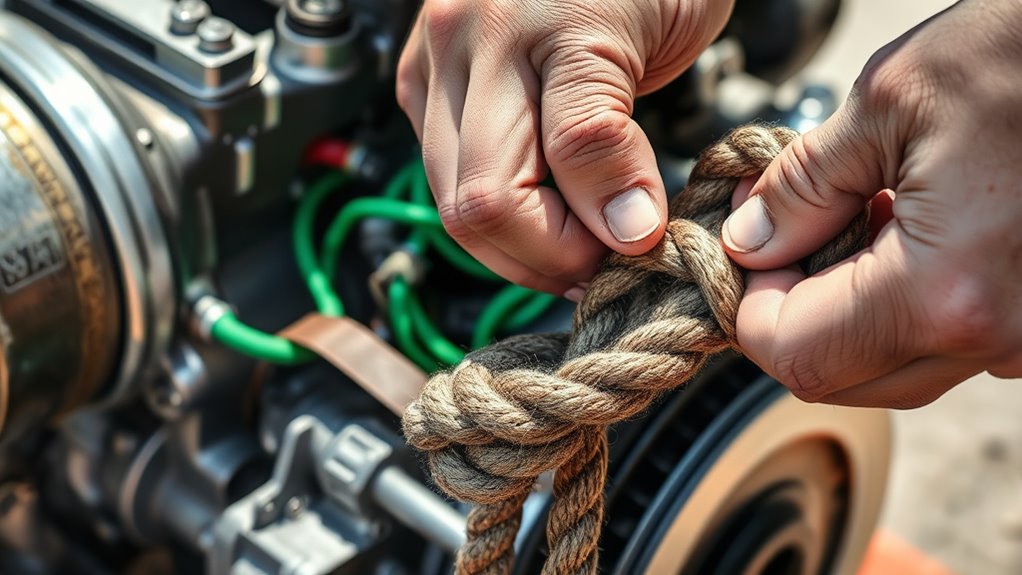
Begin by removing the starter assembly from the engine. Usually, this involves unscrewing bolts that hold the cover in place. Once exposed, carefully take note of how the recoil spring and pulley are arranged, as you’ll need to reassemble them correctly later. If the spring is wound tightly or seems damaged, replace it along with the rope. If not, you may only need to replace the rope. When removing the old rope, unwind it carefully, noting how it’s threaded through the pulley and recoil spring. This is an important troubleshooting step—if the rope is frayed or broken, it’s time for replacement.
Remove the starter assembly, note spring and pulley arrangement, and unwind the old rope carefully for replacement.
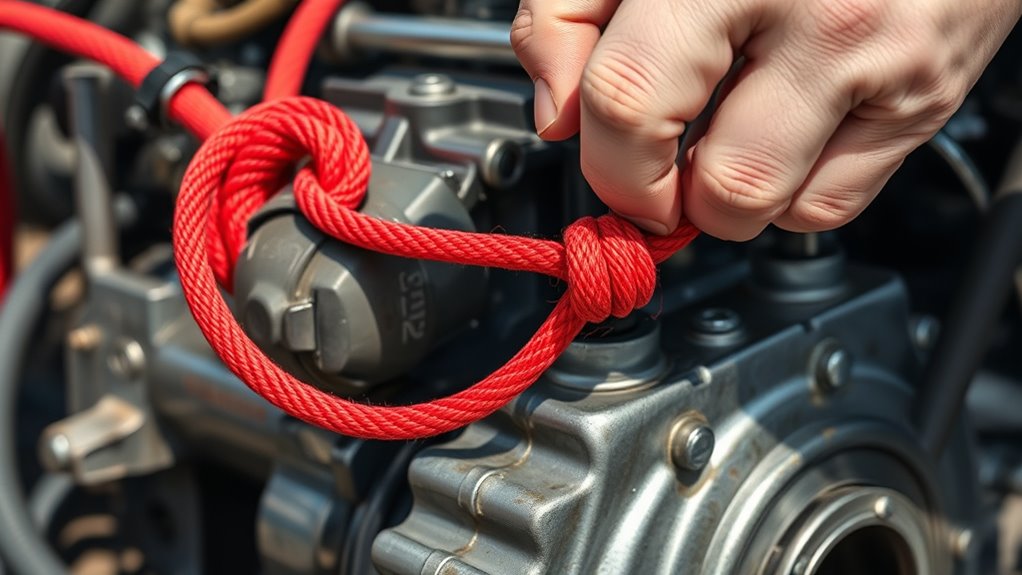
Next, cut a new length of rope, typically around 6 to 8 feet, depending on your engine’s specifications. Thread the new rope through the pulley and recoil spring, following the same path as the old one. Make sure it’s secured properly at the knot, and wind the spring back into tension as you reassemble the recoil assembly. During reassembly, double-check that the pulley spins freely and that the spring is wound correctly, which helps avoid future issues.
In addition, ensuring proper support hours and maintenance schedules can help prevent issues with your engine, as regular checks can identify wear early. Once everything is back in place, pull the starter cord gently to test the recoil action. If it pulls smoothly and retracts properly, you’ve done it correctly. If it sticks or feels loose, revisit your assembly, ensuring all parts are aligned and tensioned properly. This process is part of routine maintenance tips that can extend the life of your splitter engine and prevent unnecessary breakdowns. If problems persist, review troubleshooting steps such as checking for debris or corrosion in the pulley or spring mechanism.
Finally, reconnect the spark plug, start the engine, and confirm that the starter pulls smoothly and the engine runs properly. By following these steps carefully, you’ll save money and time, and keep your splitter running efficiently. Regular maintenance and troubleshooting are essential, especially if you notice the pull rope becoming frayed or difficult to operate, which signals it’s time for a replacement. With patience and precision, replacing a pull starter rope becomes a straightforward task that you can confidently handle yourself.
splitter engine pull starter rope replacement kit
As an affiliate, we earn on qualifying purchases.
As an affiliate, we earn on qualifying purchases.
Frequently Asked Questions
How Do I Prevent My Starter Rope From Breaking Again?
To prevent your starter rope from breaking again, focus on proper starter rope maintenance and avoid common causes of breakage. Make certain the rope isn’t frayed or worn before use, and check the recoil spring for proper tension. When pulling, do so smoothly without yanking or forcing it, and keep the pulley assembly clean to reduce stress on the rope. Regular inspections and gentle handling can considerably extend your rope’s lifespan.
Can I Replace the Pull Rope Myself Without Professional Help?
You can definitely do a DIY repair to replace the pull rope, and it’s simpler than you might think. Picture yourself carefully following safety tips—disconnecting the spark plug, wearing gloves, and working in a well-lit area. With patience, you can remove the recoil cover, thread the new rope properly, and reassemble. Just take your time, stay cautious, and you’ll have your splitter ready to go again without professional help.
What Safety Precautions Should I Take During Replacement?
You should wear safety gear like gloves and eye protection to prevent injuries during replacement. Make certain the engine is off, cool, and disconnect the spark plug wire for safety. Keep a fire extinguisher nearby for emergency preparedness. Work in a well-lit, clean area, and handle parts carefully to avoid pinches or cuts. Staying cautious helps prevent accidents and keeps you safe throughout the process.
How Long Does It Typically Take to Replace the Pull Rope?
Replacing a pull starter rope usually takes about 15 to 30 minutes, depending on your experience. During this process, consider the starter rope’s durability and choose a high-quality rope material to guarantee longevity. Carefully follow the steps to avoid damaging components. If you’re attentive and use the right materials, you’ll complete the replacement efficiently, ensuring your splitter engine starts smoothly and reliably each time.
Are There Different Types of Ropes Suitable for Replacement?
Imagine choosing the right thread to mend a torn sail; you need the proper rope materials for durability and fit. Similarly, when replacing your splitter engine’s pull rope, you’ll find different types—nylon, polypropylene, or Kevlar—each suited for specific needs. Use the correct replacement tools to guarantee a snug fit. So, yes, there are various ropes, and selecting the right one guarantees reliable starts and long-lasting performance.
Conclusion
Replacing a pull starter rope might seem tricky at first, but with patience, you’ll have your splitter engine humming smoothly again. Think of it as giving your machine a new heartbeat—restoring its power and life. Just like tuning a guitar, taking your time guarantees it plays perfectly. Soon, you’ll be back to splitting logs with ease, feeling confident that you’ve tackled the job like a pro. Your splitter’s ready to work—just like new!
Fall Picks
fall essentials
As an affiliate, we earn on qualifying purchases.