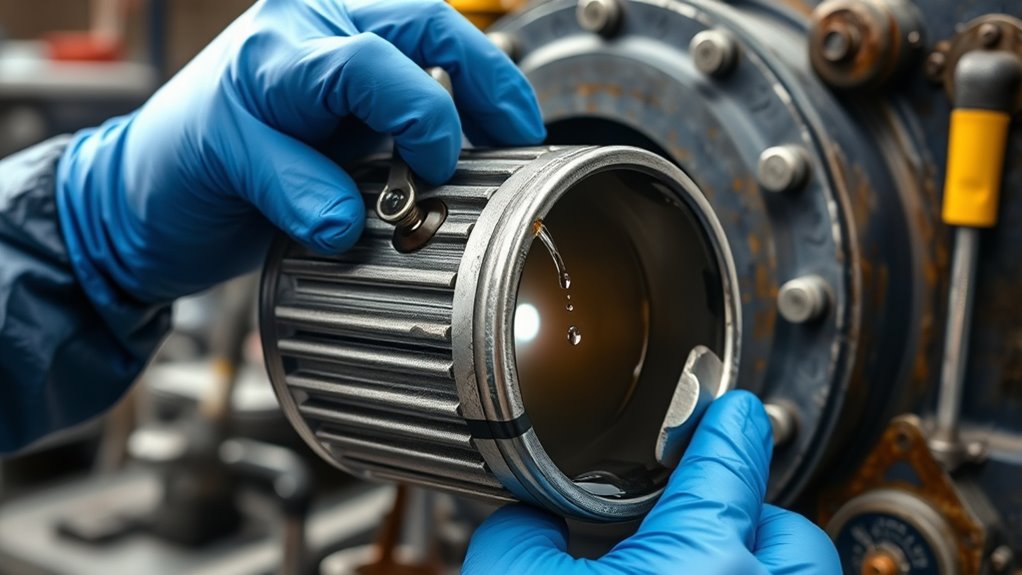

To replace your hydraulic filter, follow the manufacturer’s schedule or watch for signs like decreased pressure, increased heat, or system inefficiency. Before starting, turn off the system, relieve pressure, and gather safety gear. Remove the old filter carefully, clean the housing, then install the new filter securely. After restarting, check for leaks and monitor system performance. For detailed step-by-step guidance, continue exploring expert tips to keep your system running smoothly.

Get business pricing on tools and workshop supplies
- Business-only prices and quantity discounts
- Tax-exempt purchasing
- Multiple users, one account, clear invoices
Key Takeaways
- Replace the hydraulic filter according to the manufacturer’s schedule or after signs like pressure drops or increased heat.
- Turn off the system, relieve pressure, and prepare safety gear before removing the old filter.
- Carefully remove the old filter, clean the housing, and install the new filter securely to prevent leaks.
- Refill hydraulic fluid if needed, then start the system slowly and check for leaks or irregular operation.
- Regularly inspect and maintain filters to prevent system failure and extend equipment lifespan.

Replacing a hydraulic filter is a straightforward maintenance task that helps guarantee your hydraulic system runs smoothly. Proper filter maintenance is essential because a clean filter ensures that contaminants don’t circulate through your hydraulic system, which can cause premature wear or even system failure. When you stay on top of filter replacement, you maintain ideal performance and extend the lifespan of your equipment.
Replacing hydraulic filters ensures system longevity and smooth operation by preventing contamination and wear.
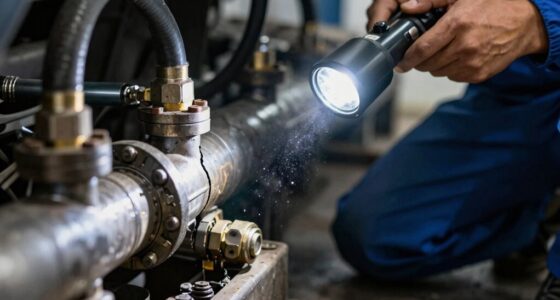
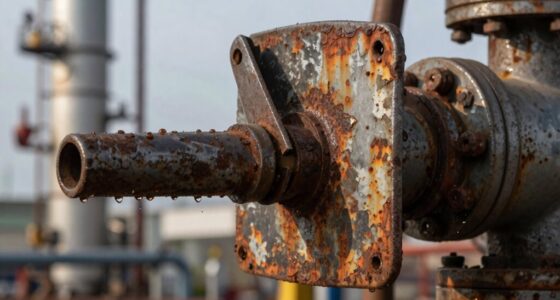
Knowing when to replace your hydraulic filter depends on several factors. Typically, manufacturers recommend changing the filter after a specific number of operating hours or according to a maintenance schedule outlined in your equipment manual. However, even if you follow these guidelines, you should also keep an eye out for signs indicating your filter might need replacement sooner. These include a drop in hydraulic system pressure, increased heat, or reduced system efficiency. If you notice these symptoms, it’s critical to inspect the filter and replace it if necessary to prevent potential damage.
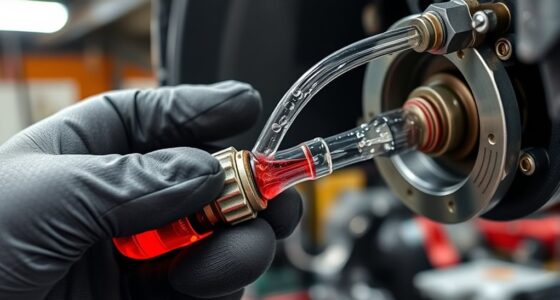
Before you start, confirm you have the correct replacement filter compatible with your hydraulic system. Wearing gloves and eye protection is advisable, as hydraulic fluid can be messy and sometimes hazardous. To replace the filter, first turn off your hydraulic system and relieve any pressure to avoid accidents. Locate the filter housing, which is usually positioned along the hydraulic lines or near the pump. Carefully remove the old filter by unscrewing or unclipping it, taking care not to spill fluid. It’s a good idea to have a container or absorbent material ready to catch any residual fluid.
Once the old filter is out, clean the filter housing thoroughly to remove any dirt, debris, or residual oil. Installing the new filter is straightforward—simply screw or clip it into place, following the manufacturer’s instructions. Double-check that it’s securely fitted to prevent leaks. After replacing the filter, refill any lost hydraulic fluid if necessary and start the system slowly to check for leaks or irregular operation. Observe how the system performs during the first few minutes; if everything runs smoothly, you’ve successfully completed the task.
Regular filter maintenance is essential for the health of your hydraulic system. It’s a simple step that prevents costly repairs down the line and keeps your equipment operating at peak efficiency. By making sure you replace your hydraulic filter at the right intervals, you help ensure your hydraulic system stays clean, reliable, and long-lasting. This not only saves you money but also minimizes downtime, making filter replacement a smart and necessary part of your overall maintenance routine. Additionally, understanding filter lifespan can help you plan replacements more effectively and avoid unnecessary failures.
hydraulic filter replacement kit
As an affiliate, we earn on qualifying purchases.
As an affiliate, we earn on qualifying purchases.
Frequently Asked Questions
Can I Replace a Hydraulic Filter Myself?
Yes, you can replace a hydraulic filter yourself if you have basic mechanical skills. Make sure to work with the hydraulic fluid at a safe level and use the correct replacement filter. During filter maintenance, disconnect the hydraulic system properly, remove the old filter, and install the new one securely. Always check for leaks and refill hydraulic fluid as needed to keep your equipment running smoothly.
What Are Signs of a Failing Hydraulic Filter?
Think of your hydraulic system as a delicate dance; when the filter fails, the rhythm falters. Signs include hydraulic fluid contamination, which turns clear fluid murky, and pressure gauge fluctuations, indicating inconsistent flow. If you notice these issues, it’s like a dancer stumbling—your system struggles to perform smoothly. Addressing these signs early keeps your machinery running seamlessly and prevents costly repairs down the line.
How Often Should Hydraulic Filters Be Checked?
You should check your hydraulic filters regularly as part of your filter maintenance routine, ideally every 100 to 200 hours of operation or monthly, whichever comes first. Keeping an eye on the filter’s condition helps prevent contamination and system failure. Regular inspections guarantee your hydraulic system stays efficient and reliable, allowing you to catch issues early and replace filters promptly when needed.
What Tools Are Needed for Filter Replacement?
Think of your tools as a trusted toolkit for a essential mission. You’ll need a wrench to loosen the filter, a drain pan to catch residual oil during filter removal, and gloves for safety. Once the filter is out, carefully dispose of the container to protect the environment. Keep these tools ready; they’re your allies in ensuring your hydraulic system runs smoothly and reliably.
Are There Any Safety Precautions During Filter Replacement?
Yes, you should always wear safety gear like gloves and goggles to protect yourself from hydraulic fluid. Be aware of hazards such as high-pressure fluid leaks or hot surfaces. Before starting, release system pressure and work in a well-ventilated area. Keep your workspace clean and use proper tools. Staying alert and following safety precautions guarantees you avoid injuries and handle the filter replacement safely.
Conclusion
Now, as you finish replacing your hydraulic filter, it’s almost poetic how the right timing can save you from costly repairs. Just like catching a small leak early prevents bigger messes, replacing your filter at the right moment keeps your machine running smoothly. So next time you’re working on your equipment, remember—sometimes, a simple change is all it takes to keep everything flowing seamlessly. After all, good maintenance often happens just when you least expect it.
Evergreen bestsellers Picks
bestsellers
As an affiliate, we earn on qualifying purchases.