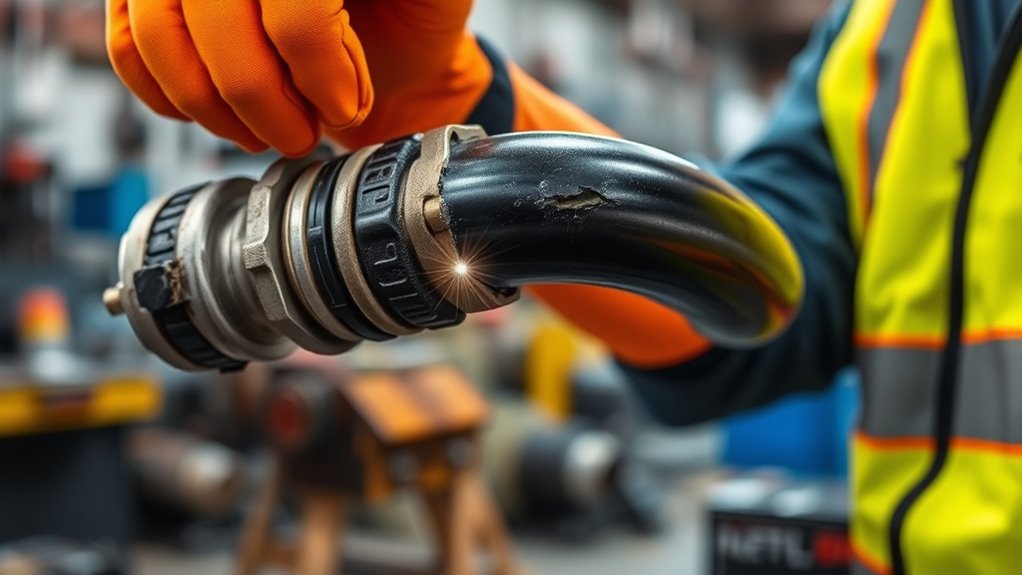

To replace a damaged hydraulic hose safely, first shut down the system, relieve pressure, and wear appropriate safety gear. Carefully disconnect fittings, catching any fluid that leaks, and inspect the connection points for damage. Choose a matching replacement hose and double-check fittings before installation. Slowly re-pressurize the system, watching for leaks and abnormal noises. Following these steps helps prevent injury and ensures proper operation—continue exploring to learn more about safe hydraulic hose replacement.
Key Takeaways
- Always depressurize and relieve hydraulic system pressure before disconnecting the hose.
- Wear appropriate PPE and handle fittings carefully to prevent fluid leaks and injuries.
- Match the replacement hose to original specifications and ensure fittings are clean and secure.
- Gradually restart the system, checking for leaks and abnormal noises before full operation.
- Perform regular inspections and maintenance to detect damage early and ensure safe, efficient operation.
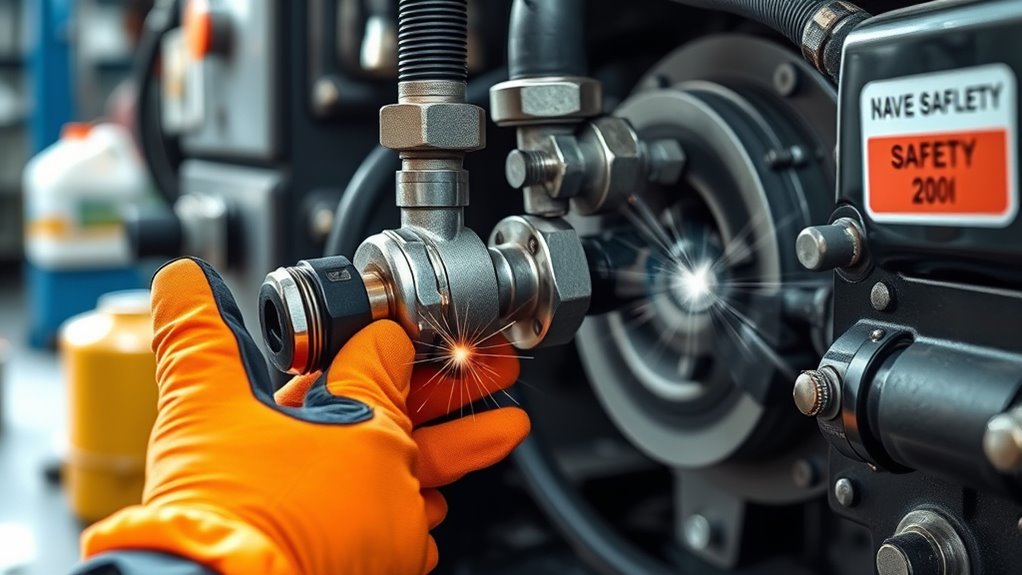
When a hydraulic hose becomes damaged, it’s essential to replace it promptly and safely to prevent leaks, equipment failure, or injury. Proper hydraulic system maintenance is crucial for ensuring your machinery operates reliably and efficiently. Regular inspections can help you spot worn or cracked hoses before they burst, saving you from costly downtime and potential hazards. Before starting the replacement process, gather the necessary tools and safety gear. Always wear personal protective equipment, including gloves, safety glasses, and protective clothing, to shield yourself from high-pressure fluid sprays or accidental contact with sharp edges. Remember, hydraulic fluid under pressure can cause serious injuries, so taking precautions is non-negotiable.
Begin by shutting down the equipment and relieving the hydraulic system pressure according to the manufacturer’s instructions. This step is vital to prevent fluid from unexpectedly escaping when disconnecting the hose. Use a pressure gauge or follow the system’s pressure release procedure carefully. Once the pressure is relieved, place a container or absorbent pads underneath the hose connection to catch any residual fluid that might leak out. Wearing your PPE, carefully loosen the fittings with the appropriate tools, turning counterclockwise to detach the damaged hose. Be prepared for some fluid to escape, even after depressurizing, so work slowly and cautiously.
When removing the defective hose, inspect the fittings and surrounding areas for damage or debris. Clean the connection points thoroughly to guarantee a proper seal when installing the new hose. Match the replacement hose precisely to the original specifications, including diameter, length, and pressure ratings. This guarantees ideal performance and safety. Before installing the new hose, double-check that all fittings and connectors are clean and free of dirt or corrosion. Carefully attach the new hose, tightening fittings securely but avoiding over-tightening, which can strip threads or damage components.
After installation, gradually restart the hydraulic system and monitor it closely. Look for leaks around the connections and listen for any abnormal noises. Re-pressurize the system slowly, checking for proper operation. Once you’re confident everything is sealed correctly, operate the equipment at low pressure to verify the repair before returning it to full working capacity. Throughout this process, prioritize safety, and never bypass any safety procedures. Regular hydraulic system maintenance, including timely hose replacements, not only extends the lifespan of your equipment but also helps maintain a safe working environment. Proper use of personal protective equipment during every step is essential to prevent injuries and guarantee your safety. Additionally, understanding the importance of best practices for hydraulic hose replacement can further enhance safety and efficiency in your maintenance routines.

2-Piece 16Feet Universal Replacement Hydraulic Steering Hose Kit with Stainless Steel Quick Connector Compatible with Seastar Hydraulic Steering System Teleflex Steering Hose
- Universal Compatibility: Fits most boat hydraulic steering systems
- Extended Length: 2-piece 16-foot hydraulic hose kit
- Easy Installation: Includes quick connectors on both ends
As an affiliate, we earn on qualifying purchases.
As an affiliate, we earn on qualifying purchases.
Frequently Asked Questions
What Are the Signs of a Failing Hydraulic Hose?
You’ll notice signs of a failing hydraulic hose through reduced hose durability, such as cracks, bulges, or frayed areas. Leak detection is vital—look for fluid leaks, spray, or puddles around the hose. Unusual noises or a drop in hydraulic system performance also indicate issues. Regular inspections help catch these signs early, preventing costly failures and ensuring your equipment remains safe and efficient.
How Often Should Hydraulic Hoses Be Inspected?
Think of your hydraulic hoses as the veins of your machinery; they need regular checkups. You should inspect them at least every 3 to 6 months, depending on hose material and usage. Look for signs of wear, leaks, or cracks during these inspections. Regularly checking guarantees safety, prevents failures, and extends hose lifespan. Adjust inspection frequency if your equipment operates in harsh conditions or heavy workloads.
Can I Replace a Hydraulic Hose Myself?
Yes, you can replace a hydraulic hose yourself if you have proper training and follow safety procedures. Inspect for hydraulic fluid leaks and assess hose durability beforehand. Make sure to depressurize the system and wear protective gear. Carefully disconnect the damaged hose, ensuring no spills. Using the correct replacement hose and fittings is essential to prevent future leaks. Always follow manufacturer instructions and safety guidelines to avoid accidents.
What Safety Gear Is Recommended During Replacement?
You should wear personal protective equipment like gloves, safety goggles, and a long-sleeved shirt to protect against hydraulic fluid spills and high-pressure spray. Use spill containment measures such as drip trays or absorbent pads to prevent environmental contamination. make certain the area is well-ventilated, and keep a fire extinguisher nearby. These precautions keep you safe and help manage hydraulic fluid leaks effectively during hose replacement.
How Do I Dispose of Old Hydraulic Hoses Properly?
Imagine the old hydraulic hose as a piece of scrap metal ready for a fresh start. You should first drain any remaining hydraulic fluid into a proper container. Then, take advantage of hose recycling programs or hydraulic fluid recycling centers to dispose of it responsibly. Avoid landfills and never burn it. Proper disposal helps protect the environment and guarantees the materials are reused safely and efficiently.
Conclusion
Remember, replacing a damaged hydraulic hose is like tending to a delicate garden—attention and care are key. Always follow safety steps, wear proper gear, and double-check connections before use. By handling it carefully, you prevent potential hazards from erupting like a volcano. With patience and precision, you’ll keep your equipment running smoothly and your workspace safe. Think of it as giving your machinery a healthy heartbeat—strong, reliable, and ready to perform.