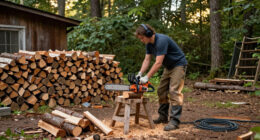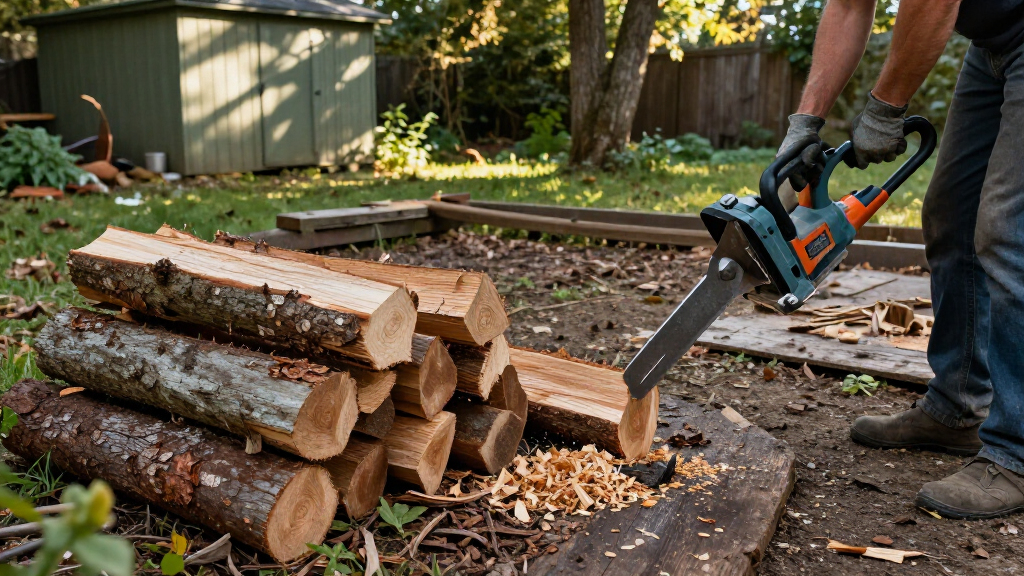
Choosing an electric log splitter is mainly a question of what wood you split and how much of it you process. A compact 5-ton model is aimed at occasional batches of smaller, relatively straight-grained rounds; a heavy-duty 10-ton model offers more force for larger, knotty, or tougher pieces and sustained work. The higher-tonnage machine is not automatically the better buy: it can cost more, take up more room, and be harder to move. Choose the 5-ton class for manageable firewood and convenience; choose 10 tons when the wood routinely challenges a smaller splitter.

Get business pricing on tools and workshop supplies
- Business-only prices and quantity discounts
- Tax-exempt purchasing
- Multiple users, one account, clear invoices

YARDMAX YS0650 6.5 Ton Electric Log Splitter
- ✔ Brand: YARDMAX
- ✔ Model: YS0650
- ✔ Splitting force: 6.5 tons

PowerSmart Electric Log Splitter, 6.5-Ton, 15 Amp, Horizontal Full Beam Design
- ✔ Splitting force: 6.5 tons
- ✔ Motor: 15-amp induction motor
- ✔ Motor speed: 3,450 rpm

7-Ton Electric Log Splitter with Foot Pedal and 4-Way Cross Wedge, 3HP Motor, Fits 22" Logs (Plus Version)
- ✔ Splitting force: 7 tons
- ✔ Motor: 3 HP
- ✔ Hydraulic pressure: 28 MPa (4,000+ PSI)
These are broad machine classes, not standardized guarantees of performance. Actual capacity depends on the design, cycle time, motor, beam orientation, and the species and condition of the wood. Check each model’s rated log dimensions and operating instructions before buying.
At a Glance
| Criteria | Compact 5-ton electric log splitter | Heavy-duty 10-ton electric log splitter | Winner |
|---|---|---|---|
| Splitting force and difficult wood | About 5 tons; suited to easier, straight-grained rounds | About 10 tons; better suited to larger or tougher rounds | B |
| Typical log size | Generally smaller rounds, within the specific model’s rating | Often accommodates larger logs, subject to the model’s stated limit | B |
| Work volume and pace | Best for occasional, limited batches | Better fit for recurring or heavier workloads, though cycle time still matters | B |
| Portability and storage | Usually lighter and easier to store or reposition | Typically heavier and needs more storage space | A |
| Power and setup | Often plugs into a standard household outlet; check the rating | Usually electric, but motor draw and circuit needs vary by model | Depends |
| Purchase value | Lower upfront cost when the workload is modest | Higher cost can pay off when extra force prevents repeated stalls or manual work | Depends |
YARDMAX YS0650 6.5 Ton Electric Log Splitter
The YARDMAX YS0650 is our most balanced choice for a household firewood supply. Its 6.5 tons of ram force matches the PowerSmart’s stated force, while its 20.5-inch maximum log length is half an inch beyond that model’s limit. The 10-inch diameter capacity gives buyers a clear size boundary for planning what they can split.Compared with the 7-ton Plus Version, YARDMAX gives up some force and a longer bed, but its listed setup is easier to assess: the description centers on the core job of splitting logs without gas or fumes. We would choose it for routine home use where those dimensions cover the wood on hand. The tradeoff is that the supplied details do not state cycle time, wheels, or specialty wedges, so buyers seeking a defined pace or easier repositioning have stronger reasons to consider the alternatives. Like the other electric models here, it also needs outlet access.
Pros:
- 6.5 tons of stated ram force for home firewood splitting
- Accepts logs up to 20.5 inches long
- Handles logs up to 10 inches in diameter
- Electric power avoids gas and exhaust fumes during operation
Cons:
- Requires access to an electrical outlet
- No cycle time or transport features are specified in the supplied details
Best for: Home firewood users who want a straightforward 6.5-ton electric splitter with capacity for logs up to 20.5 inches long.
Not ideal for: Buyers who need a stated fast cycle, a four-way wedge, or freedom to work away from an electrical outlet.
Bottom line: We recommend the YARDMAX as the balanced home pick when its 20.5-inch capacity fits the wood you need to split.
“We recommend the YARDMAX as the balanced home pick when its 20.5-inch capacity fits the wood you need to split.”
PowerSmart Electric Log Splitter, 6.5-Ton, 15 Amp, Horizontal Full Beam Design
PowerSmart is the pick for buyers who value a more fully specified home-use setup. Its 15-amp induction motor, 6.5-ton hydraulic system and stated 20-second cycle time give more information about the working rhythm than we get for the YARDMAX. Wide rear wheels and a handle also make it possible to move the 108-pound unit around a property, although the weight means “portable” still involves effort.Its limits matter. The beam works in the horizontal position only, and the product is described as suitable for light-duty or home use. Its 20-inch maximum log length is slightly shorter than YARDMAX’s 20.5-inch limit and well below the 7-ton model’s 22 inches. We would favor PowerSmart for typical domestic splitting where the stated cycle and warranty are useful buying details; we would skip it if we need multiple splitting positions or routinely process larger, tougher rounds. The two-year warranty is a concrete support advantage, but it does not change the stated workload limits.
Pros:
- 6.5-ton hydraulic splitting system
- Stated 20-second cycle time
- Rear wheels and handle aid movement around the property
- Two-year warranty
Cons:
- Horizontal-only beam limits working positions
- 108-pound weight can make moving it cumbersome
- Specified for light-duty or home use
Best for: Homeowners splitting lighter-duty firewood who want a stated cycle time, transport wheels and a two-year warranty.
Not ideal for: People who need vertical splitting positions, frequent heavy-duty use or capacity beyond 20-inch logs.
Bottom line: We would choose PowerSmart for a light home workload where the cycle-time specification and warranty matter more than larger log capacity.
“We would choose PowerSmart for a light home workload where the cycle-time specification and warranty matter more than larger log capacity.”
7-Ton Electric Log Splitter with Foot Pedal and 4-Way Cross Wedge, 3HP Motor, Fits 22" Logs (Plus Version)
The Plus Version has the widest stated working range in this lineup. Its 7 tons of force and 22-inch log capacity give it an edge over both 6.5-ton models when rounds are longer. The supplied 18-second cycle is also the shortest stated here, and the tool-free four-way cross wedge can split a round into multiple pieces in one pass. That combination makes this the most feature-rich option for buyers who process varied firewood sizes.The foot pedal is designed to leave hands available for positioning wood, potentially reducing bending and making the workflow more convenient. Still, the supplied description does not provide a weight, motor speed or warranty, so we have less information for comparing ownership and handling than with PowerSmart. Its reinforced steel frame and rugged wheels suggest a substantial unit, and the product description itself cautions that electric power may struggle with very large or extremely knotty hardwood. We’d pick it over YARDMAX when the extra log length and wedge versatility are useful; for straightforward, occasional splitting, those additions may not justify the bulk.
Pros:
- 7 tons of stated splitting force
- Fits logs up to 22 inches long
- Includes standard and tool-free 4-way cross wedges
- Stated 18-second cycle with automatic ram return
Cons:
- May struggle with very large or extremely knotty hardwood
- Heavy-duty frame may be bulky despite storage-oriented design
- Weight and warranty are not specified in the supplied details
Best for: Buyers handling logs up to 22 inches who want a second wedge option and a stated 18-second cycle.
Not ideal for: People who need a compact, light unit, detailed warranty information, or a splitter for very large and knotty hardwood.
Bottom line: We’d choose the Plus Version when its longer bed and cross wedge solve real workload needs, while accounting for its likely bulk and electric-power limits.
“We’d choose the Plus Version when its longer bed and cross wedge solve real workload needs, while accounting for its likely bulk and electric-power limits.”
As an Amazon Associate we earn from qualifying purchases.
Key Differences
The most meaningful difference is reserve force. A 5-ton splitter can be a practical choice for smaller, dry or straight-grained rounds, but knots, twisted grain, and larger diameters can slow it down or exceed its limits. A 10-ton model has more capacity for difficult pieces, so it is less likely to leave the user reaching for a maul or a different machine. That advantage matters only if the wood presents those challenges; tonnage alone does not promise faster cycles or a particular log size.
Convenience and value pull the other way. The lower-force unit is generally easier to move and store, and its lower purchase price makes sense for occasional household firewood. The stronger model asks for more money, space, and handling effort, but can earn that premium for regular splitting or a supply with mixed, knotty rounds. Both remain electric options, so confirm the specific model’s outlet and circuit requirements and plan to work where its cord can safely reach.
Detailed Comparison
Splitting force and difficult wood (Heavy-duty 10-ton electric log splitter wins — major)
The 10-ton class wins by a moderate to major margin when rounds are knotty, twisted, or relatively large. Its extra force provides more headroom and can reduce interruptions from pieces a smaller unit cannot split. For easy, straight-grained wood, the practical gap may be minor: buying more force will not necessarily make each cycle faster.
Typical log size (Heavy-duty 10-ton electric log splitter wins — moderate)
The 10-ton class usually wins moderately because higher-force machines are often designed around larger rounds. That does not set a universal diameter limit: use the model’s published maximum dimensions, and account for species and grain. A 5-ton unit remains adequate when rounds are consistently within its rating.
Work volume and pace (moderate difference)
The 10-ton class is the better fit for recurring, heavier batches, a moderate advantage when it avoids stalls or hand-splitting difficult pieces. Tonnage is not a speed rating, however. Compare cycle time, return speed, and duty guidance on the actual models; for a small seasonal pile, the 5-ton unit may complete the job without its larger counterpart’s added cost.
Portability and storage (Compact 5-ton electric log splitter wins — moderate)
The 5-ton class wins by a moderate margin in typical home use because compact machines are generally lighter and easier to put away. A 10-ton model can be awkward to reposition and may need a dedicated storage spot. Check weight, handles, wheels, and whether the machine is designed to be moved before treating either class as portable.
Power and setup (minor difference)
Neither class wins across the board. Both use electricity, avoiding the fuel and exhaust associated with a gas splitter, but motor requirements vary. A stronger model may draw more power; a standard outlet is not guaranteed to suit every unit. Check voltage, amperage, extension-cord guidance, and circuit requirements before purchase. The difference is model-specific, so this is a minor class-level distinction.
Purchase value (moderate difference)
Value depends on the wood supply. The 5-ton class wins for occasional splitting of easy rounds because a higher price buys little benefit if extra force goes unused. The 10-ton class offers better value when a weaker unit would leave frequent stalls, manual rework, or an upgrade on the table. Compare current prices alongside warranty, cycle time, log limits, and expected workload.
Compact 5-ton electric log splitter: Pros and Cons
Pros:
- Lower purchase price for occasional use
- Typically easier to move and store
- A practical match for smaller, easier rounds within its rating
Cons:
- Less reserve force for knots, twisted grain, and larger pieces
- May stall or leave some rounds for manual splitting
- Can be a false saving if the regular wood supply exceeds its capacity
Heavy-duty 10-ton electric log splitter: Pros and Cons
Pros:
- More force for tougher and larger rounds within the model’s limits
- Better suited to recurring or heavier splitting workloads
- Can reduce the need to finish difficult pieces by hand
Cons:
- Higher purchase cost
- Typically heavier and more demanding to store
- Extra force may go unused with small, easy batches; electric requirements still need checking
Who Should Choose What
Choose Compact 5-ton electric log splitter if:
- You split a modest amount of mostly straight-grained firewood each season.
- Your rounds fit the unit’s stated size limits and do not routinely stall smaller machines.
- Low purchase cost and easy storage matter more than handling difficult wood.
Choose Heavy-duty 10-ton electric log splitter if:
- Your supply regularly includes knotty, twisted, or larger rounds within the model’s capacity.
- You split larger batches often enough that repeated stalls or manual splitting are a burden.
- The higher price is justified by usable extra force, and you have room and suitable power for the unit.
Skip both if: Your wood routinely exceeds the models’ stated log limits, you need high-volume commercial output, or you need to split away from a suitable power source; compare a larger-capacity or gas-powered machine instead.
Value for Money
Paying more for a 10-ton electric splitter is worthwhile when its added force will be used regularly. If your pile contains difficult rounds and you split often, fewer stalled attempts and less manual finishing can justify the higher purchase price. If you process a small quantity of easy wood, a 5-ton model is usually better value: money spent on unused capacity does not improve the fit. Compare complete model specifications and warranty as well as tonnage, since cycle speed and log limits affect the work you can actually finish.
Final Verdict
For most homeowners with a small, predictable supply of easy firewood, choose a compact 5-ton electric splitter: it costs less, is easier to store, and handles that job without paying for unused force. Choose a 10-ton model when tough or larger rounds are a regular part of the workload and you will use the added capacity enough to justify its price and bulk. The deciding factor is not the number on the label alone; it is whether your actual wood routinely exceeds what the smaller model can split. If neither model’s published capacity covers your rounds or work volume, move up to a suitable larger machine.
Frequently Asked Questions
Is a 10-ton electric splitter twice as powerful as a 5-ton model?
Its rated splitting force is about twice as high, but that does not make it twice as fast or capable of twice the log diameter. Design, cycle time, wood species, moisture, and grain all affect results.
Can a 5-ton electric splitter handle hardwood?
It can handle some hardwood rounds if they are within the machine’s size rating and have manageable grain. Dense, knotted, or twisted pieces may stall it, so check the model’s specifications and expect performance to vary by log.
Is a 10-ton model worth the extra cost?
Yes when you regularly split larger or difficult rounds and the added force reduces stalled work or hand splitting. For small batches of easy wood, the lower-cost 5-ton class is usually the better value.
Do electric log splitters need a special outlet?
Requirements vary. Check the exact model’s voltage, amperage, and circuit instructions, including any limits on extension cords. Do not assume a household outlet will suit every splitter.
Fall yard work Picks
leaf blowers
As an affiliate, we earn on qualifying purchases.