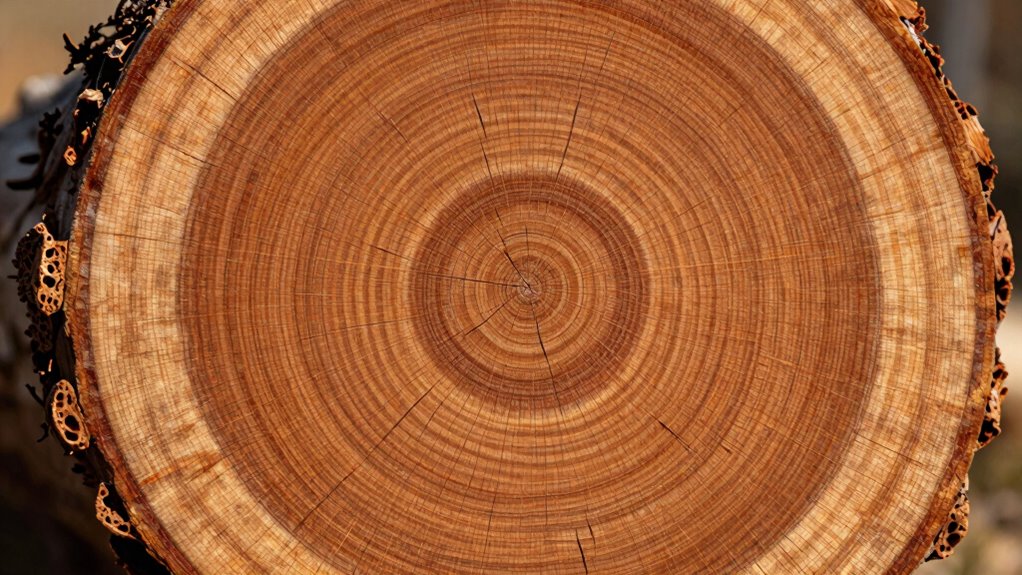

Before swinging a maul, examine the end grain closely. Look for concentric rings to identify plain-sawn wood, or irregular swirls for quarter-sawn or rift-sawn types. Notice grain direction—long, straight lines suggest fibers run parallel, while circular shapes indicate radial orientation. Recognizing these patterns helps you understand how the wood was cut, its stability, and behavior during chopping. If you keep exploring, you’ll discover even more techniques to improve your woodworking approach.

Get business pricing on tools and workshop supplies
- Business-only prices and quantity discounts
- Tax-exempt purchasing
- Multiple users, one account, clear invoices
Key Takeaways
- Examine the pattern for concentric rings indicating plain-sawn, or irregular shapes for quarter-sawn wood.
- Identify whether the grain shows straight lines or swirling patterns to determine cut type.
- Look for radial or circular shapes to assess fiber orientation and stability.
- Recognize tight, even rings as a sign of uniform grain, which affects strength.
- Use visual cues to anticipate how the wood will respond to tools, reducing mistakes.
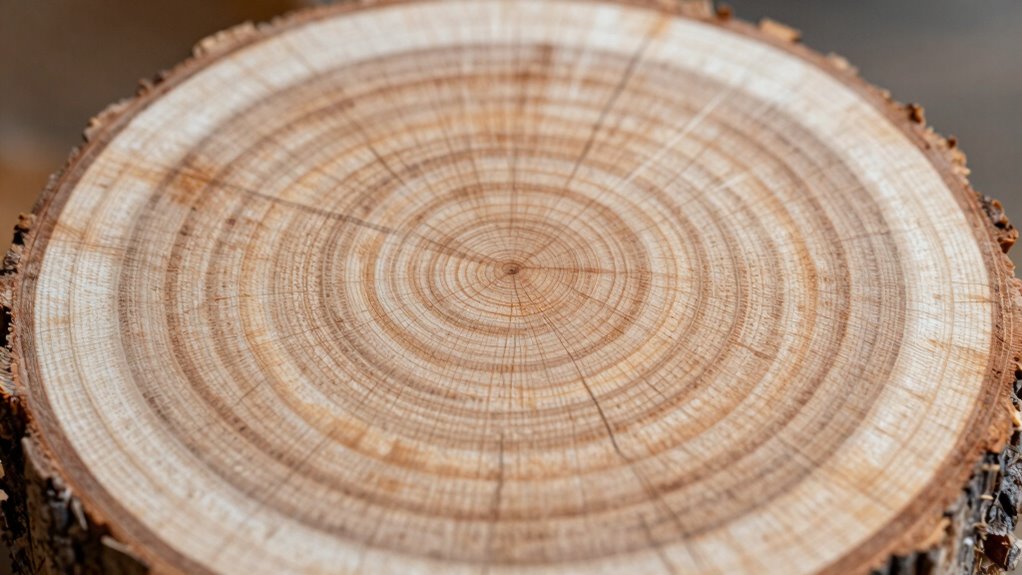
Ever wondered how to interpret the patterns on the end grain of wood? Understanding these patterns is essential before you ever swing a maul or pick up a chisel. When you look at the end grain, you’re seeing the cross-section of the wood fibers, revealing vital clues about grain orientation and the overall structure of the wood. These patterns tell you how the wood was cut and how it will behave during processing or in your finished project. Recognizing the grain patterns can also help you determine the type of cut used, which influences how the wood responds to tools. The first thing to notice is the wood grain patterns themselves. They can appear as concentric rings, straight lines, or irregular shapes, depending on how the tree was cut. For instance, if the grain forms tight, even rings, you’re likely looking at plain-sawn or flat-sawn wood. These patterns tend to be more uniform and are often easier to work with because the grain runs relatively straight across the surface. Conversely, if the patterns are more chaotic with irregular lines or swirls, you might be dealing with quarter-sawn or rift-sawn wood, which can be more stable and have different visual qualities. Additionally, understanding grain orientation is crucial because it affects how the wood will respond to different tools and techniques. This understanding can also help you anticipate potential challenges such as splintering or uneven cuts, ensuring a smoother woodworking process. Next, pay attention to the grain orientation. It’s not just about how the pattern looks but also about understanding how the fibers run through the wood. Grain orientation greatly influences the wood’s strength, stability, and how it responds to cutting or carving. If the grain runs parallel to the surface of the end grain, you’ll notice a pattern of long, straight lines. This indicates a consistent grain direction, which is ideal for certain woodworking techniques. When the grain appears as a series of small, circular or oval shapes, it suggests that the fibers are oriented radially, often seen in the early growth rings. Recognizing this helps you anticipate how the wood will behave when you work on it—whether it’ll split, chip, or cut smoothly. A thorough understanding of grain structure can also help prevent mistakes that might lead to splintering or uneven cuts.
Products Worth Considering

Roborock Qrevo 2 Pro Robot Vacuum and Mop, 20,000 Pa Suction

Samsung 55-Inch M80H Series 4K Mini LED Smart TV (2026 Model)

Shark Matrix Plus 2-in-1 Robot Vacuum and Mop with 60-Day Self-Emptying Base
As an affiliate, we earn on qualifying purchases.
Frequently Asked Questions
What Tools Are Best for Examining End Grain Closely?
You should use a magnifying glass or a jeweler’s loupe to examine end grain closely. These tools help you see grain texture and color variation in detail, revealing the wood’s growth rings and fiber patterns. A sharp chisel or a razor blade can also help gently scrape the surface for a clearer view. With these tools, you gain a better understanding of the wood’s structure before making any cuts.
How Does Moisture Content Affect End Grain Appearance?
Moisture content considerably affects end grain appearance because moisture variation causes the grain to swell or shrink, leading to grain distortion. When wood is too moist, the end grain may appear darker, swollen, or uneven, making it harder to interpret. Conversely, dry wood shows clearer, more defined grain patterns. Monitoring moisture levels helps you predict how the grain will look and behave, ensuring better decisions when working with different types of wood.
Can End Grain Patterns Predict Wood Strength?
Yes, end grain patterns can help predict wood strength because grain orientation influences a piece’s durability. Tight, straight grain typically indicates stronger wood, while irregular or wavy patterns suggest weaknesses. By examining the visual texture of the end grain, you can assess potential stress points. Recognizing these patterns allows you to select wood with the appropriate strength for your project, ensuring better performance and longevity.
Are Certain Wood Species Easier to Read Than Others?
Yes, some species are easier to read because of their distinct grain contrast and consistent patterns. For example, oak and maple have clear, bold grain lines that stand out, making it simpler to interpret end grain. In contrast, softer woods like pine may have more subtle grain variation, making reading more challenging. Understanding species variation helps you anticipate how the grain will appear, improving your ability to read end grain accurately before swinging a maul.
How Does Age Influence End Grain Visibility?
You’ll notice that older wood often shows more distinct end grain patterns because of age-related grain changes. As trees age, seasonal growth patterns become more pronounced, creating clearer, more intricate markings. This increased visibility helps you identify growth rings and grain direction more easily. By understanding these age-related variations, you can better assess the wood’s strength and suitability for your project before you even start swinging your maul.
Conclusion
So, next time you stare at a block of end grain, remember—you’re about to become the Picasso of woodworking, painting pictures with your axe. Ignore the grain’s sneaky whispers; don’t let it fool you into a splintered disaster. With a keen eye and a little patience, you’ll turn that raw, chaotic mess into a masterpiece, proving that reading end grain isn’t just a skill—it’s a secret handshake into the elite club of wood whisperers.