The ideal firewood size depends on your needs—larger logs burn longer and are great for sustained heat, while smaller splits ignite faster and are easier to handle. For efficient burning and quick startups, aim for wood around 16-18 inches long and 3-6 inches in diameter. Properly split and stored logs dry faster and burn more evenly. Keep exploring to discover how to choose the best size for your fireplace or stove, ensuring *perfect* warmth and convenience.
Key Takeaways
- Optimal firewood size depends on your heating needs: larger logs for long-lasting fires, smaller splits for quick ignition.
- Commonly recommended sizes are 16-18 inches in length and 3-6 inches in diameter for versatility.
- Proper splitting techniques ensure even drying and efficient burning, regardless of size.
- Smaller pieces are easier to handle, store, and light, ideal for frequent or quick fires.
- Balancing size with storage and handling considerations maximizes firewood efficiency and convenience.

The debate over firewood size has sparked passionate opinions among campers, homeowners, and woodworkers alike. Everyone seems to have a strong preference, whether they favor large logs or smaller splits, but the truth is, the ideal size depends on your specific needs and setup. When it comes to firewood storage, size plays a vital role. Larger logs might take up more space and require more effort to handle, but they burn longer and produce more heat. Smaller pieces are easier to stack and manage, making storage more efficient, especially if you’re short on space.
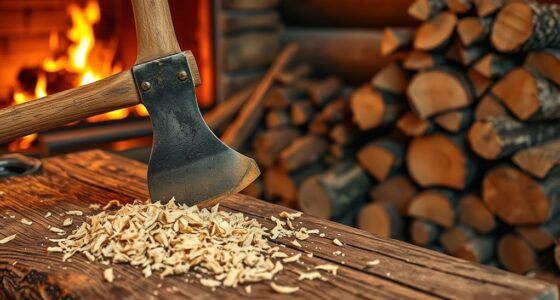
If you’re trying to figure out the best firewood size for your setup, consider how you’ll be splitting your wood. Splitting techniques directly influence the size of your firewood pieces. For example, if you use a hydraulic splitter or traditional axe, you can control the size more precisely. Many woodworkers and seasoned campers prefer splitting logs into manageable chunks—roughly 16 to 18 inches long and about 3 to 6 inches in diameter—since these sizes are versatile for different types of fires. Smaller splits tend to ignite faster and burn more evenly, which is advantageous if you’re trying to get a quick fire going or maintain a steady heat.
However, larger logs have their perks too. If you’re building a long-lasting fire, especially in colder months, bigger pieces can sustain the burn for hours without needing frequent tending. But keep in mind, larger logs take longer to dry and season properly, which affects their burning efficiency and creates more work in your firewood storage process. Proper splitting techniques can help you optimize your firewood’s readiness; splitting wood into consistent sizes ensures they dry evenly and burn efficiently. Additionally, understanding how to season firewood properly can significantly improve burning performance and reduce smoke.
For your firewood storage, stacking logs carefully and keeping them off the ground helps prevent moisture absorption and pests. The size of your firewood influences your stacking approach, since smaller pieces can be tightly packed, while larger logs need more space and support. If you’re aiming for easy handling and quick lighting, go for smaller splits that are uniform and easy to grab. But if you prioritize longer-lasting fires and less frequent tending, larger pieces, split to manageable sizes, are your best bet.
In the end, the right size is about balancing convenience, efficiency, and your specific needs. Proper splitting techniques can make all the difference, ensuring your firewood is easy to store, dry, and burn, no matter what size you choose.
Frequently Asked Questions
How Does Wood Size Affect Burning Efficiency?
You’ll burn wood more efficiently when it’s properly sized, as smaller pieces ignite faster and produce less smoke. Larger logs take longer to dry and often hold more moisture content, reducing heat output. To maximize efficiency, split wood into appropriate sizes and store it using proper methods like stacking in a dry, well-ventilated area. This minimizes moisture content and guarantees quicker, cleaner, and more efficient burning.
What Tools Are Best for Splitting Different Wood Sizes?
You should use a splitting maul or an axe for smaller to medium wood sizes, as they give you control and power. For larger logs, a hydraulic or gas-powered splitter works best, making the job safer and quicker. Always wear safety gear, keep your wood stored properly to prevent accidents, and follow safety precautions like clearing the area and ensuring a stable stance before splitting.
Can Improper-Sized Firewood Cause Chimney Issues?
If you use improper-sized firewood, you risk causing chimney blockages and creosote buildup. Small or uneven splits don’t burn efficiently, leading to more soot and creosote accumulating inside your chimney. Over time, this buildup can restrict airflow and increase fire hazards. To avoid these issues, always split your firewood to the right size, ensuring a cleaner burn, better airflow, and a safer chimney.
Is There an Ideal Size for Seasoned Versus Green Wood?
You’ll find that a slightly smaller size works best, especially for seasoned wood, since it stacks more efficiently in your outdoor firewood storage and burns more evenly. Green wood, being a little chunkier, tends to hold moisture longer, so splitting it into medium-sized pieces helps it dry quicker. This balance guarantees your fire burns cleanly, reduces creosote buildup, and keeps your chimney happy, while optimizing your outdoor firewood setup.
How Does Wood Size Influence Heating Time?
Smaller wood pieces heat faster because they have less mass, allowing heat to penetrate quickly. When you choose smaller splits, the wood’s density and moisture content matter more; denser, dry wood burns efficiently, producing consistent heat. Larger logs take longer to heat through due to higher moisture content and density, which slows the transfer of heat. For quick heating, opt for smaller, well-seasoned splits with low moisture content.
Conclusion
So, you see, settling the size squabble starts with simple science and your stove’s specifics. By balancing burnability, bulk, and best-fit, you can confidently choose the correct cut. Don’t dwell on the division or dwell in doubt—deliberate, decide, and deliver the desired warmth. Remember, firewood finesse fosters fire-fighting fun and forest-friendly fun. Find your perfect piece, and fire up with confidence, clarity, and comfort!