
When splitting firewood for a fireplace, aim for larger chunks (4-6 inches) that burn longer and create cozy flames, while for a wood stove, opt for smaller, uniform pieces (2-3 inches) to ignite quickly and burn evenly. Proper sizing enhances efficiency, safety, and drying time, so matching your split size to your stove or fireplace needs is key. Keep exploring to learn how to choose the right size for ideal burning.
Key Takeaways
- Larger, chunkier splits (4-6 inches) are ideal for fireplaces to produce longer-lasting, steady fires.
- Smaller, uniform splits (2-3 inches) are preferred for wood stoves for quick ignition and efficient burning.
- Fireplaces benefit from larger splits that take longer to dry, while stoves require smaller splits for faster seasoning.
- Proper sizing enhances burning efficiency, safety, and heat output for both fireplaces and wood stoves.
- Storage and drying practices should match split size to optimize seasoning and fire performance.
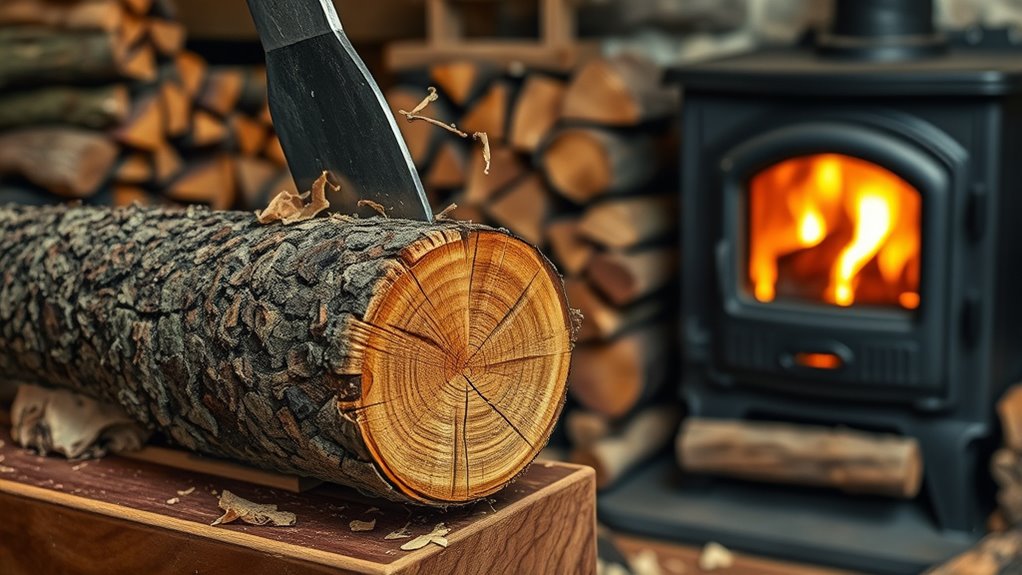
When it comes to preparing firewood, understanding the differences between splitting for a fireplace and a wood stove is essential. Your approach to splitting directly affects how well your wood burns, how efficiently it heats your space, and how you manage your seasonal storage. Fireplaces typically require larger, chunkier pieces, while wood stoves demand smaller, more uniform splits. Knowing your stove’s requirements and your storage methods helps you choose the right split size preferences, ensuring you get the most out of every piece of wood.
Properly splitting firewood for your stove or fireplace maximizes efficiency and warmth.
For a fireplace, larger splits are generally preferred because they create a more substantial, longer-lasting fire. These chunks are easier to handle when stacking and tend to produce a cozy, roaring flame. If you’re aiming for long-lasting fires during cold months, you’ll want to split your wood into sizable pieces — roughly 4 to 6 inches in diameter. This size allows the fire to burn steadily without burning out too quickly, giving you extended heat with fewer refuels. When planning your seasonal storage, keep in mind that larger pieces take longer to dry and cure, so you need to plan ahead by splitting your wood early. Properly seasoned, larger splits will provide better heat and produce less creosote buildup. Additionally, understanding the importance of seasoned wood can greatly enhance your heating efficiency.
In contrast, wood stoves require smaller, more uniform splits for exemplary performance. The goal is to achieve quick ignition, efficient burning, and easy control over the fire. Smaller splits, about 2 to 3 inches in diameter, ignite faster and burn more evenly, which is crucial for maintaining a consistent temperature. These smaller pieces also make loading the stove easier and help you fine-tune your heat output. When splitting for a wood stove, you’ll want to focus on split size preferences that promote faster seasoning. Smaller splits dry out more quickly, reducing moisture content and increasing heat output. Additionally, consistent sizing aids in stacking and storage, making it easier to manage your fuel supply throughout the season.
In both cases, proper seasonal storage is vital. Store your split wood in a dry, well-ventilated area, off the ground, and covered to prevent moisture absorption. Whether you’re preparing larger chunks for the fireplace or smaller splits for the stove, keeping your wood properly dried ensures it burns efficiently, produces less creosote, and provides reliable heat throughout the cold months. Adjust your splitting techniques based on your stove type and storage plans, and you’ll enjoy a warm, safe, and cost-effective heating experience.
Frequently Asked Questions
Which Type of Axe Is Best for Splitting Firewood?
You should choose a sledge or maul axe for splitting firewood. Look for an axe with a sturdy handle made of hickory or fiberglass, which offers durability and comfort. The axe’s weight distribution is vital — a heavier head provides more force, making splitting easier. Opt for a tool with a balanced handle and head, so you can swing accurately and efficiently, reducing fatigue and increasing effectiveness.
How Do Moisture Levels Affect Splitting for Fireplaces and Wood Stoves?
Moisture levels substantially influence how you split wood for fireplaces and wood stoves. When the moisture content is high, the wood is harder to split and may cause more wear on your axe. Proper wood drying reduces moisture, making splitting easier and safer. Dry wood burns more efficiently, producing less smoke. Always guarantee your wood is well-seasoned, ideally with a moisture content below 20%, for effective splitting and ideal burning.
Are Specific Wood Species Better Suited for Fireplace or Stove Use?
Certain wood species like oak, hickory, and maple are better suited for fireplaces and wood stoves because they burn longer and produce more heat. To maximize their efficiency, guarantee proper firewood seasoning—dry the wood for at least 6-12 months—and follow wood storage tips by stacking it off the ground and covering it to protect from moisture. Properly prepared wood enhances heat output and minimizes smoke.
What’s the Safest Way to Split Wood Without Injury?
Ever pictured yourself safely splitting wood? Always wear safety gear like gloves and safety glasses, and choose the right splitting tools such as a quality axe or maul. Keep your feet firmly planted and use a stable, level surface. Focus on controlled, deliberate swings, never rush. Are you ready to split wood safely? Following these steps helps prevent injuries and makes the task easier and more efficient.
How Does Splitting Technique Vary Between Seasoned and Green Wood?
When splitting seasoned wood, you use a more controlled splitting method, applying less force because its lower moisture content makes it easier to break. For green wood, which has higher moisture content, you need to use a heavier swing or a maul and sometimes score the wood first. This helps prevent the wood from bouncing or causing injury. Always guarantee safety, and adjust your splitting technique based on the moisture content.
Conclusion
Whether you’re splitting for a fireplace or wood stove, remember that the right preparation ignites the fire of warmth and comfort in your home. Think of your wood as a trusted ally, needing the perfect cut to perform at its best. Choosing the appropriate splitting method ensures your fire burns bright and steady. So, embrace your role as the master of your hearth, because with the right split, your cozy sanctuary is just a flame away.