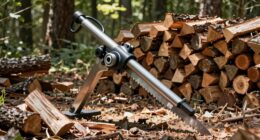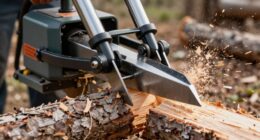
Stacking firewood on pallets can improve organization, but many overlook proper ventilation. If you place wood directly on the ground or use pallets with narrow gaps, airflow is restricted. This leads to moisture buildup, mold, and pests that damage your firewood and reduce its burning efficiency. To avoid these hidden issues, it’s essential to guarantee good airflow around each piece. Keep exploring to discover how to optimize your firewood storage for dryness and pest prevention.
Key Takeaways
- Using pallets improves firewood airflow but neglecting proper spacing between slats can hinder ventilation.
- Stacking firewood directly on pallets without gaps reduces airflow, increasing moisture retention.
- Elevating firewood on pallets promotes drying, but improper placement can trap moisture and foster mold.
- Adding clearance between stacked logs and pallet slats enhances ventilation and prevents pest infestation.
- Regularly inspecting and adjusting pallet stacking ensures adequate airflow and minimizes hidden moisture issues.
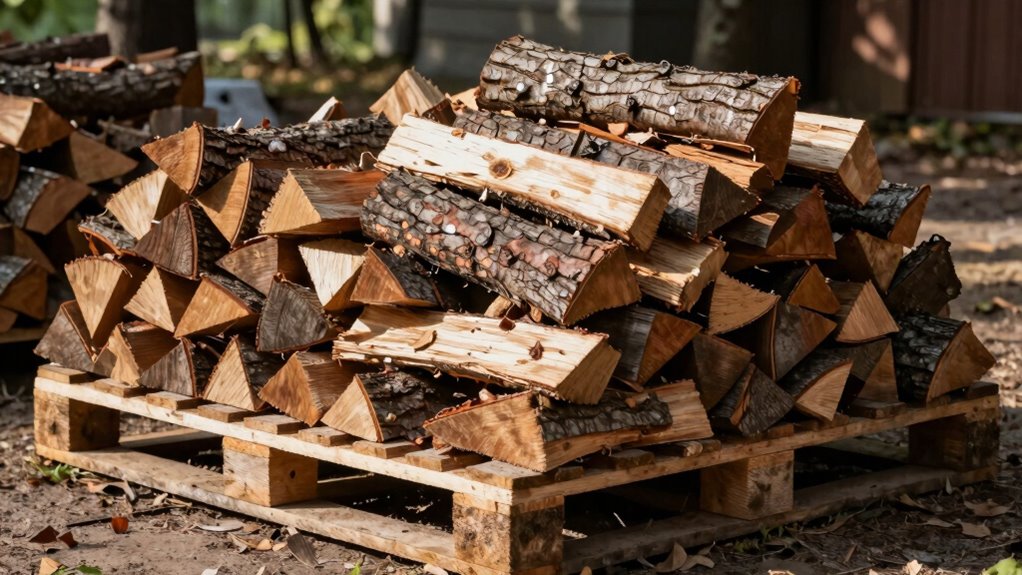
If you’re looking for an efficient way to store and transport firewood, using pallets can be a smart solution. They keep your wood off the ground, making it easier to move and organize. However, a common mistake many people make is overlooking proper ventilation, which can lead to moisture issues and pest problems. When firewood is stacked directly on the ground or in a confined space without adequate airflow, moisture can accumulate. This trapped moisture not only hampers the drying process but also creates the perfect environment for mold, rot, and fungi to develop. Over time, this can weaken the wood, making it less effective for burning and increasing the risk of pests settling in your firewood stash.
To prevent these issues, it’s essential to guarantee your pallets promote good moisture control. Elevating your firewood on pallets allows air to circulate freely around each piece, facilitating even drying and reducing excess moisture. Proper ventilation helps keep the wood dry, which is vital not only for efficient burning but also for preventing the growth of mold and other pathogens that thrive in damp conditions. When your firewood stays dry, it’s less attractive to pests like termites, beetles, or mice, which are drawn to moist, decaying wood. By choosing pallets that provide sufficient gaps between slats or adding slats where necessary, you can substantially improve airflow and moisture control. Additionally, understanding the importance of proper airflow can help optimize your firewood stacking setup.
Pest prevention is another essential reason to pay attention to how you stack your firewood. Pests tend to hide in damp, decaying wood, making moist stacks a magnet for unwanted critters. Using pallets that elevate the wood off the ground reduces the risk of pests crawling in from the soil, where they often breed. Furthermore, stacking firewood neatly, with enough space between each piece, allows for better inspection and reduces the likelihood of pests establishing a foothold. Regularly checking your firewood for signs of pests and ensuring it remains dry will keep your firewood safe and ready for use. Remember, pests not only damage the wood but can also be a health risk for your home and family.
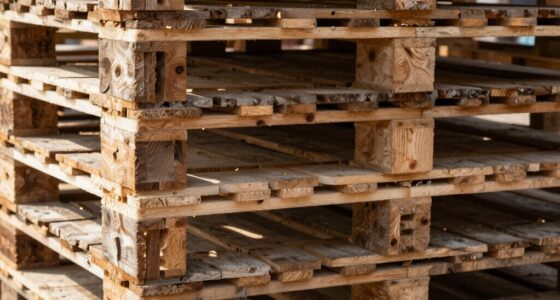
firewood storage pallets with ventilation gaps
As an affiliate, we earn on qualifying purchases.
As an affiliate, we earn on qualifying purchases.
Frequently Asked Questions
How Often Should I Rotate Firewood on Pallets?
You should rotate your firewood on pallets every few months, ideally once a season, to guarantee proper seasonal rotation. This helps prevent pests from settling in and promotes better airflow, which aids in pest management and keeps your firewood dry. Regular rotation also allows you to check for signs of mold or pests, maintaining the quality of your firewood and reducing the risk of pests spreading to your home.
Can Different Types of Wood Be Stacked Together Safely?
Don’t put all your eggs in one basket, and the same goes for stacking different types of wood. You can stack various wood types safely if you consider wood compatibility and use proper stacking techniques. Make sure denser woods are separated from softer ones to prevent uneven drying or decay. Proper airflow and careful layering help, ensuring your firewood stays dry and ready. Always check for signs of mold or pests before stacking different woods together.
What Are Signs of Poor Ventilation in Pallet-Stacked Firewood?
You’ll notice signs of poor ventilation in your pallet-stacked firewood if you see moisture buildup or mold growth on the logs. These issues indicate that air isn’t circulating properly, trapping humidity and promoting mold. Additionally, you might observe a musty smell or uneven drying, which further signals inadequate airflow. Regularly check your stacks and guarantee they’re well-ventilated to prevent these problems and keep your firewood in good condition.
Is It Better to Cover Firewood on Pallets or Leave It Exposed?
A stitch in time saves nine, so you should leave your firewood exposed on pallets. This allows air to circulate, reducing wood moisture and preventing pests. Covering it can trap humidity, promoting rot and attracting insects. If you choose to cover, make certain there’s ventilation to prevent mold and pest issues. Proper airflow keeps your firewood dry, safe, and ready to burn efficiently.
How Does Climate Affect Firewood Storage on Pallets?
Climate profoundly impacts how you should store firewood on pallets. In humid environments, you need to focus on humidity control to prevent mold and rot, ensuring proper airflow. In colder climates, temperature regulation becomes essential to keep the wood dry and ready for use. Always elevate your firewood on pallets to enhance ventilation, regardless of climate, and adjust your storage methods based on local weather conditions for optimal preservation.
firewood drying rack with slats
As an affiliate, we earn on qualifying purchases.
As an affiliate, we earn on qualifying purchases.
Conclusion
By now, you see how placing firewood directly on pallets can trap moisture and lead to rot. Are you willing to risk compromising your firewood’s quality just to save a few seconds? Proper ventilation isn’t just a detail—it’s the key to keeping your firewood dry and ready whenever you need it. Take a moment to reassess your setup; your future self will thank you for making this simple but essential change.
pest-resistant firewood racks
As an affiliate, we earn on qualifying purchases.
As an affiliate, we earn on qualifying purchases.

General Tools MMD4E Digital Moisture Meter, Water Leak Detector, Moisture Tester, Pin Type, Backlit LCD Display With Audible and Visual High-Medium-Low Moisture Content Alerts, Grays
HUMIDITY SENSOR: Our handy meter tool can quickly determine what level of remediation is needed to keep your…
As an affiliate, we earn on qualifying purchases.
As an affiliate, we earn on qualifying purchases.