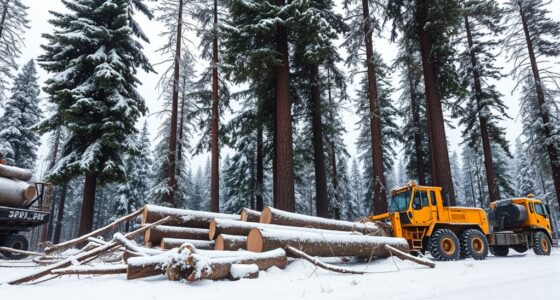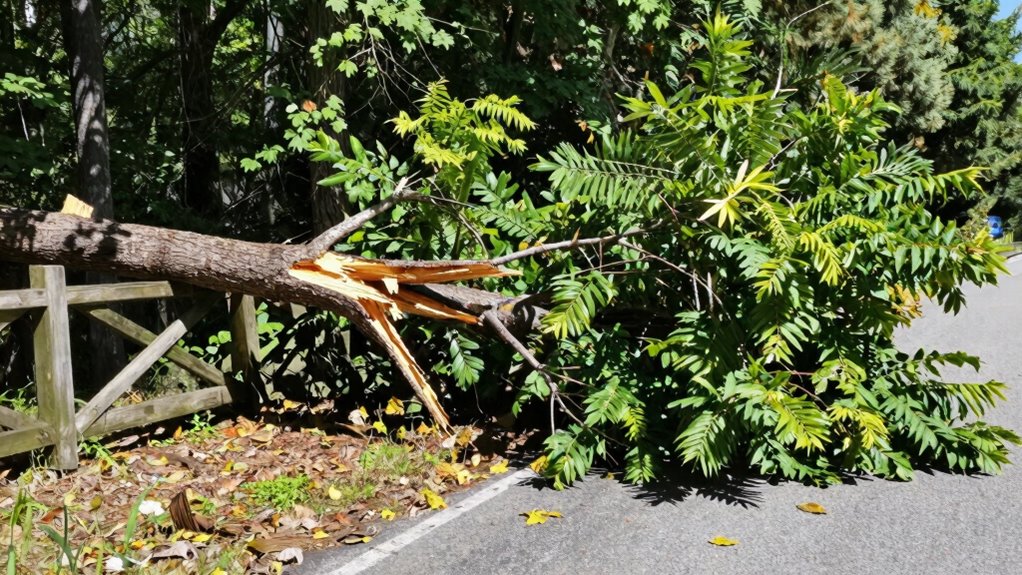

When handling fallen trees near fences, roads, or structures, first assess the scene from a safe distance, checking for stability and utility hazards. Contact authorities if the tree blocks a road or is entangled with power lines. Use the right tools carefully, cutting into manageable sections from the top down, and avoid risking further damage. For complex or unsafe situations, it’s best to call professional tree removal services. Continue on to learn essential safety tips and proper cleanup techniques.
Key Takeaways
- Assess the scene safely, avoiding unstable branches or hanging debris that could fall unexpectedly.
- Contact local authorities or utility companies if the tree contacts power lines or blocks roads.
- Use proper tools and plan sections to carefully cut and remove the tree, working from top to bottom.
- Engage professional tree removal services for large or hazardous situations near structures or fences.
- Clear debris thoroughly and inspect for remaining hazards to ensure safety and prevent future damage.
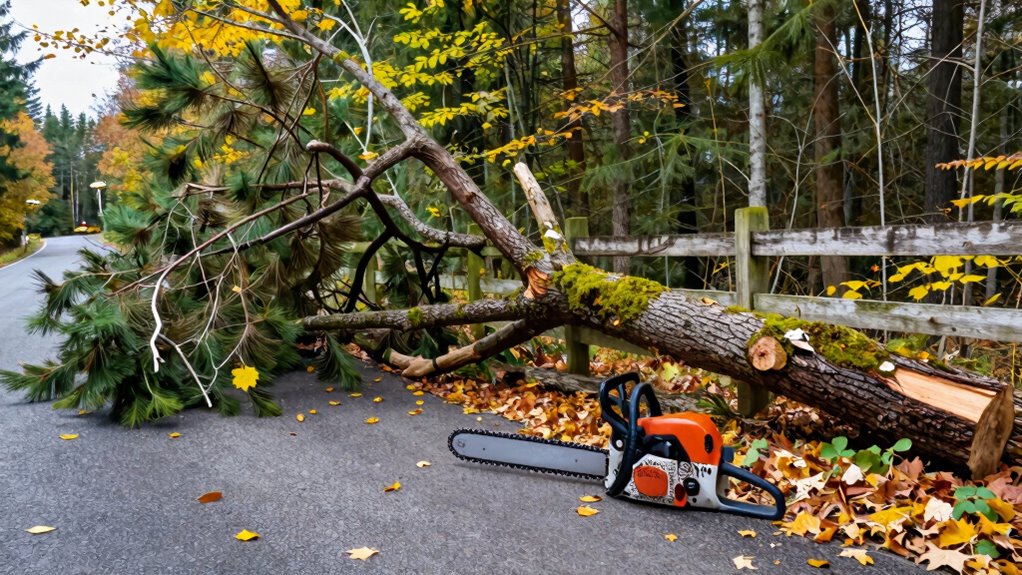
Have you ever faced a fallen tree blocking a fence, road, or nearby structure? When this happens, your first instinct might be to rush in and try to clear the obstacle, but it’s vital to stay calm and prioritize safety. Handling a fallen tree near fences, roads, or structures requires careful planning and the right approach to prevent accidents or further damage. Tree removal in such situations isn’t a task you should take lightly, especially if the tree is large or entangled with power lines or delicate structures. Before starting, assess the scene from a safe distance. Look for signs of instability, such as leaning branches, cracked limbs, or any hanging parts that could fall unexpectedly. Always keep in mind that safety precautions are your top priority—wear sturdy gloves, eye protection, and a helmet if you have one, and keep others at a safe distance.
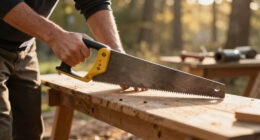
If the fallen tree is near a road, traffic control becomes an immediate concern. You should alert local authorities or traffic management to block the area temporarily to prevent accidents. Do not attempt to move the tree if you’re unsure about its stability or if it’s entangled with utility lines. Electricity lines pose a serious risk, and attempting to remove a tree in contact with power lines can be deadly. In such cases, contact the utility company immediately so they can handle the situation safely. If the tree is blocking a fence or structure and it’s manageable, plan your approach carefully. Use the right tools, such as a chainsaw or hand saw, and ensure they are in good working condition. Cut the tree into manageable sections, working from the top down, and avoid cutting into areas that could cause the tree or limbs to fall unpredictably. It’s also advisable to consult local regulations before proceeding with removal, as some areas have specific rules about tree disposal and safety.
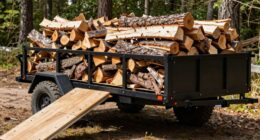
Remember that even small trees or branches can cause injury if handled improperly. If the task seems overwhelming or unsafe, don’t hesitate to call professional tree removal services. They have the experience, equipment, and knowledge to handle complex situations safely. Additionally, it’s helpful to know the basic safety procedures to prevent accidents during removal. Furthermore, ensuring proper tree assessment can help identify potential hazards before they become emergencies. After the tree is cleared, inspect the area thoroughly for any remaining hazards like loose branches or damaged structures. It’s also essential to properly assess the stability of the surrounding landscape to prevent future incidents. Clean up debris promptly to prevent tripping or further damage. Additionally, consider proper disposal methods to ensure environmental safety. Ultimately, handling fallen trees near fences, roads, or structures demands a cautious approach, respect for safety precautions, and knowing when to call in the experts. Taking these steps guarantees you’re protecting yourself, others, and the property from potential harm.

CAMPNDOOR High Limb Rope Saw 53 In – Zero Effort 360 Rope Chain Saw – Sharp Manual Tree Limb Cutter – Hand Chainsaw with Ergonomic Handles and Carrying Case – Fast and Easy Pocket Chainsaw
- Cost Savings: Save thousands on tree services
- Extended Reach: Cut 25 ft limbs without ladders
- Dual Sided Blades: Effortless heavy-duty yard tasks
As an affiliate, we earn on qualifying purchases.
As an affiliate, we earn on qualifying purchases.
Frequently Asked Questions
When Should I Call Professional Help for Fallen Trees?
You should call professional help immediately if the fallen tree causes significant property damage or blocks roads, threatening safety. If the tree damages fences or structures, contact experts to assess and remove it safely. Additionally, notify your insurance company promptly to file claims for property damage. Don’t delay, as prompt action guarantees safety, prevents further damage, and helps you navigate insurance processes efficiently.
How Can I Prevent Trees From Falling in the Future?
To keep your trees standing tall, you need to stay ahead of the game. Regularly check their health and address any signs of disease or damage. Focus on root stability by ensuring proper watering and avoiding soil compaction around the roots. Prune weak or dead branches to reduce stress. Remember, a stitch in time saves nine—early care prevents future falls and keeps your landscape safe and beautiful.
Are There Legal Considerations When Removing Fallen Trees?
Yes, there are legal considerations when removing fallen trees. You need to be aware of liability concerns if someone gets injured or if the removal causes property damage. Check local laws and regulations, especially if the tree impacts public areas or neighboring properties. It’s wise to document the process and, if unsure, consult with a professional or legal expert to avoid potential legal issues.
What Safety Gear Is Recommended During Removal?
You should wear protective clothing and safety equipment when removing a fallen tree. Gear like gloves, safety goggles, a hard hat, and steel-toed boots will protect you from debris and potential injuries. Consider using ear protection if you’re operating loud tools like chainsaws. Always make certain your safety gear is in good condition. Wearing the right protective clothing and safety equipment keeps you safe while handling the challenging task of fallen tree removal.
How Long Does It Typically Take to Clear a Fallen Tree?
It generally takes a few hours to a full day to clear a fallen tree, depending on its size and location. During this process, you’ll need to assess tree stability and damage to surrounding structures first. You might also need specialized equipment and help from professionals if the tree is large or precariously positioned. Ensuring safety and proper damage assessment speeds up the process and prevents future hazards.
Conclusion
Remember, fallen trees are like unwelcome guests blocking your path—tackle them with patience and caution. Approach with a steady hand, clear the way bit by bit, and respect the strength of nature’s giants. With careful planning and the right tools, you can turn chaos into calm, transforming a tangled mess into a safe, open space. Stay vigilant, work smart, and let your efforts be the gentle whisper that restores peace to your surroundings.