
To thin your small woodlot without regrets, start by setting clear goals like improving growth or wildlife habitat. Carefully select trees to remove, focusing on overcrowded, diseased, or weaker ones, while leaving healthy, diverse trees for future growth. Use proper tools and prioritize safety. Regularly monitor the results, noting changes in tree health and wildlife. By planning thoughtfully and adjusting as needed, you’ll create a resilient, thriving forest—and here’s how you can do it right.

Get business pricing on tools and workshop supplies
- Business-only prices and quantity discounts
- Tax-exempt purchasing
- Multiple users, one account, clear invoices
Key Takeaways
- Clearly define your goals (timber, wildlife, health) to guide selective thinning decisions.
- Prioritize removing weaker, overcrowded, or diseased trees while preserving diversity.
- Use proper tools and techniques, and consider consulting forestry professionals for best practices.
- Plan disposal methods that benefit the ecosystem, such as habitat creation or sustainable firewood use.
- Monitor post-thinning effects regularly to adjust management and ensure long-term forest health.
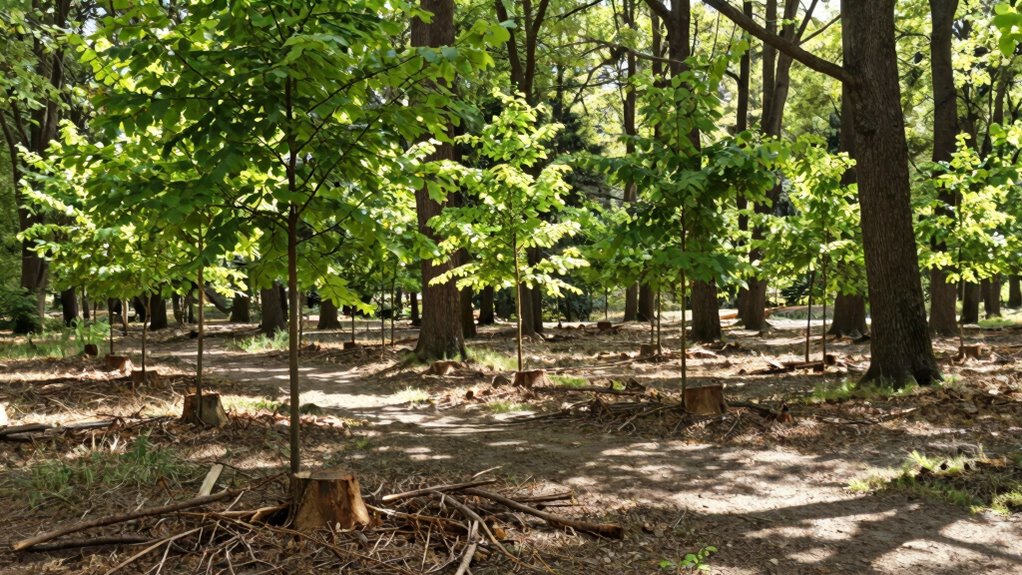
Thinning a small woodlot can improve the health and growth of your trees, but it’s important to approach the process carefully. When you remove select trees and shrubs, you help guarantee the remaining ones have enough space, light, and nutrients to thrive. This practice isn’t just about aesthetic improvement; it directly impacts the overall forest health. A well-thinned woodlot promotes vigorous growth, reduces disease risk, and creates a more resilient ecosystem. It’s also a chance to enhance wildlife habitat, providing better shelter, food, and nesting areas for local animals.
Thinning boosts tree health, promotes growth, and enhances wildlife habitat for a resilient, thriving forest ecosystem.
Before you start, take a good look at your woodlot and identify your goals. Are you aiming to boost timber production, improve wildlife habitat, or simply maintain the health of your trees? Each goal influences how you approach thinning. If your priority is forest health, focus on removing weaker, overcrowded, or diseased trees, which can compete with healthier ones and spread problems. Thinning should be strategic—don’t cut indiscriminately. Leave a mix of tree species and ages, as diversity strengthens the ecosystem and supports a wider range of wildlife.
When selecting which trees to remove, consider their size, health, and location. Removing overly dense or suppressed trees creates space for the stronger ones to grow. Leave behind some smaller and younger trees to assure continuous regeneration. Relating to wildlife habitat, aim to retain trees with dead branches, hollow cavities, or thick bark—these features attract birds, insects, and small mammals. Creating a variety of tree sizes and conditions offers essential cover and food sources for different species. Promoting biodiversity within your woodlot ensures a more robust and adaptable ecosystem.
Safety is vital, so plan your thinning carefully. Use proper tools and techniques, and don’t hesitate to seek advice from local forestry professionals if you’re unsure. Make sure you have a clear plan for disposal of cut material—chipping, stacking for firewood, or leaving some on the ground for habitat benefits. After thinning, monitor your woodlot over the seasons. Look for signs of improved growth and health, and observe changes in wildlife presence. Regular assessments help you refine your approach and maintain a balanced, thriving ecosystem.
In the end, thoughtful thinning isn’t just about trimming trees; it’s about nurturing a healthy, resilient forest that sustains wildlife and meets your management goals. When done with care and purpose, you’ll enjoy a more vibrant, productive woodlot for years to come.
forestry hand tools for tree removal
As an affiliate, we earn on qualifying purchases.
As an affiliate, we earn on qualifying purchases.
Frequently Asked Questions
When Is the Best Time of Year to Thin My Woodlot?
You should thin your woodlot in late winter or early spring when tree species are dormant, minimizing stress on the trees. This timing helps protect soil health because it reduces soil disturbance when moisture levels are ideal. Plus, you’ll have a clearer view of the tree structure, making it easier to decide which to remove. Avoid thinning during wet seasons to prevent soil compaction and protect your woodlot’s overall health.
How Do I Identify Which Trees to Remove?
To identify which trees to remove, look for those that disrupt species diversity or are invasive species, as they can harm the ecosystem. Remove weaker, damaged, or crowded trees to promote healthy growth. Avoid removing healthy, dominant trees unless necessary. Focus on thinning selectively, ensuring a mix of species remains, and prioritize removing invasive species to maintain a balanced, resilient woodlot that benefits wildlife and forest health.
What Tools Are Essential for Thinning a Small Woodlot?
You’ll need essential tools like a chainsaw for cutting, pruning shears for smaller branches, and safety gear such as gloves and goggles. Maintain your equipment regularly to guarantee safety and efficiency, especially during thinning techniques. Keep blades sharp and check fuel levels. Use proper techniques to avoid damaging remaining trees. With well-maintained tools and proper thinning methods, you’ll make thoughtful decisions that promote healthy growth while minimizing regret later.
How Can I Ensure Wildlife Isn’t Disturbed During Thinning?
To guarantee wildlife isn’t disturbed during thinning, you should plan your work around their habitats, preserving key areas for habitat preservation. Keep important wildlife corridors intact, allowing animals safe passage. Avoid working during breeding seasons or in sensitive nesting sites. Use quiet, non-intrusive methods, and limit machinery noise. Regularly monitor wildlife activity to adapt your approach, ensuring minimal disruption and maintaining the health of your woodlot’s ecosystem.
What Are the Long-Term Benefits of Proper Thinning?
Imagine your woodland thriving with tall, healthy trees after proper thinning. Long-term benefits include enhanced forest regeneration, ensuring future growth and resilience. Well-executed thinning also improves timber quality by reducing competition for nutrients. Over time, this creates a sustainable ecosystem, supports diverse wildlife, and increases your land’s value. Proper thinning isn’t just a quick fix; it’s a strategic investment in your woodland’s health and productivity for years to come.
Conclusion
Remember, patience is a virtue when thinning your woodlot. By carefully selecting trees and removing the weaker ones, you’ll foster healthier growth and a more vibrant forest. Don’t rush the process, or you might regret it later. As the saying goes, “Haste makes waste,” so take your time, plan wisely, and trust your judgment. With thoughtful effort, your small woodlot will thrive for years to come, rewarding your care and dedication.
Halloween Picks
halloween
As an affiliate, we earn on qualifying purchases.