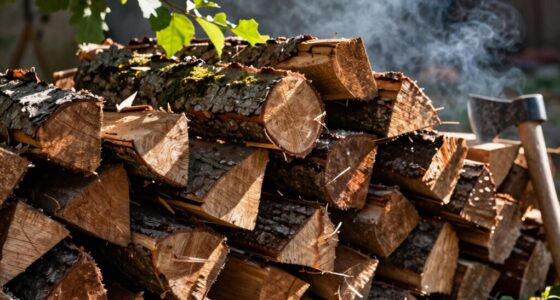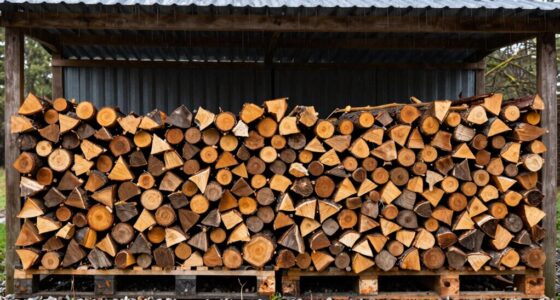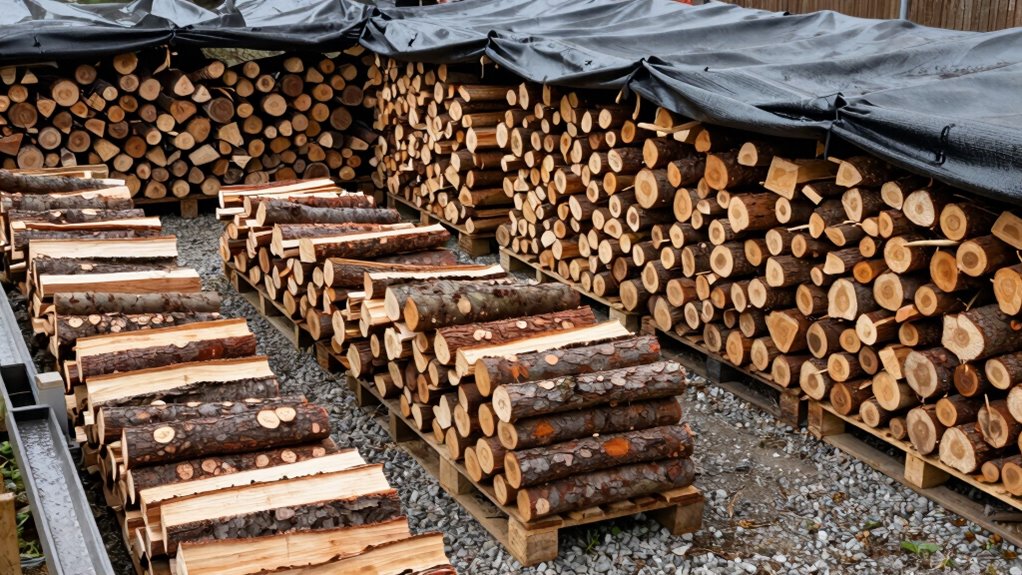

To keep your firewood yard cleaner, drier, and more sustainable, organize your wood in neat rows or cribs using pallets or supports, and guarantee proper ventilation for airflow. Elevate your stacks off the ground and cover them partially with waterproof materials to prevent moisture buildup. Regularly remove debris, re-stack as needed, and use seasoned, dry wood for efficient burning. Sustainable practices like maintaining natural vegetation help protect the environment—discover more tips to optimize your firewood storage effectively.
Key Takeaways
- Organize and stack firewood properly using supports to promote airflow and prevent moisture retention.
- Cover the pile with breathable materials, leaving sides open to ensure ventilation and reduce dampness.
- Elevate firewood on pallets or blocks to prevent soil moisture absorption and improve drying.
- Regularly clear debris, fallen branches, and sawdust to maintain cleanliness and reduce pest risks.
- Use seasoned, dry wood and rotate logs to enhance burning efficiency and minimize environmental impact.
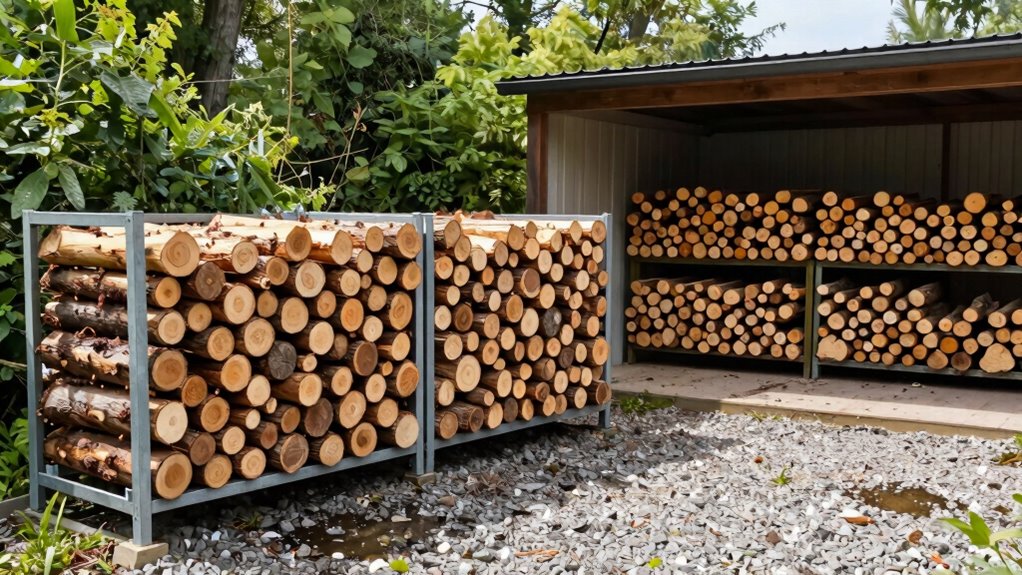
Maintaining a clean, dry, and sustainable firewood yard is essential for efficient burning and environmental responsibility. To achieve this, you need to focus on proper woodpile organization and moisture control. Start by stacking your firewood neatly in rows or cribs, ensuring each piece is positioned to promote airflow. Proper woodpile organization prevents the pile from toppling and makes it easier to access the wood you need. Keep the stacks off the ground by using pallets, concrete blocks, or other supports to prevent moisture absorption from the soil, which can lead to rot and mold. This elevation also helps air circulate beneath the pile, aiding in drying out the wood and reducing pest infestation.
Moisture control is critical because wet or green wood burns inefficiently, produces more smoke, and creates creosote buildup in your chimney, increasing fire risks. To maintain optimal moisture levels, split your firewood into smaller pieces, which dry faster than whole logs. Cover your woodpile with a waterproof tarp or roof but leave the sides open to allow air to circulate freely. This setup protects the wood from rain and snow while still permitting moisture escape and airflow. Avoid tightly wrapping the entire pile, as trapping moisture indoors promotes decay and mold growth. Regularly check the wood’s dryness by inspecting the ends for cracks, checking for mold, or using a moisture meter if you want precise readings. Dry wood typically has cracks in the ends and a dull appearance, unlike green or freshly cut wood, which looks vibrant and moist.
Additionally, rotate your firewood supply. Use the older, drier logs first, and add new wood to the back of the pile, so it has time to season. Proper woodpile organization and moisture control work hand-in-hand, ensuring your firewood is ready to burn efficiently when needed. This process not only enhances your heating experience but also extends the life of your firewood and minimizes environmental impact. Keeping your yard tidy by removing debris, fallen branches, and sawdust also supports a cleaner and more sustainable space. Regular maintenance of your firewood yard, including re-stacking and checking moisture levels, makes a significant difference. Incorporating biodiversity-friendly practices such as maintaining natural vegetation around your yard can further promote ecological balance. Being mindful of environmental impact by using sustainable practices can help reduce your carbon footprint and support local ecosystems. Implementing proper storage techniques can significantly improve the quality of your firewood and reduce waste. Moreover, adopting seasoning methods can enhance the drying process and efficiency of your firewood. With disciplined woodpile organization and diligent moisture control, you’ll enjoy a more efficient, safer, and eco-friendly firewood setup year-round.

Tikimilor 8ft Firewood Rack Holder, Adjustable Heavy Duty Fire Log Stacker Stand for Fireplace, Outdoor Indoor Metal Wood Pile Storage Organizer, Patio Logs Stand tool, Black
- Durable Material: Heavy-duty tubular steel construction
- Weatherproof Finish: Two-layer black powder coat
- All-Climate Use: Suitable for indoor and outdoor use
As an affiliate, we earn on qualifying purchases.
As an affiliate, we earn on qualifying purchases.
Frequently Asked Questions
What Are the Best Tools for Maintaining a Firewood Yard?
You should use a sturdy pitchfork and a log splitter to manage firewood storage efficiently. A rake helps keep the yard tidy, while a wheelbarrow makes moving wood easier. To promote sustainable practices, invest in a moisture meter to guarantee proper drying, and consider a solar-powered fan for ventilation. These tools help you maintain a cleaner, drier firewood yard that’s eco-friendly and easier to manage.
How Often Should I Inspect for Pests or Mold?
You should inspect your firewood yard for pests and mold at least once a month, especially during warm, humid months. Regular pest prevention helps keep insects and rodents away, while mold monitoring guarantees your firewood stays dry and safe to burn. Look for signs like holes, droppings, or fuzzy growths. Promptly address any issues to maintain a cleaner, drier, and more sustainable firewood yard.
Can I Compost Firewood Scraps Safely?
You can compost firewood scraps safely if they’re free of mold, pests, or chemicals. Firewood composting helps recycle wood pieces into nutrient-rich soil, but avoid adding large or heavily contaminated chunks. Break scraps into smaller pieces, and mix them with other compost materials to guarantee proper decomposition. This method promotes safe disposal, reduces waste, and supports a sustainable firewood yard. Just stay mindful of mold and pests during the process.
What Safety Precautions Are Necessary When Handling Firewood?
Handling firewood is like walking a tightrope—balance and safety come first. Always wear safety gear, including gloves, eye protection, and sturdy boots, to shield yourself from splinters, debris, and insects. Keep your workspace clear of obstructions, and lift carefully to avoid strains. Stay alert and cautious, especially when stacking or moving large logs, to prevent accidents and guarantee your firewood handling remains safe and efficient.
How Do Weather Conditions Affect Firewood Storage Choices?
Weather conditions greatly influence your firewood storage choices. You should prioritize moisture management by keeping wood off the ground and covered during rain or snow to prevent rot and mold. Additionally, seasonal protection is essential; in winter, guarantee the wood is stored in a sheltered spot, while in summer, good airflow helps keep it dry. Adjust your storage practices based on weather to maintain dry, seasoned firewood efficiently.
Conclusion
Keeping your firewood yard clean, dry, and sustainable not only makes your wood easier to access but also prolongs its burn quality. Did you know that properly stored firewood can retain moisture levels below 20%, reducing smoke and emissions? By stacking wood off the ground, covering it adequately, and practicing eco-friendly disposal, you can enjoy a more efficient and environmentally conscious firewood setup. Take these steps now to enhance safety, sustainability, and ease of use for years to come.