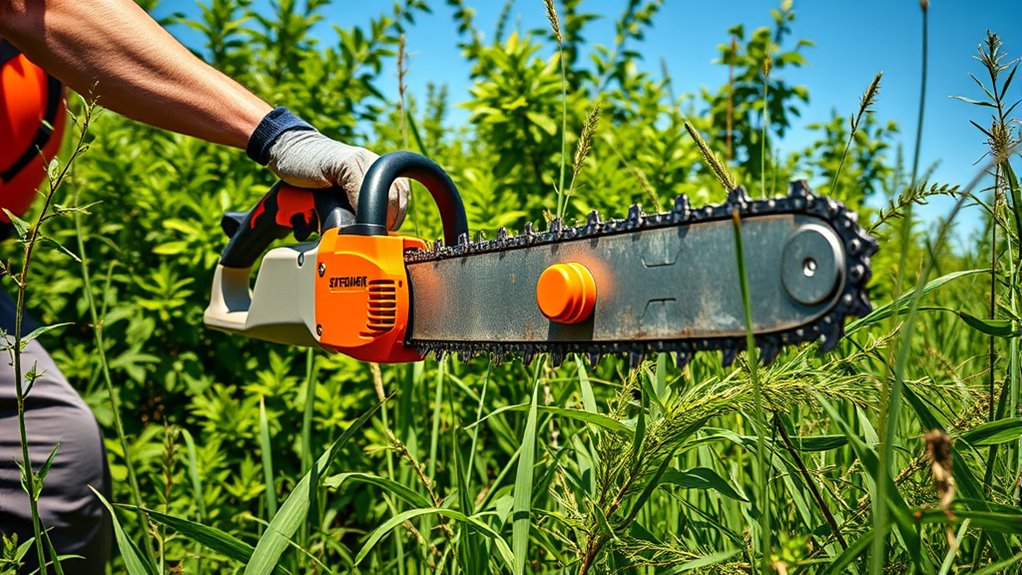

When using brushcutters and clearing saws, always wear proper protective gear like gloves, goggles, and sturdy footwear. Choose the right tool and battery to match your vegetation and work area, and keep batteries charged and compatible. Regularly inspect and maintain blades, clean vents, and store batteries properly to guarantee safety and performance. Knowing safety basics and proper handling keeps you injury-free, and more tips await if you continue exploring this essential outdoor equipment.

Get business pricing on tools and workshop supplies
- Business-only prices and quantity discounts
- Tax-exempt purchasing
- Multiple users, one account, clear invoices
Key Takeaways
- Always wear protective gear and ensure safety features are functional before operating brushcutters or clearing saws.
- Use batteries with appropriate voltage and capacity, and verify compatibility for optimal power and runtime.
- Conduct routine maintenance, including blade inspection, cleaning, and proper storage, to ensure performance and safety.
- Maintain proper handling techniques, including firm grip, correct stance, and awareness of surroundings to prevent accidents.
- Disconnect power and follow manufacturer instructions during maintenance or battery swapping to avoid injury.
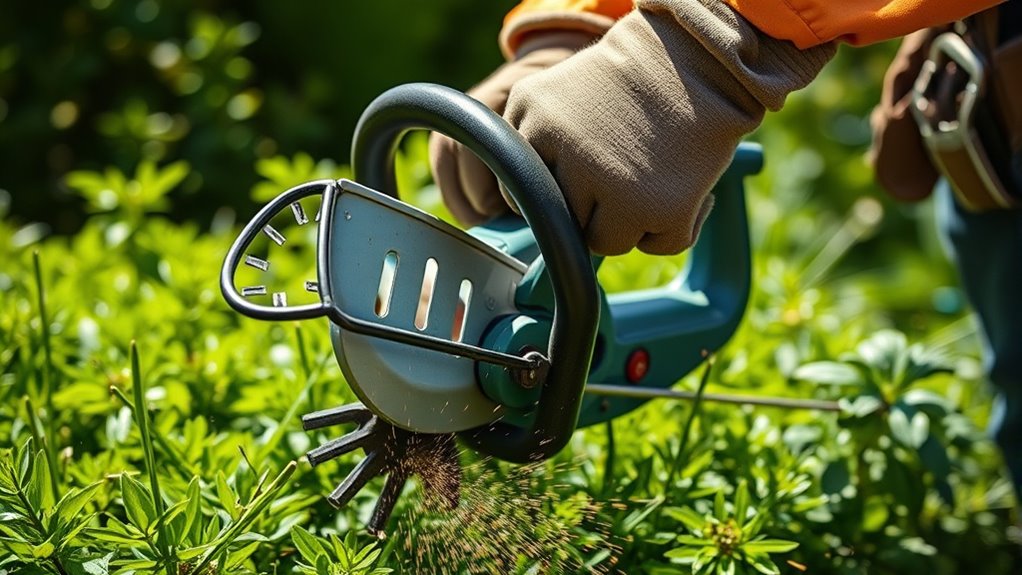
Brushcutters and clearing saws are essential tools for tackling dense brush, tall grass, and stubborn weeds. When choosing a model, you’ll find that battery options play a noteworthy role in your overall experience. Cordless models give you the freedom to move around without the hassle of cords, making them ideal for large or remote areas. Battery options vary, with lithium-ion batteries being the most common because they offer longer run times and quicker charging. You should consider the battery voltage and capacity—higher voltage generally means more power, which is beneficial for tougher vegetation. Keep in mind that some models allow you to swap batteries, so having extra charged batteries can extend your work time considerably. When selecting a cordless brushcutter, ensure the battery compatibility matches your needs, and verify the runtime on a full charge to avoid interruptions during your work. Regular maintenance tips are key to keeping your brushcutter or clearing saw functioning efficiently and safely.
Proper maintenance includes routine inspections to identify worn or damaged blades and replace them promptly to maintain cutting performance. Cleaning the air vents and engine area helps prevent overheating and prolongs the tool’s lifespan. If you’re using a battery-powered model, always store your batteries in a cool, dry place and avoid extreme temperatures to preserve their longevity. After each use, clean off debris and grass clippings, especially around the motor and blade mount, to prevent buildup that could hinder performance. Lubricate moving parts as recommended by the manufacturer, and check fasteners and handles for tightness before each use. Keeping your tool well-maintained not only extends its life but also ensures safer operation.
Safety should always be your top priority when handling brushcutters and clearing saws. Always wear appropriate protective gear, including eye protection, gloves, long pants, and sturdy footwear. Before starting, check that all safety features are in place and functioning properly—such as blade guards and safety switches. Familiarize yourself with the tool’s operation, especially how to start and stop it quickly in case of emergency. When working, maintain a firm grip and proper stance to control the tool effectively, especially when cutting through thick vegetation. Be mindful of your surroundings, avoiding contact with power lines or other obstacles. After finishing, turn off the tool and disconnect the battery or power source before performing any maintenance or adjustments. Following these safety and maintenance tips ensures your work is efficient, effective, and injury-free.
As an affiliate, we earn on qualifying purchases.
Frequently Asked Questions
How Often Should I Service My Brushcutter?
You should service your brushcutter every 25 to 50 hours of use, or at least once a season. During maintenance, focus on blade maintenance to keep cuts precise and engine inspections to guarantee ideal performance. Regularly check the air filter, spark plug, and fuel system. Proper servicing prolongs the tool’s life, improves safety, and ensures efficient operation, so don’t skip these essential steps.
What Are the Signs of a Worn-Out Blade?
You’ll notice a worn-out blade when your blade inspection reveals dull or chipped edges, which can substantially reduce cutting performance. If you see excessive vibration, it’s a sign the blade might be uneven or damaged. Also, if it struggles to cut through thick brush or weeds, it’s time to replace or sharpen the blade. Regularly checking your blade guarantees ideal cutting performance and safe operation.
Can I Use My Brushcutter for Snow Removal?
You might be tempted to try snow removal with your brushcutter, but beware—the icy challenge could damage your equipment. While it’s tempting to use it for winter maintenance, brushcutters aren’t designed for snow. They lack the power and safety features needed. Instead, invest in proper snow removal tools to prevent costly repairs or accidents. Protect your equipment and stay safe by choosing the right gear for winter tasks.
What’s the Best Way to Store My Clearing Saw?
You should store your clearing saw in a dry, well-ventilated area, preferably on a wall mount or sturdy stand to prevent falls. Follow safety storage tips by disconnecting the spark plug and cleaning the equipment before storage. Keep it out of reach of children and pets. Regularly inspect for rust or damage, and ensure it’s stored away from flammable materials to maintain safety and prolong its lifespan.
Are There Eco-Friendly Fuel Options for Brushcutters?
Like the green hero in a story, you can choose eco-friendly fuels for your brushcutter. Look for eco-friendly fuels that combine biodegradable oils with renewable ethanol blends, reducing your environmental impact. These options help lower emissions and keep the earth cleaner. By switching to biodegradable oils and sustainable fuel mixes, you’re taking a proactive step towards a healthier planet while maintaining powerful performance for your clearing tasks.
Conclusion
Now that you know the essentials of brushcutters and clearing saws, you’re equipped to handle them safely and confidently. Think of these tools as your trusty swords in the jungle—powerful but requiring respect and proper technique. Always wear safety gear and follow guidelines to keep yourself out of harm’s way. With the right knowledge and caution, you’ll tame overgrown terrains like a seasoned warrior, turning wild chaos into neat, manageable land.
Fall yard work Picks
leaf blowers
As an affiliate, we earn on qualifying purchases.