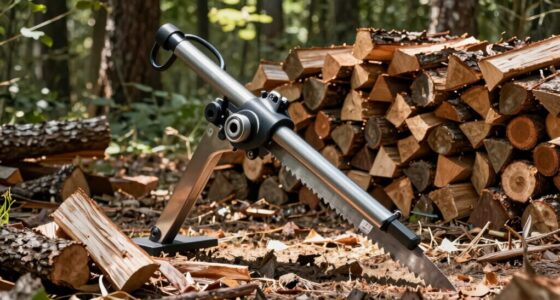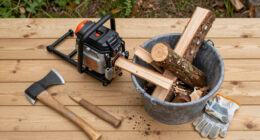
When splitting wood in winter, keep your firewood off the ground on pallets or racks to prevent moisture. Wear thick gloves, safety goggles, and dress warmly to stay safe and comfortable. Avoid splitting on icy or snowy surfaces to prevent slips, and handle tools carefully. Warm up your muscles and take regular breaks to stay safe. Want more tips on making winter wood splitting safer and easier? Keep exploring for all the essentials.
Key Takeaways
- Warm up muscles before splitting and wear layered clothing to stay comfortable and prevent injuries.
- Use sharp, sturdy tools and handle them carefully to reduce the risk of accidents on frozen or brittle wood.
- Choose dry, level, and obstacle-free areas, avoiding icy patches and snow for better footing and safety.
- Store firewood properly off the ground with ventilation and cover to prevent moisture, mold, and insect issues.
- Take regular breaks, stay warm, and avoid splitting during icy or snowy conditions to ensure safety and efficiency.
Have you ever noticed your hair splitting more often during the winter months? The same can happen to your firewood if you don’t handle it properly. Cold weather can make splitting wood more challenging and dangerous if you’re not careful. Proper firewood storage is essential to keep your wood dry, accessible, and safe to handle. When storing firewood in winter, make sure it’s kept off the ground to prevent moisture absorption, which can cause the wood to freeze together or rot. Use a well-ventilated rack or stack it on pallets to guarantee air circulation. Cover the top of the stack with a tarp or waterproof material, but leave the sides exposed to promote airflow. This prevents the wood from becoming damp and reduces the risk of mold or insect infestation, which can make splitting more difficult and unsafe. Proper firewood storage is also important for maintaining the quality of your wood and ensuring ease of use when needed.
Safety precautions are vital when splitting wood in winter. Cold temperatures can numb your hands and reduce your grip strength, increasing the risk of accidents. Wear thick gloves designed for splitting to protect your hands from splinters and cold. Use safety goggles to shield your eyes from flying debris, especially since frozen wood tends to be more brittle and may shatter unexpectedly. When splitting, always position yourself on a stable, level surface and ensure the area around you is clear of obstacles. Keep your hands away from the splitting wedge’s path, and use a sturdy, sharp ax or maul. Dull tools require more force and can slip, causing injuries. Also, be cautious of ice patches on the ground, which can be slippery and lead to falls. Take your time, and don’t rush the process, especially when the wood is frozen solid.
Another safety tip is to be aware of the weather conditions. Avoid splitting wood during icy or snowstorm conditions, as visibility and footing become compromised. If you must split wood in cold weather, consider doing it in a sheltered area to protect yourself from wind chill and falling ice or snow. Additionally, stay warm between sessions by wearing layered clothing and taking regular breaks. Cold muscles are more prone to strain and injury, so warming up beforehand helps prevent accidents. When you’re finished, store your tools in a safe, dry place to prevent rust and guarantee they’re ready for next time. Remember, patience and preparation are key. By managing firewood storage properly and observing safety precautions, you can make winter splitting safer, more efficient, and less stressful. Incorporating proper firewood storage techniques can also help reduce moisture-related issues and make your splitting efforts more successful.

Fiskars Pro IsoCore 8 lb Splitting Maul, 36" Wood Splitter Axe
- Multi-Use Axe: Ideal for firewood and yard work
- Shock-Absorbing Handle: Reduces hand strain and improves control
- Long-Lasting Steel Blade: Maintains sharpness longer for tough logs
As an affiliate, we earn on qualifying purchases.
As an affiliate, we earn on qualifying purchases.
Frequently Asked Questions
How Can I Prevent Splitting in Extremely Cold Temperatures?
To prevent splitting in extremely cold temperatures, you should maintain proper wood seasoning and manage winter moisture. Guarantee your firewood is well-seasoned before use, reducing internal moisture that causes cracking. Store wood in a dry, covered area to prevent moisture absorption. When burning, avoid overloading your stove or fireplace, which can cause uneven heating and stress the wood. These practices help keep your wood stable and reduce splitting during harsh winter conditions.
What Tools Are Best for Winter Splitting Projects?
Did you know that a sharp, heavy-duty axe is preferred by 80% of seasoned woodsplitters? For winter splitting projects, use a good splitting maul or axe with a sturdy handle for efficiency and safety. Always wear gloves and eye protection for safety. These tools are perfect for seasonal wood preparation, and following splitting safety tips guarantees you work safely and effectively in cold conditions.
How Does Moisture Content Affect Splitting During Winter?
Moisture content greatly impacts your winter splitting, as high moisture makes wood harder to split and increases the risk of splitting tools sticking. To improve your results, focus on moisture control through proper wood seasoning before winter, ensuring the wood is adequately dried. Well-seasoned wood has lower moisture content, making it easier to split, even in cold conditions, and reducing strain on your tools.
Can I Store Split Wood Outside Safely in Winter?
Sure, you can store split wood outside in winter—just not like a reckless adventurer. Use fire-resistant storage and proper insulation techniques to protect your wood from snow and moisture. Think of it as giving your firewood a cozy winter coat, preventing it from absorbing too much water, which can cause splitting. With a little effort, your firewood stays dry, ready, and safe for those chilly nights.
What Are Signs of Damage From Splitting in Winter Conditions?
You’ll notice signs of damage from winter splitting if the wood shows rot or insect infestation. Wood rot appears as soft, decayed areas, often with a musty smell, while insects create small holes and tunnels. These issues indicate the wood has been compromised by moisture or pests during winter. Regularly inspect your stored wood, especially after cold, damp weather, to prevent further damage and assure it stays dry and safe for use.
Conclusion
Remember, winter splitting is like steering icy waters—you need to stay steady and prepared. Keep your tools sharp, wear warm layers, and take your time with each chop. By staying cautious and patient, you’ll avoid setbacks and keep your winter projects afloat. Think of each split as a small victory, building confidence just like steadying a boat on frozen seas. With these tips, you’ll sail smoothly through winter’s challenges and come out stronger on the other side.