
When reusing pallets in wood projects, it’s essential to inspect them carefully for hazards. Look for stamps like “HT” (heat-treated) which are safer, and avoid pallets marked “MB” (methyl bromide), as they could contain chemical residues. Clean, sand, and treat the wood to remove dirt, paint, or chemicals. Always work in a ventilated space with protective gear. For detailed steps on safe pallet reuse, keep exploring how to handle and treat reclaimed wood properly.
Key Takeaways
- Always check pallet markings like “HT” for heat treatment, indicating safer wood for reuse.
- Remove dirt, nails, staples, and surface contaminants through thorough cleaning and sanding.
- Wear protective gear and work in well-ventilated areas during cleaning and treatment processes.
- Avoid using pallets with “MB” marks or chemical residue for projects involving food or skin contact.
- Apply sealants or primers after cleaning to neutralize chemical residues and enhance safety.

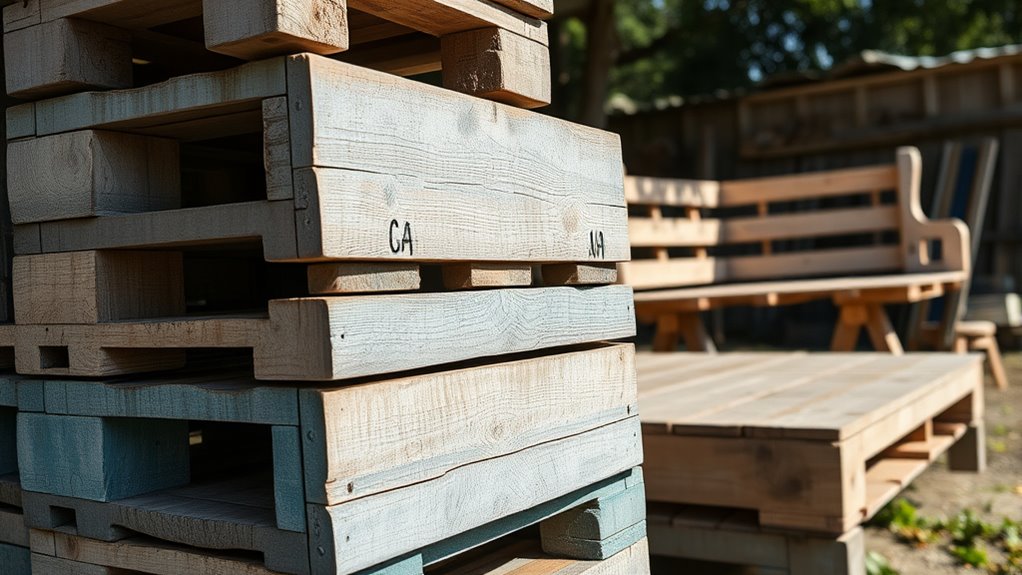
Reusing pallets in wood projects offers an eco-friendly and cost-effective way to create furniture, décor, and practical items. However, before you start ripping apart those wooden pallets, it’s vital to prioritize safety by understanding hazard identification and proper material treatment. Pallets can contain a variety of hazards, including chemical residues from previous uses or treatments, so you need to assess the risks involved carefully. First, identify potential hazards by examining the pallet’s origin and markings. For instance, pallets stamped with “HT” (heat-treated) are generally safer than those marked with “MB” (methyl bromide), which indicates chemical fumigation. Recognizing these labels helps you determine whether the wood has been treated with hazardous substances, guiding you on necessary precautions.
Once you’ve identified potential hazards, focus on material treatment. Proper treatment removes or neutralizes harmful substances, making the wood safer for indoor or food-related projects. You should plan to clean and treat the wood thoroughly. Start by removing any dirt, nails, or staples, then sand the surface to eliminate splinters and surface residues. Sanding not only smooths the wood but also helps remove surface contaminants. For chemical residues, consider applying a sealant or primer after cleaning and sanding. This step is vital because chemical residues can linger in the wood fibers and pose health risks through inhalation or skin contact. If you’re unsure about the treatment history of a pallet, it’s best to avoid using it for projects that come into direct contact with food or skin.
In some cases, you might need to perform additional treatment. For example, heat-treat the wood by exposing it to high temperatures, or use a chemical wash designed to remove pesticides or chemicals. Always work in well-ventilated areas and wear protective gear, such as gloves and masks, during cleaning and treatment processes. Proper hazard identification and material treatment not only protect your health but also ensure your finished project is safe and durable. Recognizing the importance of appropriate treatment can significantly reduce health risks associated with reclaimed wood. Remember, safety should always come first, even when working with reclaimed materials. By thoroughly inspecting, cleaning, and treating pallets, you turn potentially hazardous waste into beautiful, functional items you can be proud of. Reusing pallets becomes a sustainable choice that benefits both the environment and your living space, provided you handle the process responsibly.
Frequently Asked Questions
How Can I Identify Non-Toxic Pallets for Projects?
To identify non-toxic pallets for your projects, start by checking for certification labels like ISPM 15, which indicate treatments that are safer. Look for pallets made from untreated wood or labeled as food-grade. You should also consider chemical testing if you’re unsure about any treatments or coatings. Always source from reputable suppliers who provide information about the pallet’s safety, ensuring your project remains non-toxic and safe.
What Tools Are Best for Dismantling Pallets Safely?
Did you know that using the right tools can reduce dismantling accidents by over 50%? For safe pallet dismantling, you should use a crowbar or pry bar, a hammer, and pliers. Always wear safety equipment like gloves, safety glasses, and sturdy footwear. Master proper dismantling techniques by working slowly and leveraging the tools carefully, minimizing risk of injury and ensuring your project stays on track.
How Do I Treat Pallets to Prevent Pest Infestation?
To prevent pest infestation, you should treat pallets with a chemical treatment designed for pest prevention. First, inspect the pallets thoroughly for signs of pests or damage. Then, apply a safe, approved chemical treatment evenly across all surfaces, including edges and crevices. Allow the pallets to dry completely before use. Regularly re-treat if stored for long periods, and always follow the manufacturer’s instructions for safe and effective pest prevention.
Are There Specific Design Ideas for Small Pallet Projects?
Did you know that small pallet projects can reduce waste by up to 60%? For your project, explore upcycling techniques like turning pallets into wall art or compact shelves. Use creative design tips such as sanding edges for a smooth finish or adding paint for a pop of color. These ideas maximize space and style, making your small pallet project both functional and eye-catching.
How Long Does Pallet Wood Typically Last Outdoors?
Pallet wood usually lasts 1 to 3 years outdoors if you don’t maintain it. To extend its lifespan, you should regularly check for damage and use weatherproofing techniques like sealing or staining. Proper pallet maintenance, including applying protective coatings, helps prevent rot and decay caused by moisture and sun exposure. With consistent care, your outdoor pallet projects can stay sturdy and attractive for several seasons.
Conclusion
Reusing pallets isn’t just a smart choice—it’s a game-changer for your wood projects. Every pallet you repurpose could be the start of something legendary, turning ordinary wood into masterpieces that impress even the toughest critics. When you embrace safety and creativity, you’re not just building furniture—you’re creating timeless pieces that could outlast generations. So go ahead, take those pallets, and craft something so amazing it’ll be remembered for centuries to come!