To select trees for sustainable firewood harvests, focus on species that grow quickly like poplar or willow for regular supply, but also incorporate slow-growers like oak or hickory for quality wood. Guarantee the trees match your soil conditions, such as sandy or loamy soils, to promote healthy growth. Always harvest responsibly with proper management to prevent forest depletion and support ecosystem health. Stay with us to discover effective tips for balancing growth and conservation.

Get business pricing on tools and workshop supplies
- Business-only prices and quantity discounts
- Tax-exempt purchasing
- Multiple users, one account, clear invoices
Key Takeaways
- Prioritize native, fast-growing species that can be harvested sustainably without harming local ecosystems.
- Match tree species to soil conditions to ensure healthy growth and reduce environmental impact.
- Balance harvesting with natural regeneration to maintain forest health and resource availability.
- Select slow-growing, dense woods like oak or hickory for high-quality, long-lasting firewood.
- Implement responsible forest management practices to support ecological balance and long-term sustainability.

When selecting trees for firewood, it is vital to prioritize sustainability to protect your local environment and guarantee a steady supply for years to come. One of the most important factors to contemplate is the growth rate of the tree species. Fast-growing trees, such as poplar or willow, can provide a quick source of firewood, allowing you to harvest more frequently without depleting your forest or planting new trees constantly. However, relying solely on rapid growers can sometimes lead to weaker wood quality or overharvesting issues. Consequently, it’s wise to balance growth rate with the tree’s ability to regenerate naturally and sustainably. Slow-growing species like oak or hickory produce dense, high-quality firewood but take longer to mature, so careful planning is necessary to make sure your harvests remain sustainable over time.
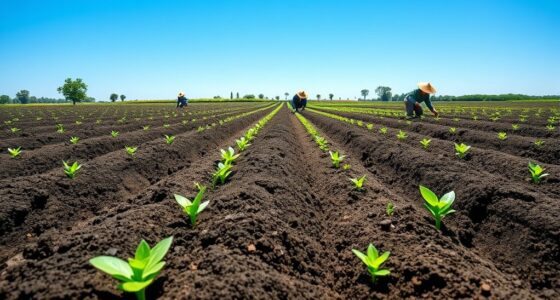
Another key consideration is soil compatibility. Different tree species thrive in specific soil conditions, and choosing the right species for your soil type guarantees healthy growth and minimizes environmental impact. For example, certain trees flourish in sandy or well-drained soils, while others prefer richer, loamy soils. When you select trees that are compatible with your local soil, they establish stronger root systems, grow more efficiently, and require fewer interventions like fertilization or soil amendments. This not only supports healthy regeneration after harvesting but also maintains soil stability and prevents erosion. If you’re unsure about your soil type, conducting a simple test can help guide your choices. Matching tree species to your soil’s characteristics guarantees that your firewood harvesting remains sustainable, keeping your local ecosystem balanced. Additionally, understanding forest management practices can help ensure that harvesting methods support long-term forest health and resource availability.
sustainable firewood cutting tools
As an affiliate, we earn on qualifying purchases.
As an affiliate, we earn on qualifying purchases.
Frequently Asked Questions
How Can I Identify Invasive Tree Species Suitable for Firewood?
To identify invasive species suitable for firewood, start with invasive species identification guides or databases to recognize common invasive trees in your area. Look for species known for rapid growth and adaptability, like certain invasive honeysuckles or buckthorns. These trees often have distinct leaves, bark, or seed features. Always confirm firewood suitability, ensuring the wood burns efficiently and burns cleanly without introducing invasive seeds or pests.
What Are the Best Practices for Pruning Firewood Trees Sustainably?
Ever wonder how to keep your firewood trees healthy while pruning? You should focus on proper pruning techniques that promote tree health, like removing dead or diseased branches and avoiding excessive cuts. Prune during dormancy to minimize stress, and never remove more than 25% of the canopy at once. This helps maintain the tree’s robustness, ensuring sustainable harvests and a steady supply of quality firewood.
How Do Soil Conditions Affect Sustainable Tree Selection for Firewood?
Soil conditions greatly influence sustainable tree selection for firewood. You should choose trees that thrive in your soil’s fertility level, ensuring healthy growth without overtaxing nutrients. Also, consider erosion control; select species with strong roots that stabilize the soil and prevent erosion. By matching trees to your soil’s characteristics, you promote sustainable harvesting, maintain soil health, and support long-term forest productivity.
Are There Specific Tree Age Groups Optimal for Sustainable Harvesting?
Think of trees as a well-tended garden; selecting the right age groups guarantees steady growth. Young trees, like eager seedlings, aren’t ideal for harvest, while mature trees, akin to seasoned veterans, provide ideal firewood. Aim for middle-aged trees, around 10-20 years old, which balance growth with harvest timing. This approach promotes sustainability, allowing trees to regenerate while providing quality firewood. Your best harvests happen when trees are in their prime.
How Can Community Efforts Enhance Sustainable Firewood Harvesting?
You can enhance sustainable firewood harvesting by encouraging community monitoring and collective planting efforts. By regularly observing tree health and growth, you guarantee only mature, healthy trees are harvested, preventing overexploitation. Collective planting helps replenish harvested trees, maintaining forest balance. When your community collaborates on these initiatives, it creates a sustainable cycle that preserves resources, supports local ecosystems, and ensures firewood availability for future generations.
Conclusion
By selecting the right trees and harvesting responsibly, you’re planting seeds for a sustainable future. Think of your firewood choices as tending a garden—careful selection today guarantees a thriving forest tomorrow. When you prioritize health, diversity, and moderation, you’re not just fueling your fire; you’re nurturing the very landscape that keeps our planet warm. So, be a mindful steward, and let your firewood harvest be a gentle breeze that sustains, not scorches, the woods.
Fall yard work Picks
leaf blowers
As an affiliate, we earn on qualifying purchases.