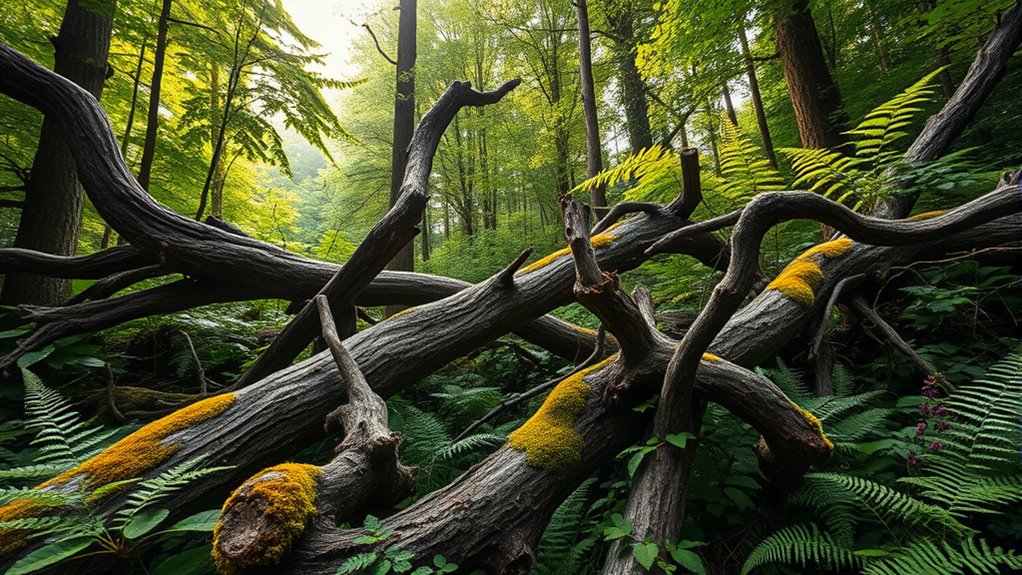

Leaving deadwood and snags in your forest helps support essential habitats, boosting biodiversity and natural processes. These structures offer homes for insects, fungi, birds, and small mammals, while also aiding nutrient cycling and forest resilience. By retaining a mix of standing and fallen deadwood, you promote ecological health and stability. To learn how to identify and manage these key features responsibly, continue exploring the importance of deadwood and snags in healthy forests.
Key Takeaways
- Leave standing dead trees (snags) as they provide essential habitats for birds, fungi, and insects.
- Retain fallen deadwood to support nutrient cycling and offer shelter for diverse species.
- Assess each deadwood piece for safety before removal, prioritizing ecological value.
- Maintain a variety of deadwood sizes and decay stages to promote biodiversity.
- Incorporate deadwood retention into management plans to enhance forest resilience and ecological health.
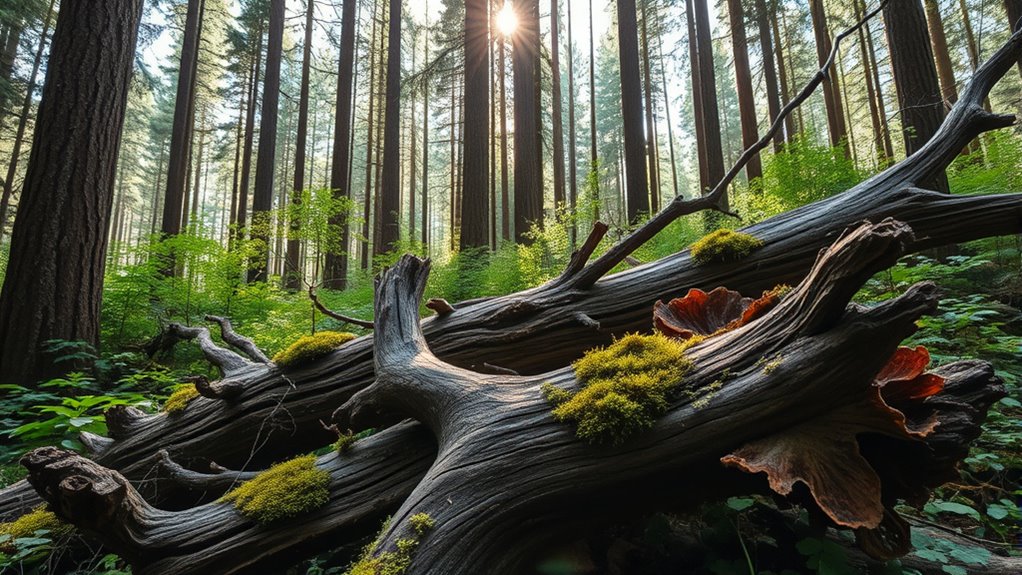
Have you ever wondered why deadwood and snags are essential components of healthy habitats? When you think about forest health, it’s easy to focus on the lush green canopy or thriving wildlife, but the often-overlooked features like deadwood and snags play a crucial role. Proper forest management recognizes the importance of these elements, not just for aesthetics but for maintaining ecological balance. Leaving deadwood and snags in place supports a diverse range of species, from insects to birds, and encourages natural processes that sustain the forest’s vitality.
By leaving deadwood, you promote biodiversity. Many insects, fungi, and microorganisms depend on decomposing wood for food and habitat. These organisms, in turn, attract birds and mammals that feed on them, creating a rich food web. Deadwood provides essential shelter and breeding sites, especially for cavity-nesting birds and small mammals. Without it, these species struggle to find suitable places to nest or hide from predators. When you incorporate deadwood into your forest management practices, you’re fostering a resilient ecosystem that can adapt to environmental changes and resist pests and diseases.
Leaving deadwood promotes biodiversity and creates vital habitats for insects, fungi, birds, and mammals.
Snags, or standing dead trees, are equally vital. They serve as perches for raptors and songbirds, aiding in hunting and communication. They also act as breeding sites for a variety of species, including fungi and insects. Leaving snags standing helps preserve the natural succession of forest layers, which is critical for maintaining ecological balance. It’s a common misconception that removing dead trees is necessary for safety or aesthetics, but doing so can disrupt the intricate web of life that depends on these features. Thoughtful forest management involves assessing each snag’s safety and ecological value, ensuring that removal doesn’t compromise the habitat’s integrity.
In the context of sustainable forest management, leaving deadwood and snags isn’t just about conservation; it’s about recognizing their role in ecosystem health. By respecting natural processes, you help sustain a balanced and productive environment. Instead of clearing every dead tree, you can selectively retain those that offer the most ecological benefits. This approach supports nutrient cycling, enhances habitat complexity, and promotes natural regeneration. It’s about understanding that deadwood and snags aren’t eyesores but vital components that contribute to the ecological balance you want to preserve.
Additionally, understanding the ecological functions of deadwood and snags can help inform better management decisions. Ultimately, when you leave deadwood and snags in your forest, you’re fostering a thriving, dynamic environment. It’s a simple yet powerful act of conservation that ensures the forest remains healthy, resilient, and full of life for generations to come. Proper forest management isn’t just about controlling growth; it’s about embracing nature’s processes and giving ecosystems the space to flourish.
Top picks for "deadwood snag habitat"
As an affiliate, we earn on qualifying purchases.
Frequently Asked Questions
How Does Deadwood Benefit Forest Ecosystems?
Deadwood benefits forest ecosystems by supporting forest regeneration and providing crucial insect habitats. When you leave deadwood, you create a natural environment where fungi and insects thrive, which helps break down organic matter and enrich the soil. These processes promote healthy tree growth and sustain diverse wildlife. By conserving deadwood, you actively contribute to maintaining a balanced and resilient forest ecosystem, ensuring its health for future generations.
What Types of Wildlife Rely on Snags?
Imagine a tree standing tall, offering shelter like a cozy home. Many birds rely on snags for nesting and roosting, just like finding a safe haven. Insects also thrive in these structures, using bark and cavities as habitat. Without snags, wildlife’s survival chances drop, and ecosystems lose essential diversity. You play a role in conservation by leaving snags, supporting bird nesting and insect habitats.
When Is the Best Time to Leave Deadwood?
You should leave deadwood throughout the year, but timing considerations in forest management suggest doing so in late winter or early spring. During this period, removing deadwood can minimize disturbance to wildlife that rely on snags for nesting or shelter. Leaving deadwood year-round provides essential habitat, but careful timing guarantees you support ecosystem health without impacting species during sensitive times like breeding or migration.
Are There Any Risks in Leaving Deadwood in Forests?
Leaving deadwood in forests isn’t risk-free; it can increase fire hazards and attract insect infestations. While deadwood provides essential habitat, it also creates potential dangers, especially in dry seasons when fires can spread quickly. You might think you’re helping the ecosystem, but failing to manage deadwood properly could lead to unforeseen threats. Stay informed and balance the ecological benefits with safety concerns to protect both the forest and yourself.
How Can I Identify Valuable Snags for Conservation?
You can identify valuable snags for conservation by looking for those with cavities or signs of insect activity, as these are vital for cavity nesting and insect habitat. Check for partially decayed wood, holes, or splits, which indicate a healthy, aging snag. Prioritize standing dead trees that support diverse wildlife, especially if they have bark loss or fungi, ensuring they provide essential shelter and food sources for various species.
Conclusion
By leaving deadwood and snags undisturbed, you’re planting seeds for a thriving forest symphony. These silent sentinels cradle life’s intricate web, offering shelter and sustenance to countless creatures. Think of them as nature’s ancient scrolls, whispering stories of resilience and renewal. When you choose to preserve these natural treasures, you’re not just protecting a tree’s final chapter—you’re nurturing a vibrant tapestry where life continues to weave itself in delicate, enduring harmony.