
Storing firewood too close to your property boundary without verifying your actual line can cause neighbor problems. If you overstep or encroach, even unintentionally, it can lead to disputes or legal trouble. Marking boundaries clearly and conducting a survey helps prevent these issues. Small mistakes like stacking near property edges can escalate quickly if overlooked. To understand how to protect your rights and keep things friendly, keep exploring this important topic.
Key Takeaways
- Storing firewood too close to property boundaries without verifying land limits can lead to encroachment issues.
- Using outdated or informal boundary markers increases the risk of accidental boundary crossing with firewood.
- Failing to conduct boundary surveys before stacking firewood near edges can result in legal disputes.
- Encroaching firewood onto a neighbor’s land may be perceived as trespassing or property infringement.
- Maintaining clear, documented boundaries helps prevent misunderstandings and neighbor conflicts over firewood placement.
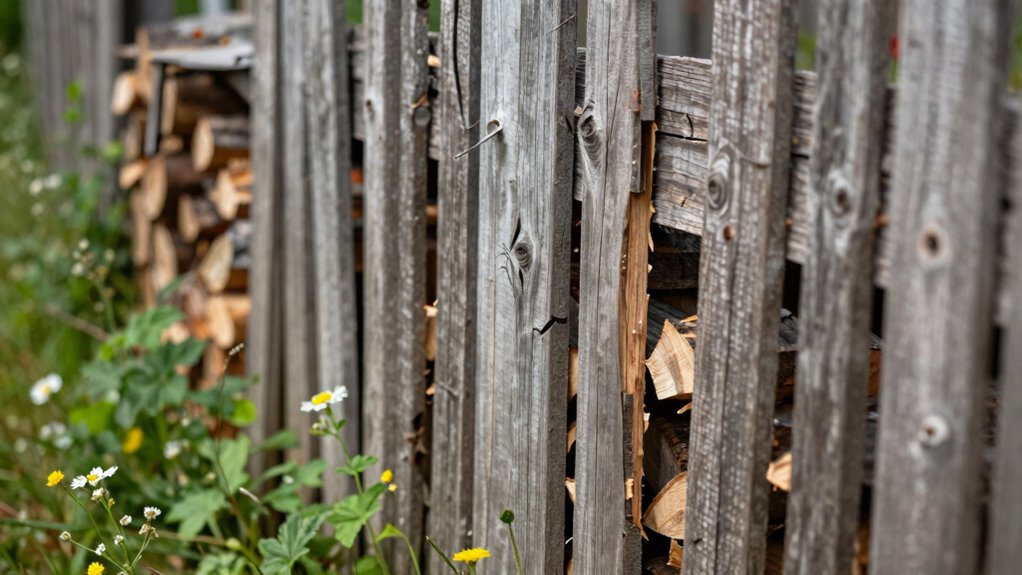
Boundary mistakes can quickly lead to neighbor problems, often because disputes arise when property lines aren’t clearly defined or properly marked. One common issue that sparks conflicts is the firewood boundary mistake. If you’ve ever stacked or stored firewood close to your property line without confirming the boundary, you might unknowingly cause tension with your neighbor. When the firewood encroaches onto their land, it can lead to a property dispute, especially if your neighbor feels that their property rights are being infringed upon. To prevent this, it’s essential to understand exactly where your property line lies, which often requires a boundary survey.
Boundary mistakes, like firewood encroachment, can cause neighbor disputes—know your property lines to prevent conflicts.
A boundary survey helps establish precise property lines, giving you legal clarity on where your land ends and your neighbor’s begins. Without this survey, you might rely on outdated or informal markers like fences, trees, or even your memory, which can be inaccurate. When firewood piles or stacks extend beyond your property, your neighbor might see it as an encroachment, leading to misunderstandings or even legal action if the dispute escalates. Having a boundary survey done not only confirms your property boundaries but also provides documented proof, reducing the chances of conflict over misplaced firewood or other boundary-related issues.
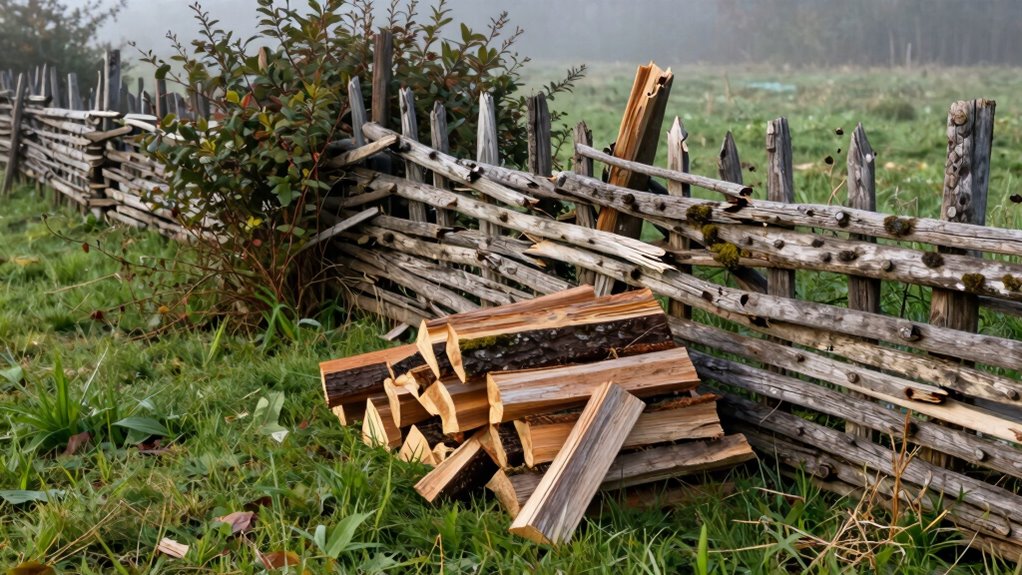
It’s tempting to just move firewood closer to the boundary for convenience, but this small act can have larger consequences. If your neighbor notices the firewood encroaching, they might assume you’re intentionally overstepping your property rights. Even if it was unintentional, disputes can quickly follow, especially if one party feels their land is being used without permission. To avoid this, you should always check your property boundaries before stacking firewood near the edge. Consulting your boundary survey can give you peace of mind and help you position your firewood within your legal property limits.
In some cases, boundary mistakes aren’t just about where firewood is stored but stem from a lack of clarity around property lines altogether. If you’re unsure about your boundaries, it’s wise to invest in a professional boundary survey. This step can save you from future disputes, legal headaches, and strained neighborly relations. Understanding property boundaries is crucial for maintaining good relations and avoiding unnecessary conflicts, especially when it comes to shared land or boundary-related issues like firewood storage. Recognizing the importance of accurate boundary delineation can also prevent costly misunderstandings and ensure that your property boundaries are legally recognized. Additionally, proper boundary marking can help prevent accidental encroachments and clarify your rights as a property owner. Remember, clear boundaries are the foundation of good neighborly relations, especially when it comes to shared land or boundary-related issues like firewood storage. Knowing exactly where your property ends helps you respect your neighbor’s rights and avoid unnecessary conflicts over what might seem like a small issue but can quickly escalate.

Nyuemystery 6 Pack Heavy Duty Property Line Markers, 12 Inch Galvanized Steel Survey Stakes with High-Visibility Red Head for Boundary Marking, Land Survey, Construction and Garden Projects
- Durable Galvanized Steel: Resists rust and bending for outdoor use
- High-Visibility Red Head: Ensures clear boundary marking in various terrains
- Stable and Secure: Heavy 1.32 lb weight for firm ground hold
As an affiliate, we earn on qualifying purchases.
As an affiliate, we earn on qualifying purchases.
Frequently Asked Questions
How Can I Legally Reclaim Firewood on a Neighbor’s Property?
You can legally reclaim firewood on a neighbor’s property by first confirming boundary lines through tree marking or boundary fencing. Talk to your neighbor about the firewood, and if needed, seek a surveyor’s help to clarify property borders. Always communicate openly and avoid trespassing. If disputes persist, consult local laws or a legal expert to understand your rights and guarantee you’re acting within the law.
What Are the Best Ways to Communicate Boundary Disputes?
You should start by calmly discussing boundary disputes with your neighbor, emphasizing open communication. Consider involving community mediation to facilitate a constructive dialogue if needed. Clearly identify and point out boundary markers like fences or natural landmarks, which can help resolve misunderstandings. Always stay respectful and avoid confrontations, as maintaining a cooperative attitude encourages mutual understanding and helps prevent future conflicts.
Can Boundary Mistakes Lead to Legal Action?
Boundary mistakes can indeed lead to legal action, much like a tree’s growth crossing into a neighbor’s yard. If boundary markers are incorrectly placed or ignored, disputes can escalate, especially when trees grow over property lines or roots cause damage. You might find yourself in court if these issues aren’t resolved early. To avoid this, make certain boundary markers are clear and updated, and consult a professional if needed.
How Do I Verify Property Line Accuracy Before Collecting Firewood?
You should start by conducting a tree survey with a professional to accurately identify your property lines. Look for boundary markers like stakes, fences, or survey pins, and verify their locations against official property maps. If you’re unsure, consider hiring a licensed surveyor to double-check the boundaries. This guarantees you collect firewood within your land, avoiding disputes or accidental encroachment, and helps maintain good neighbor relations.
What Remedies Are Available for Boundary Boundary Boundary Disputes?
If you face boundary disputes, start by reviewing boundary markers and conducting property surveys to clarify property lines. You can negotiate directly with your neighbor or seek mediation to resolve the issue amicably. If disputes persist, consult a land use attorney or file a claim with your local land records office. These steps help protect your rights and guarantee clear boundaries, preventing future conflicts.
Conclusion
Forget the small spat over a few logs—boundary mistakes can ignite conflicts that burn through friendships and turn neighborly smiles into icy glares. A simple oversight might set off a chain reaction so fierce it could tear your community apart. Don’t let a tiny boundary error become the wildfire of your neighborhood. Double-check, communicate, and respect those lines—because ignoring them could turn your peaceful yard into a battleground for generations.