
The best time to mark trees for future firewood cuts is during late winter to early spring, just before sap flow ramps up and trees become actively growing. During this dormant period, trees are less stressed, making it easier to assess their health and structure. Cutting now minimizes disease and pest risks and helps guarantee the long-term robustness of your forest. If you want to discover more tips, keep exploring these seasonal insights.

Get business pricing on tools and workshop supplies
- Business-only prices and quantity discounts
- Tax-exempt purchasing
- Multiple users, one account, clear invoices
Key Takeaways
- Mark trees during late winter to early spring before sap flow increases.
- Choose dormancy periods to minimize stress and disease transmission.
- Avoid marking during active growth seasons to prevent damage and pest vulnerability.
- Proper timing ensures sustainable harvesting and forest health.
- Planning around seasonal timing supports ecological balance and efficient wood collection.
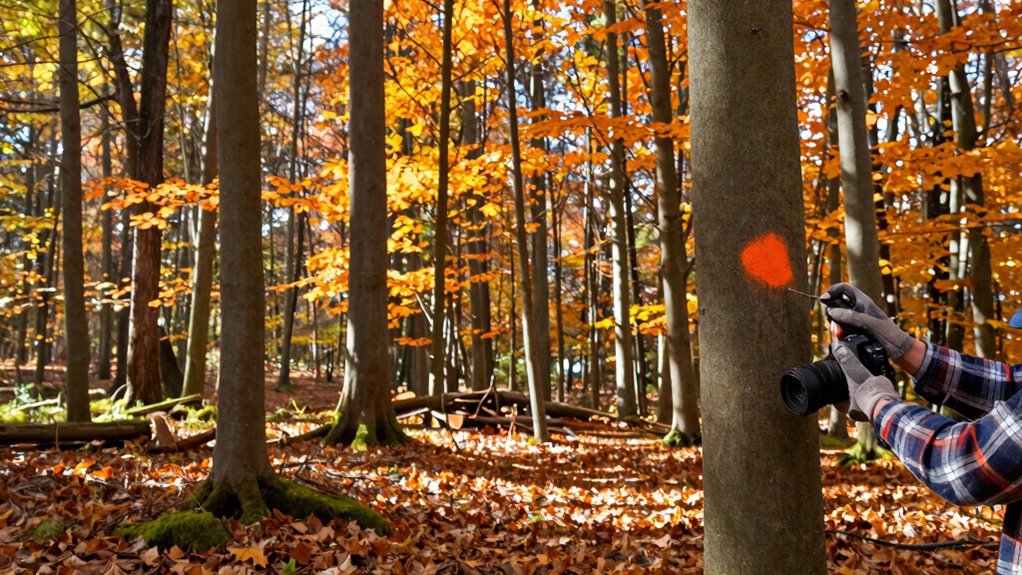
Knowing the best time to mark trees for future firewood cuts can make the process more efficient and sustainable. Timing is essential because it affects not only the ease of cutting but also the health of the remaining trees. When you mark trees during the right season, you guarantee their health isn’t compromised and that your equipment works best. Generally, late winter to early spring, before the sap begins to flow heavily, is ideal. During this period, trees are dormant, which makes marking and cutting less stressful on their health. You’ll notice fewer sap flows, and the wood is usually drier, making it easier to handle and process later.
Tree health is a vital factor in deciding when to mark trees. Cutting during dormancy minimizes the risk of disease transmission and insect infestation, which can spread more easily when trees are actively growing. Marking trees when they are dormant also helps you assess their structure and overall health more clearly. You can spot diseased or damaged trees more easily, allowing you to make informed decisions about which trees to harvest and which to leave standing for ecological balance. If you wait until late spring or summer, you risk harming trees that are actively growing and more susceptible to stress and pest damage. Plus, cutting during the growing season can lead to increased sap loss, which might weaken the tree. Additionally, understanding the importance of tree dormancy can help you plan your harvest more effectively and sustainably. When you’re working in the right season with the right tools, you reduce strain on yourself and the trees, promoting a more sustainable approach. Recognizing the best harvesting times also ensures you minimize environmental impact and maintain healthy forest ecosystems. Being aware of seasonal timing can also help you avoid unnecessary damage to surrounding vegetation and wildlife. Proper planning during dormant periods allows for more precise and less invasive cuts, supporting the long-term vitality of the forest. Moreover, planning your firewood harvest around these periods can help support forest ecosystem health and preserve biodiversity.
As an affiliate, we earn on qualifying purchases.
Frequently Asked Questions
How Do I Identify the Best Trees for Firewood?
You identify the best trees for firewood by focusing on healthy, mature trees of suitable species like oak, maple, or birch. Look for trees in the right growth stage—fully grown but not overly old or damaged. Avoid diseased or hollow trees. Choose those with dense wood and minimal knots, as these burn longer and hotter. Properly marked trees guarantee quality firewood and sustainable harvesting.
What Tools Are Best for Marking Trees?
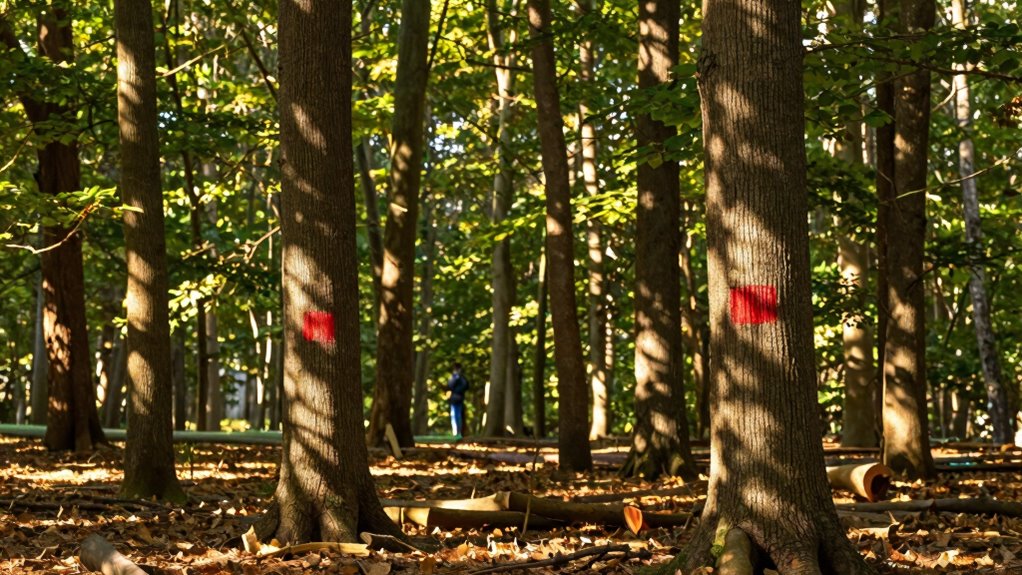
You should use sturdy tools like a paint marker or a tag gun for tree tagging, ensuring clear visibility. Marking techniques include tying brightly colored ribbons or flags around the selected trees, or using spray paint for quick, noticeable markings. These methods help you easily identify your chosen trees later. Make sure your markings are durable enough to withstand weather, so you can consistently follow your plan for future firewood cuts.
How Do I Ensure Sustainable Tree Harvesting?
To guarantee sustainable tree harvesting, you should carefully select trees that support forest regeneration and wildlife habitat. Mark only mature or overgrown trees, leaving young saplings and those essential for local fauna untouched. Practice selective cutting, which maintains the forest’s health and biodiversity. Additionally, plan your harvest to promote regeneration, avoid overharvesting, and consider replanting efforts to sustain the ecosystem for future generations.
Can Marking Trees Damage the Forest Ecosystem?
Marking trees can impact the ecosystem balance and wildlife if done improperly. If you’re careful and selective, you minimize disruption, but careless marking might harm habitats or displace animals. Always consider wildlife impact and aim to preserve biodiversity. By planning sustainably and marking only necessary trees, you help maintain forest health, ensuring ecosystems stay balanced and resilient for future generations.
How Far in Advance Should I Mark Trees?
Think back to the days of the Titanic—timing matters. You should mark trees at least one or two seasons in advance, ideally during the dormant period in late winter or early spring. This allows for proper assessment and healthy marking techniques, reducing harm to the forest. Planning ahead guarantees you select the best trees for future firewood, giving you time to take into account growth patterns and avoid unnecessary damage.
Conclusion
Think of marking trees for future firewood as planting seeds for warmth. By choosing the right time—when trees are dormant—you set the stage for a rewarding harvest later. Your careful planning acts like a compass, guiding you through the seasons to guarantee quality and sustainability. When you mark wisely now, you’re not just preparing for winter—you’re nurturing a future supply that keeps your fires burning bright and steady, like a well-tended garden of firewood.
Columbus Day / Indigenous Peoples' Day Picks
long weekend sales
As an affiliate, we earn on qualifying purchases.