Outdoor wood furnaces can be a great solution if you’re seeking an efficient, eco-friendly way to heat your home. They burn wood more completely, reducing emissions and indoor air pollution, while saving you money on fuel. However, they require a significant upfront investment, outdoor space, and diligent maintenance, especially in harsh weather. To see if they’re the right fit for your needs and learn practical tips, keep exploring the benefits and challenges they offer.
Key Takeaways
- Outdoor wood furnaces improve fuel efficiency and reduce indoor pollution but require significant upfront investment and outdoor space.
- They promote sustainable fuel use but need proper wood sourcing, storage, and maintenance for optimal performance.
- Harsh weather conditions can complicate operation and maintenance, impacting convenience and system longevity.
- They offer environmental benefits by lowering emissions and supporting renewable fuel sources, aligning with sustainability goals.
- Overall, they can be a cost-effective solution in the long run, but initial costs and management demands should be carefully considered.
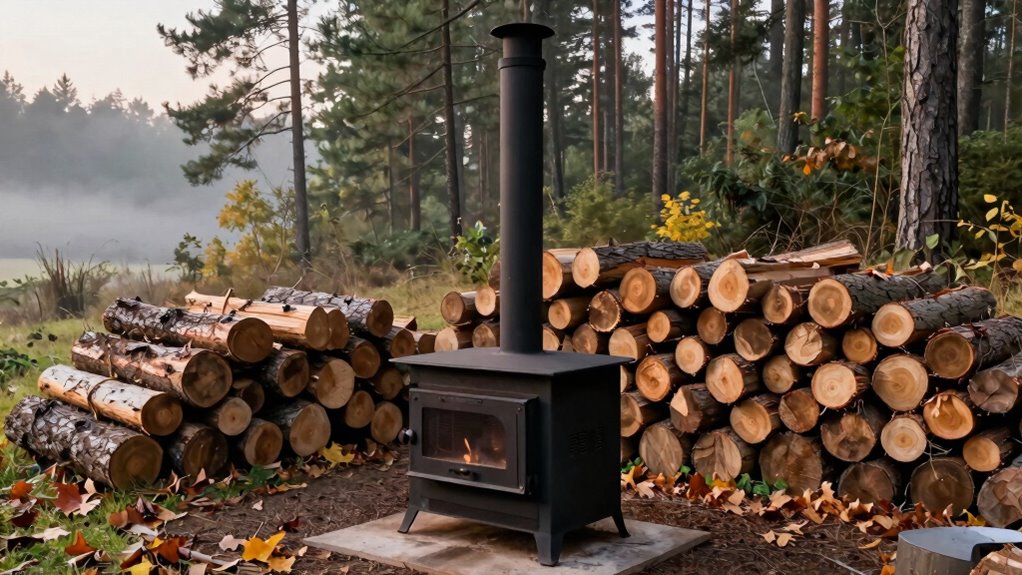
Outdoor wood furnaces offer an efficient way to heat your home and other buildings while saving on energy costs. Unlike traditional indoor heating systems, these units are installed outside your house, which can free up space and reduce indoor air quality concerns. You might wonder if investing in an outdoor furnace is worth the effort or if it’s just too much system to handle. The answer depends on your priorities and circumstances.
One of the biggest advantages of outdoor wood furnaces is their fuel efficiency. These systems typically burn wood more completely than indoor fireplaces or wood stoves, translating to less wasted fuel and more heat generated from each load of wood. Because they’re designed to operate at high temperatures with proper airflow, they convert wood into usable heat with minimal emissions. If you’ve struggled with indoor heating options that waste fuel or produce too much smoke, an outdoor furnace could be a game-changer. It allows you to burn seasoned wood efficiently, which means you get more warmth for less wood consumption, ultimately saving you money over time.
Outdoor wood furnaces maximize fuel efficiency, producing more heat with less wood and minimal emissions.
Another benefit is the ability to control indoor air quality better. Since the furnace is outside, smoke, ash, and other byproducts don’t circulate inside your home. This can be especially appealing if you have allergies or respiratory issues. Plus, outdoor systems tend to be easier to maintain because you’re not working in confined, smoky spaces. You can clean and service the unit without disturbing indoor living areas, making upkeep less of a chore. Additionally, outdoor furnaces are often part of a sustainable living approach, as they promote responsible fuel use and can incorporate renewable wood sources. Properly maintaining and sourcing quality fuel is crucial to maximizing the efficiency of your outdoor furnace, which ties into the broader concept of energy sustainability. Regularly checking and improving fuel storage techniques can help ensure consistent operation and safety.
However, outdoor furnaces also come with some challenges. They require a significant initial investment, including the purchase of the unit, installation, and the necessary piping or ductwork to transfer heat indoors. You’ll need space outside for the furnace and a reliable supply of seasoned wood. While fuel efficiency is high, you must also be diligent about sourcing and storing enough wood to keep the furnace running through cold months. Additionally, managing the outdoor unit during harsh weather can sometimes be inconvenient, especially if you have to go outside in snow or rain to tend to it. Proper outdoor setup and weather protection can help mitigate some of these issues.
As an affiliate, we earn on qualifying purchases.
Frequently Asked Questions
What Are the Initial Installation Costs for Outdoor Wood Furnaces?
You’ll find initial installation costs for outdoor wood furnaces typically range from $4,000 to $8,000, depending on size and features. While the upfront expense might seem high, you’ll benefit from increased fuel efficiency and significant savings over time. When doing a cost comparison, outdoor wood furnaces often prove more economical in the long run, especially if you have access to ample firewood, making them a smart investment.
How Long Does It Take to Heat a Home With an Outdoor Wood Furnace?
It takes about 30 minutes to a few hours to heat your home with an outdoor wood furnace, depending on the size and insulation. Think of it like warming a cozy blanket around your house. Compared to indoor alternatives, outdoor systems often boast better fuel efficiency, meaning you get more heat for less wood. Once heated, your home stays warm longer, making the wait worth it.
Are Outdoor Wood Furnaces Environmentally Friendly?
Yes, outdoor wood furnaces can be environmentally friendly if they’re designed for high fuel efficiency and produce fewer indoor emissions. Since they burn wood outside your home, they reduce indoor air pollution and limit exposure to smoke. However, the environmental impact depends on proper operation and maintenance. When used correctly, they offer a sustainable heating option, but poorly maintained units can emit more pollutants and harm the environment.
What Maintenance Is Required for Outdoor Wood Furnaces?
Imagine your outdoor wood furnace as a well-oiled steampunk machine. You need to regularly clean the firebox and chimney, check the fuel efficiency, and inspect for rust or leaks. Safety precautions involve keeping combustible materials away, ensuring proper ventilation, and monitoring the water levels. Routine maintenance guarantees your system runs smoothly, safely, and efficiently, extending its lifespan while reducing energy costs.
Can Outdoor Wood Furnaces Be Used With Existing Heating Systems?
Yes, outdoor wood furnaces can work with your existing heating system, but you should consider indoor safety and fuel efficiency. You might need to install a proper transfer system, like a heat exchanger, to seamlessly integrate it. Ensuring proper insulation and ventilation is essential for safety, and a well-maintained furnace maximizes fuel efficiency. Always consult a professional to optimize compatibility and safety for your setup.
Conclusion
Ultimately, outdoor wood furnaces can be a great solution if you value cost savings and eco-friendliness. Imagine a family in Vermont heating their home efficiently with seasoned firewood, reducing reliance on fossil fuels, and enjoying cozy winters. However, consider the setup and maintenance demands—if you’re not prepared, it might feel overwhelming. Weigh your needs carefully. With the right approach, outdoor wood furnaces can be a practical choice, offering warmth and savings for years to come.