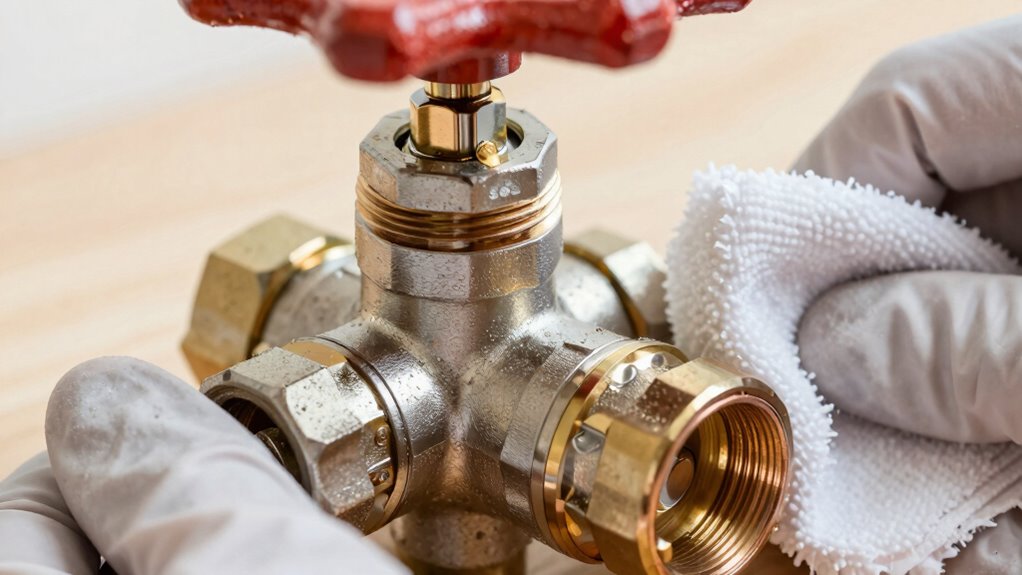

To prevent your control valve from sticking, regularly clean external parts and the stem with gentle, manufacturer-approved agents that won’t damage seals or internal components. Avoid harsh chemicals, aggressive abrasives, or internal tampering unless you’re authorized and trained. Proper calibration and maintenance are equally important to guarantee smooth operation. Keeping these guidelines in mind helps maintain reliable performance. For detailed tips on what to clean and avoid, keep exploring to ensure your control valve stays in top shape.

Get business pricing on tools and workshop supplies
- Business-only prices and quantity discounts
- Tax-exempt purchasing
- Multiple users, one account, clear invoices
Key Takeaways
- Clean external valve parts and stems regularly to remove dust, dirt, and corrosion, ensuring smooth movement.
- Use manufacturer-approved cleaning agents and avoid harsh chemicals that can damage seals or internal components.
- Do not clean or attempt to service internal valve parts unless properly trained and authorized.
- Avoid abrasive tools or aggressive solvents that may scratch or degrade delicate surfaces and elastomers.
- Regular calibration and inspection help identify sticking issues and prevent damage from improper cleaning.
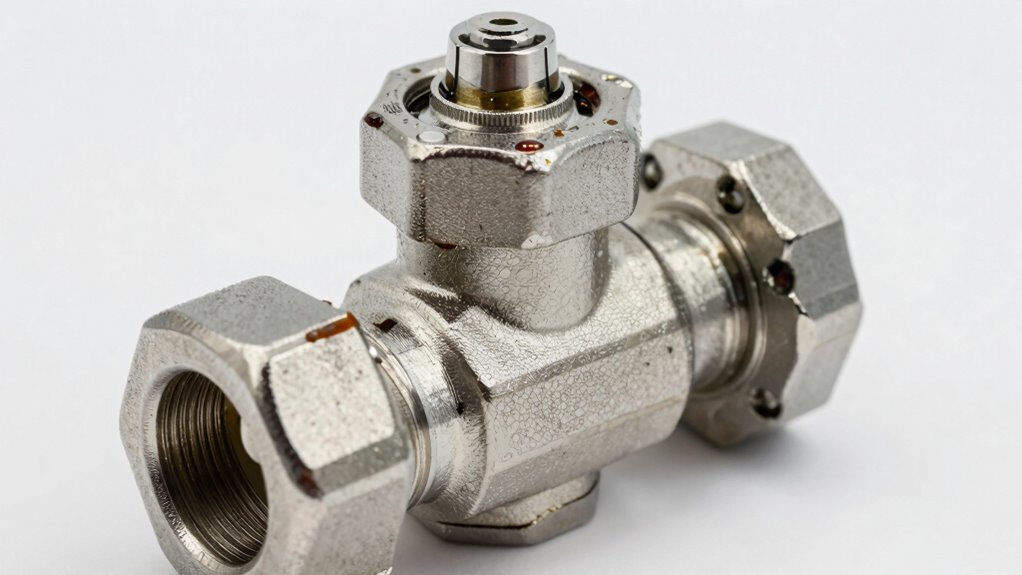
Control valves are fundamental components in regulating fluid flow, but when they stick, it can disrupt operations and cause safety concerns. If your valve isn’t moving smoothly, one of the first steps is to evaluate the actuator maintenance. The actuator is responsible for moving the valve, and over time, dust, corrosion, or debris can hinder its operation. Regularly inspecting the actuator, cleaning its components, and ensuring proper lubrication helps prevent sticking caused by mechanical wear or buildup. Remember, neglecting actuator maintenance can lead to inaccurate valve positioning, which impacts process control and safety. Additionally, performing valve calibration is vital. Proper calibration ensures the valve opens and closes precisely according to control signals, minimizing the chances of it sticking due to misalignment or incorrect settings.
When addressing a sticking valve, avoid the temptation to force it open or shut, as this can damage internal parts. Instead, start with a gentle manual operation if possible, to see if the valve moves freely after cleaning. During cleaning, focus on removing dirt, dust, or corrosion from the external parts and the stem. Use appropriate cleaning agents that won’t damage seals or internal components. Be cautious not to use abrasive tools that might scratch or harm delicate surfaces. If the valve has a positioner, check its calibration and connections, as a misconfigured positioner can cause the valve to stick or respond improperly. Incorporating regular maintenance practices can significantly reduce the likelihood of sticking issues in control valves.
In terms of what not to clean, avoid using harsh chemicals or solvents inside the valve unless specifically recommended by the manufacturer. Some cleaning agents can degrade seals, elastomers, or internal lubricants, leading to worse sticking issues. Also, don’t tamper with or adjust internal components unless you’re trained and authorized, as improper handling can throw off valve calibration and damage the internal mechanisms. It’s best to follow a routine maintenance schedule that includes inspecting, cleaning, and calibrating valves regularly. This approach helps catch issues early and guarantees the valve operates reliably.
As an affiliate, we earn on qualifying purchases.
Frequently Asked Questions
Can I Reuse Cleaning Solvents on Different Control Valves?
You should avoid reusing cleaning solvents on different control valves because it can compromise cleaning safety. Reusing solvents may spread contaminants or degrade their effectiveness, risking damage to your valves. Always dispose of used solvents properly and use fresh ones for each cleaning session. This practice guarantees thorough cleaning and maintains safety standards, preventing potential issues caused by residual contaminants or chemical breakdown in reused solvents.
How Often Should I Perform Maintenance on Control Valves?
Did you know that regular maintenance can extend a control valve’s lifespan by up to 50%? You should perform maintenance on control valves at least quarterly, with a cleaning frequency that matches their usage and environment. Following a consistent maintenance schedule helps prevent sticking and ensures smooth operation. Skipping or delaying maintenance can lead to costly repairs, so stay proactive to keep your control valves functioning at their best.
Are There Specific Safety Precautions When Cleaning Control Valves?
When cleaning control valves, always wear personal protective equipment like gloves, goggles, and a respirator to guarantee safety. Check chemical compatibility before using cleaning agents to avoid damaging components or causing hazards. Work in well-ventilated areas, follow manufacturer instructions, and handle chemicals carefully. By taking these precautions, you protect yourself from potential risks and maintain the integrity of the valve during cleaning.
What Are the Signs of a Damaged Control Valve?
Like a detective in a noir film, you notice signs of a damaged control valve. Check for valve corrosion, which appears as rust or pitting, and seal deterioration, evident through leaks or difficulty in operation. You might also feel unusual vibrations or hear irregular noises. These indicators tell you the valve isn’t functioning properly, and prompt inspection or replacement is necessary to prevent further issues.
Can DIY Cleaning Damage the Control Valve?
Yes, DIY cleaning can damage your control valve if you’re not careful. Using improper cleaning methods or incompatible chemicals can harm internal parts or seals. Always check chemical compatibility before applying any cleaning agents, and stick to manufacturer-recommended procedures. Avoid abrasive tools or harsh chemicals that could scratch or degrade components. Properly inspecting and understanding your valve’s specifications helps prevent accidental damage during cleaning.
Conclusion
Remember, regular cleaning can reduce control valve sticking by up to 30%. But be cautious—clean only what’s necessary to avoid damage. Over-cleaning can cause more harm than good, so focus on removing dirt and debris from accessible parts. Staying vigilant and maintaining your valves properly ensures smooth operation and longevity. Keeping these tips in mind helps you prevent costly downtime and keeps your system running efficiently, saving you time and money in the long run.
Fall yard work Picks
leaf blowers
As an affiliate, we earn on qualifying purchases.