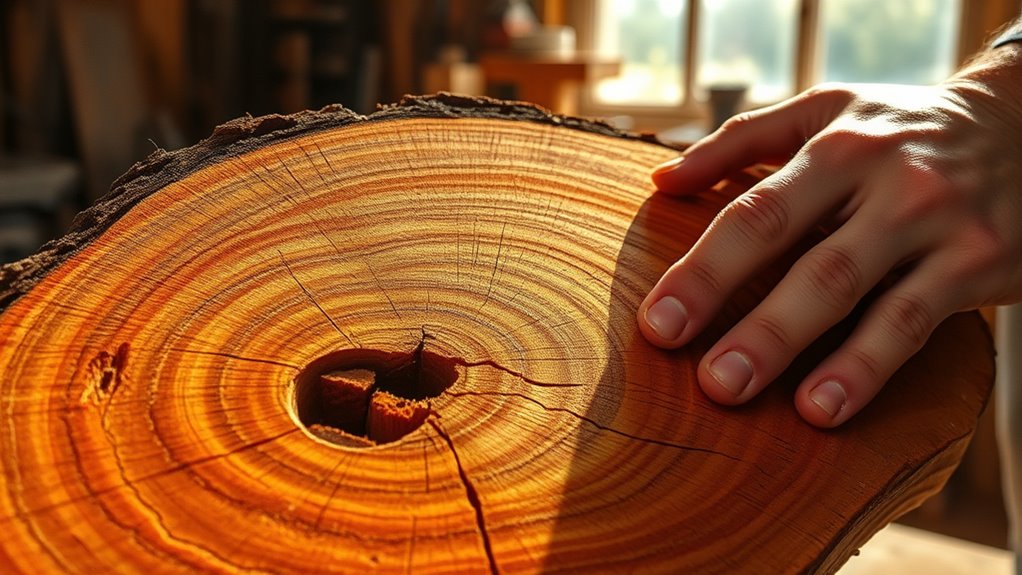

To split wood faster, you need to pay attention to the grain patterns on the surface. Look for parallel lines and overall flow to identify the natural direction of the fibers. Always cut or strike along the grain, not against it, to reduce resistance and effort. Adjust your technique based on complex or irregular patterns for smoother splitting. Keep observing and adapting—learn more about how grain details can make your work easier and more efficient.
Key Takeaways
- Examine the wood surface for parallel lines indicating fiber direction before splitting.
- Align your tool parallel to the grain lines to facilitate natural fiber separation.
- Use angled strikes following the grain to reduce resistance and improve splitting speed.
- Identify irregular or interlocking grain patterns and adjust your technique accordingly.
- Focus your effort on challenging areas, such as knots, by applying precise, controlled cuts along the grain.

Have you ever wondered what the patterns in wood grain can tell you? Understanding grain patterns is essential if you want to split wood efficiently. When you look closely at a piece of timber, you’ll notice that the grain isn’t just a random swirl of lines; it tells a story about the wood’s growth and structure. These patterns reveal the direction of the fibers, which is vital when determining how to approach splitting. The key lies in recognizing the natural flow of the grain and aligning your tools accordingly. When you cut along the grain, splitting becomes smoother and requires less effort. Conversely, if you go against the grain, you risk causing unnecessary resistance or damaging your tools.
One of the most important aspects to grasp is how cutting angles influence your ability to split wood quickly. When you position your axe or maul at the correct angle relative to the grain, you optimize force transfer and minimize effort. For instance, striking along the grain allows the fibers to separate naturally, making the split easier. If you’re unsure about the grain direction, take a moment to examine the wood’s surface. Look for lines that run parallel to each other—these indicate the natural flow of fibers. When you identify the grain’s direction, angle your tool so that you’re driving the blade or axe parallel to those lines. This alignment ensures that your strikes work with the wood’s natural structure rather than against it, reducing fatigue and the risk of mishaps.
Additionally, understanding the grain pattern helps you anticipate potential challenges. Some woods have irregular or interlocking grains, which can cause the splitting process to be more difficult or unpredictable. In such cases, adjusting your cutting angles and applying more controlled, precise strikes can make a significant difference. If you notice knots or tight grain sections, it’s better to focus your effort on these areas with a sharper, well-aimed strike rather than brute force. By paying close attention to the grain pattern, you can plan your cuts more effectively, saving time and energy.
Mastering grain recognition is also essential for choosing the right tools and techniques, which can greatly improve your efficiency. Ultimately, reading the grain isn’t just about aesthetics; it’s a practical skill that speeds up splitting and prolongs your tools’ life. When you master recognizing grain patterns and adjusting your cutting angles accordingly, you’ll find that splitting becomes less of a chore and more of a skillful craft. With a keen eye and strategic approach, you’ll be able to make each split cleaner, faster, and safer.
Frequently Asked Questions
How Can I Identify the Direction of Wood Grain in Curved Logs?
To identify the grain direction in curved logs, look for subtle lines or patterns that follow the log’s curvature. You can also gently scratch the surface with your fingernail or a knife; the grain will feel more resistant when you go against it. Observe the bark and growth rings for clues, as they usually run parallel to the grain. With practice, you’ll quickly determine the grain’s direction in curved logs.
What Tools Are Best for Reading Grain Patterns Accurately?
Imagine the perfect split—what tools do you need? To read grain patterns accurately, start with a sharp chisel or a fine-toothed saw for clear grain detection. A magnifying glass can reveal subtle details, while a straightedge helps trace grain flow. For curved logs, a small hand lens or a grain finder tool is essential. Your choice of tools can *uncover* the secrets hidden within the wood’s intricate patterns, making your work precise and efficient.
How Does Wood Type Affect Grain Visibility and Splitting?
You’ll find that wood type markedly affects grain visibility and splitting. Denser woods, like oak, often have tighter grain, making patterns less distinct but stronger. Softer woods, like pine, show more contrast and easier to read, helping you split along natural lines. High grain contrast makes it simpler to follow the grain, while lower contrast can obscure it. Choosing the right wood based on density and contrast helps you split more efficiently.
Can Environmental Factors Alter the Appearance of Wood Grain?
They say “a storm in a teacup,” but environmental effects can notably alter the appearance of wood grain. Environmental factors like humidity, temperature, and moisture cause grain distortion, making it harder to read. These changes can hide or exaggerate grain patterns, affecting splitting. So, you should consider environmental effects when examining wood, as they can deceive your eye and impact your work.
Are There Safety Tips for Beginners When Reading Wood Grain?
Yes, there are safety tips for beginners when reading wood grain. Always pay attention to grain orientation, as it guides you on how to split wood safely and effectively. Wear proper safety equipment like gloves, safety glasses, and hearing protection to prevent injuries. Take your time to study the grain pattern, and avoid rushing, which can lead to accidents. Staying cautious guarantees a safer and more efficient splitting experience.
Conclusion
Just like a sailor reads the wind to steer true, reading the wood grain guides your hand to split with ease. When you understand its natural flow, you’re like a navigator trusting the stars, moving effortlessly through the task. The grain whispers secrets, and you listen closely. Master this skill, and splitting becomes less about force and more about harmony with nature’s rhythm—turning a chore into a dance with the wood.