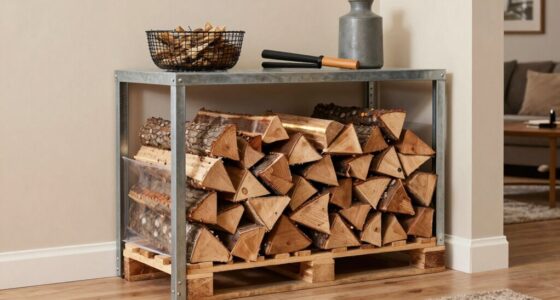
To build a stable holzhaufen, start with a solid, level foundation using larger logs arranged in a circular pattern. Stack the logs tightly with slight interlocking and taper the pile inward as it rises for extra stability. Leave gaps for good airflow and prevent moisture buildup. Regularly check the stack’s stability, especially after weather changes, and reinforce loose sections. Master these techniques to keep your firewood secure—and there’s more to learn about perfecting your stack.
Key Takeaways
- Use a firm, level base with interlocking logs for a stable foundation.
- Taper the stack inward and lean logs slightly to improve overall stability.
- Leave gaps between logs to ensure proper airflow and prevent mold.
- Regularly check and reinforce loose sections, especially after weather events.
- Position the stack in a sheltered, well-ventilated area for optimal stability and dryness.
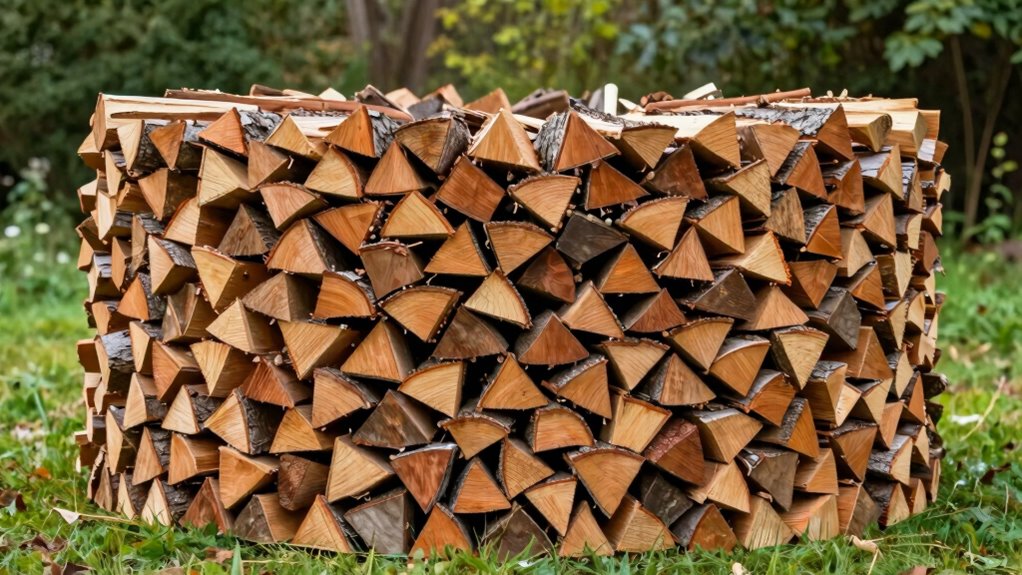
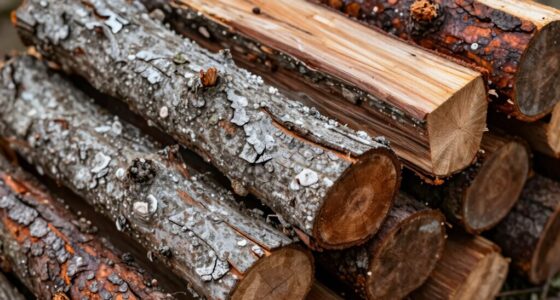
Building a proper holzhaufen, or round stack, might seem straightforward, but doing it correctly guarantees your firewood stays dry, burns efficiently, and lasts longer. The foundation of a stable and safe woodpile begins with careful wood selection. Choose seasoned, dry logs, ideally with a moisture content below 20%. Fresh-cut wood retains moisture, which hampers combustion and can produce excess smoke, creosote buildup, and even fire hazards. Look for wood with tight grain, minimal bark, and no signs of rot or mold. Splitting larger logs into manageable pieces helps ensure even drying and easier stacking, which is *essential* for fire safety. Proper wood selection not only enhances burning efficiency but also minimizes the risk of accidental fires caused by improperly seasoned or damp wood.
Once you’ve picked the right wood, focus on stacking with stability in mind. The round stack method involves creating a compact, circular formation, but the key to stability lies in how you arrange the logs. Start by establishing a firm base—use larger logs laid flat to form a sturdy foundation. This base must be level and stable, as it bears the weight of the entire stack. When stacking, alternate the direction of each layer, ensuring the logs interlock slightly. This interlocking provides lateral stability, reducing the risk of collapse. Keep the pile slightly wider at the bottom and taper it as you go higher, which naturally improves stability and prevents top-heavy tipping. Additionally, proper airflow is vital for efficient drying and mold prevention, so leave gaps between logs and ensure good ventilation throughout the stack.
Pay attention to the environment during stacking. Choose a well-ventilated spot, ideally with some shelter to protect the wood from rain. Leave gaps between the logs, especially near the top, to promote airflow and aid in drying. Good air circulation is *crucial* for preventing mold and rot, which can compromise fire safety by creating unsafe conditions and reducing the firewood’s lifespan. When stacking in a circular form, ensure the logs lean slightly inward, creating a natural arch that enhances the pile’s strength. Regularly check the stability of your round stack, especially after weather events or if you notice shifting. Reinforce any loose sections promptly to maintain safety and *guarantee* your firewood stays dry and ready for use.

BALIE SPACE Outdoor Firewood Rack Brackets Kit for Fire Wood Pile Storage, Adjustable log stacking Stand Holder for 2×4 lumber, Black, Set of 2
- Fits 2×4 Lumber: Measures 12-¾ x 3-¾ inches
- Customizable Size & DIY: Adjust length and height freely
- Heavy Duty Steel Construction: 2mm thick, rust-proof, durable
As an affiliate, we earn on qualifying purchases.
As an affiliate, we earn on qualifying purchases.
Frequently Asked Questions
How Do I Choose the Best Wood for a Round Stack?
You should choose wood with low moisture content and high density for your round stack. Dry wood with less moisture burns better and lasts longer, while dense wood provides stability and structural integrity. Avoid soft or overly wet wood, as it can compromise your stack’s stability and efficiency. Look for seasoned logs that are thoroughly dried, ensuring a solid, durable, and safe round stack that burns efficiently.
What Tools Are Essential for Building a Stable Holzhaufen?
You need essential tools like a sturdy axe or hatchet for shaping wood, a level for stability, and gloves for safety. These tools help you build a secure, stable holzhaufen, which is important for fire safety. Additionally, you can use decorative elements like bark or painted tips to enhance its appearance, giving your stack both safety and aesthetic appeal. Proper tools make certain your woodpile stays safe, stable, and visually pleasing.
How Does Weather Affect the Stability of a Round Stack?
Weather considerably impacts your round stack’s stability through moisture fluctuations and wind impact. Rain can increase moisture levels, causing the wood to swell and shift, while dry conditions make the stack more brittle and prone to collapse. Strong winds can destabilize the structure, especially if the stack isn’t tightly packed or properly supported. To maintain stability, protect your stack from weather elements and guarantee it’s built with consistent, tight layers.
Can I Build a Round Stack Without Prior Experience?
Yes, you can build a round stack without prior experience. Focus on good wood selection—choose evenly sized, dry logs for stability. Use proper stacking techniques: start with a solid base, keep logs tightly packed, and layer logs with the bark side outward. Take your time and learn as you go. With patience and attention to detail, you’ll create a stable, long-lasting wood stack even without previous experience.
What Are Common Mistakes to Avoid When Stacking Wood?
Stacking wood is like building a sturdy bridge—you need balance and attention. Avoid common mistakes by not stacking too high, which can compromise stability. Always check moisture content to prevent rot and guarantee proper drying. Don’t forget to keep the stack even and tight, avoiding gaps that weaken the structure. These tips help your wood stack stay solid, safe, and ready when you need it most.
Conclusion
Mastering a holzhaufen isn’t just about stacking wood; it’s about creating stability from chaos. When you build it right, each log becomes a proof to careful planning and patience. Yet, even with perfect technique, nature’s unpredictability can challenge your work—wind, rain, or a shifting foundation. Embrace the balance of control and chance. Because in the end, a well-done round stack stands firm, beautifully simple, and resilient against whatever the elements throw your way.