
Turning storm-damaged trees into seasoned firewood is a smart, eco-friendly approach. Start by identifying healthy-appearing branches and carefully prune damaged areas to promote healing. Cut the debris into manageable logs, then season the wood by stacking it properly in a ventilated area for six to twelve months. This reduces moisture and improves burn quality. Keep exploring to discover more tips on making the most of storm cleanup and creating efficient firewood.
Key Takeaways
- Assess storm-damaged trees to identify healthy, salvageable wood for firewood production.
- Properly prune broken branches to promote healing and prevent disease entry.
- Cut fallen branches into manageable, healthy logs suitable for seasoning.
- Stack and cover firewood to ensure proper airflow and optimal drying over 6-12 months.
- Use seasoned storm debris as an eco-friendly, cost-effective firewood source for the upcoming year.
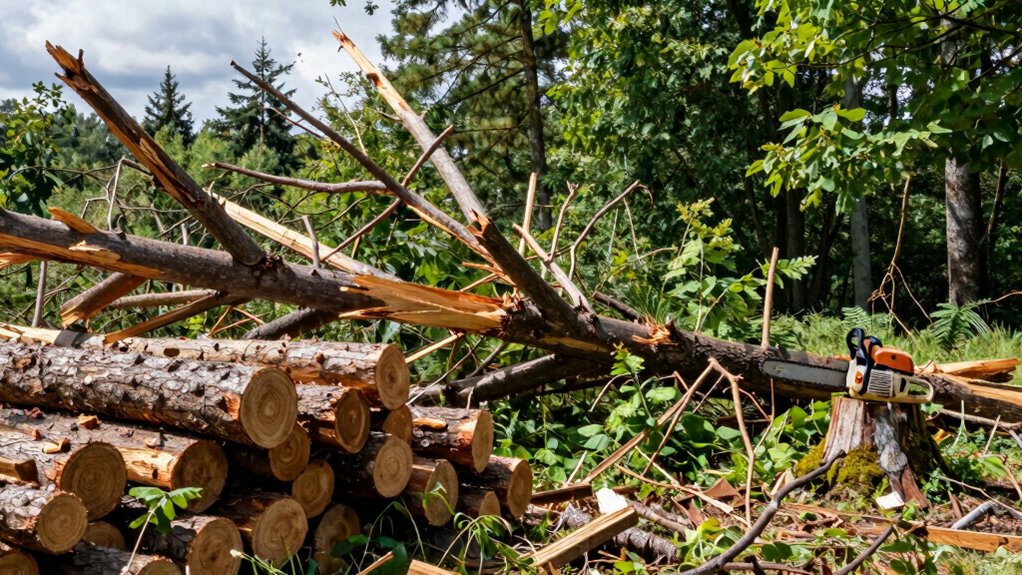
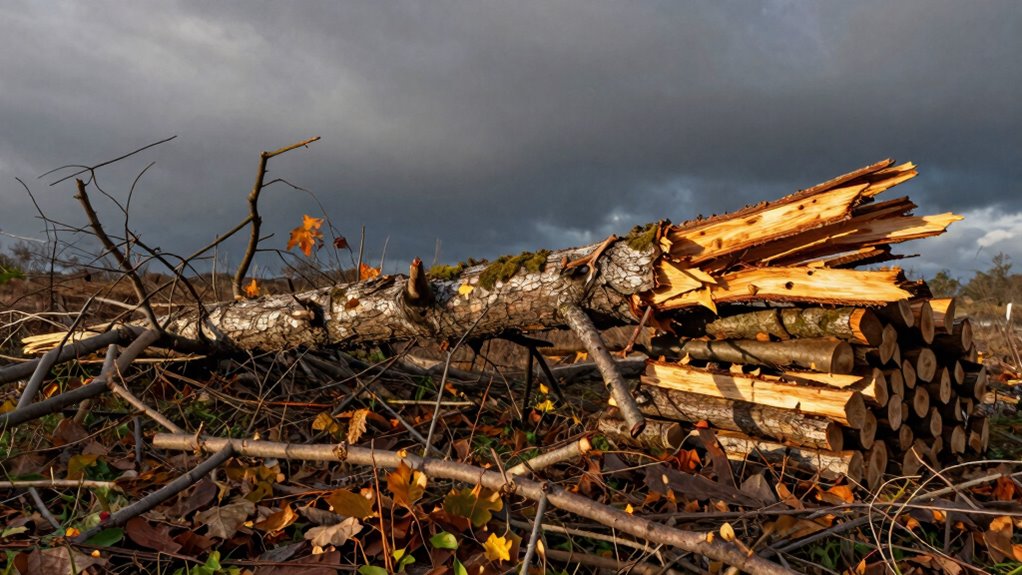
When a storm leaves your yard littered with fallen branches and damaged trees, it might seem like a cleanup hassle. But instead of just hauling away the debris, you can turn this chaos into a valuable resource: firewood. The key to doing this efficiently lies in proper tree pruning and wood seasoning. You want to cut the damaged branches and trunks into manageable pieces, but it’s equally important to prune the trees correctly to encourage healthy growth and prevent future storm damage.
Start by carefully selecting pieces that are suitable for firewood. Look for trees that have suffered damage but are still healthy overall. Using sharp tools, prune away broken or cracked branches and trim any jagged cuts. Proper tree pruning not only makes the cleanup easier but also helps the remaining tree recover faster. When you prune, aim to make clean cuts just outside the branch collar, which promotes healing and minimizes disease entry. This step ensures your firewood will be of good quality and reduces the risk of introducing pests or decay into your woodpile later on. Additionally, understanding storm damage assessment can help you identify which trees are worth saving and which should be removed. Incorporating proper tree maintenance practices can also improve the overall resilience of your landscape against future storms. Regular maintenance, including pruning techniques, is essential for minimizing storm-related damage and promoting healthier trees. Proper tree health can significantly reduce the likelihood of storm damage in the future.
Carefully prune damaged branches just outside the branch collar to promote healing and ensure quality firewood.
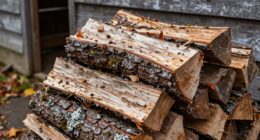
Once you’ve gathered the fallen branches and cut them into logs, the next step is wood seasoning. Freshly cut wood contains a lot of moisture, which makes it hard to burn cleanly and efficiently. You’ll need to let the wood dry out properly before using it in your fireplace or stove. Stack your firewood in a way that allows good airflow around each piece. Cover the top to protect it from rain but keep the sides open to facilitate air circulation. The seasoning process typically takes six to twelve months, depending on the type of wood and the climate. Proper wood seasoning not only improves burning efficiency but also reduces smoke and creosote buildup.
As you work through your storm debris, keep in mind that turning damaged wood into seasoned firewood is a smart way to make use of what might otherwise be wasted. It’s a sustainable approach that saves money and provides you with a ready supply of heat for the cold months. Plus, by practicing good tree pruning, you help ensure your trees stay healthy and resilient against future storms. The process might take some time, but the reward of having your own seasoned firewood makes it worth the effort. With patience and proper technique, your storm cleanup becomes an opportunity rather than a chore, giving you a stockpile of warm, dry firewood for seasons to come.

ESTWING Sure Split Wedge – 5-Pound USA Made Wood Splitting Tool with Forged Steel Construction & 1-7/8" Cutting Edge – Finish May Vary – E-5
- Weight: 5-pound wood splitting wedge
- Material: Forged steel construction
- Cutting Edge: 1-7/8 inch blade
As an affiliate, we earn on qualifying purchases.
As an affiliate, we earn on qualifying purchases.
Frequently Asked Questions
How Do I Identify Suitable Storm-Damaged Trees for Firewood?
You can identify suitable storm-damaged trees for firewood by evaluating their tree health and damage. Look for trees with broken or fallen branches, cracked or snapped trunks, and signs of decay or disease. Avoid trees with extensive root damage or rot, as they won’t burn efficiently. Conduct a damage assessment by checking for stability and structural integrity, ensuring the wood is dry and sound for burning next season.
What Tools Are Best for Safely Harvesting Storm-Damaged Wood?
Think of your tools as your trusted crew in a storm rescue. A sharp, well-maintained chainsaw is essential for safe harvesting. Use it with chainsaw safety gear—helmet, gloves, and eye protection—and follow proper cutting techniques to prevent accidents. A pruning saw or hand saw can help access tight spots, but always prioritize safety. Your tools, wielded wisely, turn chaos into manageable firewood, ensuring your safety and efficiency.
How Should I Store Firewood to Prevent Pest Infestation?
To prevent pest infestation, store your firewood indoors or in a well-ventilated, uncovered rack outside away from your home. Keep the wood elevated off the ground to prevent moisture buildup and pests from burrowing in. Regularly inspect and rotate the stack, and avoid storing it directly against your house’s walls. Proper indoor storage and pest prevention techniques guarantee your firewood stays dry, pest-free, and ready for use.
What Are the Legal Considerations for Collecting Storm-Damaged Wood?
You need to check legal restrictions and property permissions before collecting storm-damaged wood. Many areas have laws protecting certain trees or requiring permission from property owners. Always obtain the necessary permits and make certain you’re not trespassing. Failing to respect these legal considerations can lead to fines or legal trouble. So, verify local regulations and get permission to collect storm debris, guaranteeing you stay within the law while gathering firewood.
How Long Should Firewood Be Seasoned Before Use?
Imagine you’re anxious to light your fire, but your wood isn’t ready. Typically, firewood should be seasoned for at least 6-12 months. During that seasoning duration, moisture content drops below 20%, making it burn efficiently. If you skip this step, your fire may smolder and produce excess smoke. Properly seasoned firewood ensures safe, efficient heating, so check moisture content and let it cure fully before use.
Conclusion
Now that you know how to turn storm damage into next year’s firewood, you’re practically a woodland wizard! With just a little effort, you’ll be transforming fallen branches into enough heat to melt the North Pole’s ice caps. Imagine cozy fires warming your home while saving money and saving the environment—all thanks to your savvy storm-sorting skills. Get ready to impress neighbors and conquer winter, one crackling fire at a time!