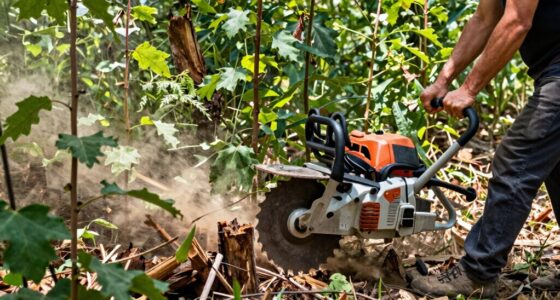
When you’re planning to cut trees on your property, it’s essential to check local regulations and determine if permits are needed, especially for protected species or designated zones. Contact local authorities or visit their websites to understand the requirements and submit applications detailing your project. Make sure to include replanting plans if required. Staying compliant helps avoid fines and delays. Keep exploring to learn more about managing permits smoothly and responsibly.
Key Takeaways
- Check local regulations to determine if your property requires permits for tree cutting or land clearing.
- Contact local authorities or environmental agencies to understand specific permit application processes.
- Identify protected trees, zones, or species that may be restricted from removal without permits.
- Prepare and submit detailed applications including project scope, tree species, and replanting plans if necessary.
- Comply with inspection requirements and regional rules to ensure legal, environmentally responsible land management.
Are you planning to cut trees or clear land on your property? If so, it’s important to understand the permits required before you start. Many areas have strict rules designed to protect tree preservation and ensure responsible land management. Ignoring these regulations can lead to hefty fines, project delays, or even legal action. Taking the time to familiarize yourself with local regulations will save you trouble down the line and help you avoid unnecessary setbacks.
Understanding local permits helps protect trees and keeps your project on track.
First, you need to determine if your project requires a permit. Some jurisdictions have specific restrictions on tree removal, especially if the trees are protected due to size, species, or environmental significance. Local regulations often designate certain trees or areas as protected zones, making it illegal to cut or damage them without special permission. Even if you’re only planning to clear land for development or landscaping, it’s critical to check whether permits are necessary. Many municipalities or counties have online databases or offices where you can access this information easily.
When considering tree preservation, it’s helpful to consult with local authorities or environmental agencies. They can provide guidance on which trees are protected and outline the procedures for obtaining a permit. Typically, you’ll need to submit an application detailing the scope of your project, the number and species of trees involved, and how you plan to carry out the work. In some cases, you may need to include a plan for replanting or mitigating the impact on the local ecosystem. These efforts demonstrate your commitment to responsible land use and can make the permit process smoother. Additionally, understanding permitting procedures and the specific requirements in your area can significantly streamline your project timeline.
Understanding local regulations is vital because rules vary considerably from place to place. Some areas might have strict ordinances that limit tree removal to only certain times of the year or require inspections before and after the work. Others may have specific guidelines for protecting mature trees or preserving natural habitats. Before you begin any work, visit your city or county’s official website or contact the local planning department. They can provide detailed information about the permits you need, the steps to obtain them, and any fees involved.
Taking these proactive steps ensures you stay compliant with the law and contribute to tree preservation efforts in your community. It also helps you avoid costly mistakes that could halt your project or lead to penalties. Remember, responsible land management not only benefits the environment but also maintains good standing with local authorities. By doing your due diligence on local regulations and respecting tree preservation rules, you ensure your project progresses smoothly and sustainably.
tree cutting permit application kit
As an affiliate, we earn on qualifying purchases.
As an affiliate, we earn on qualifying purchases.
Frequently Asked Questions
Can I Cut Trees Without Any Permit if They Are Dead?
You can usually cut dead trees without a permit, but it’s important to check local laws first. Dead trees aren’t protected by tree preservation rules, so land clearing becomes easier. However, some areas might have specific regulations to prevent damage to the environment. Always verify with your local authorities to avoid fines or legal issues, and consider whether your actions impact nearby trees or ecosystems.
How Long Does It Take to Get a Permit Approved?
Back in the day, getting a permit approved can feel like waiting for dial-up internet. Usually, it takes anywhere from a few weeks to a month, depending on your area’s permit process. Keep in mind, they’ll assess tree health and safety concerns prior to approval. To speed things up, submit complete paperwork and clear documentation. Stay patient—permits ensure responsible tree management and compliance with local regulations.
Are There Specific Seasons When Permits Are Required?
You’ll need permits during certain seasons when there are seasonal restrictions on tree cutting, usually to protect wildlife or prevent erosion. However, permit exemptions may apply if you’re removing dead or dangerous trees, or if local regulations specify different rules. Check with your local forestry office or permitting agency to confirm whether your planned cutting falls within restricted periods or qualifies for exemptions, ensuring you stay compliant year-round.
What Are the Penalties for Unauthorized Cutting?
Imagine a quiet forest, suddenly disturbed by unauthorized cutting, leaving scars on tree preservation efforts. If you cut without permits, you risk hefty fines, land clearing violations, and even legal action. Authorities enforce penalties to protect ecosystems and prevent illegal land use. You could face suspension of land use rights or be ordered to restore the damage. Always secure proper permits to avoid these consequences and preserve the natural beauty of your property.
Can I Appeal a Permit Denial?
Yes, you can appeal a permit denial. You should review the permit appeal processes outlined by your local agency, which typically involve submitting a formal appeal letter and providing additional documentation. Address the denial reasons clearly, explaining why you believe your application meets the requirements. Follow the specific steps and deadlines for appealing, and consider seeking professional advice if you need help steering through the process.
Conclusion
Navigating permits for cutting on your property might seem daunting, but it’s essential for legal and environmental reasons. Did you know that over 60% of landowners face fines or delays due to permit issues? By understanding the process and securing the right permits, you guarantee your projects stay compliant and smooth. Remember, taking the time now saves you potential headaches later. Stay informed, follow the rules, and enjoy your property responsibly.